
Why Designers Are Falling Back in Love with Checkered Kitchen Floors
Why a Checkerboard Kitchen Floor Works in So Many Styles
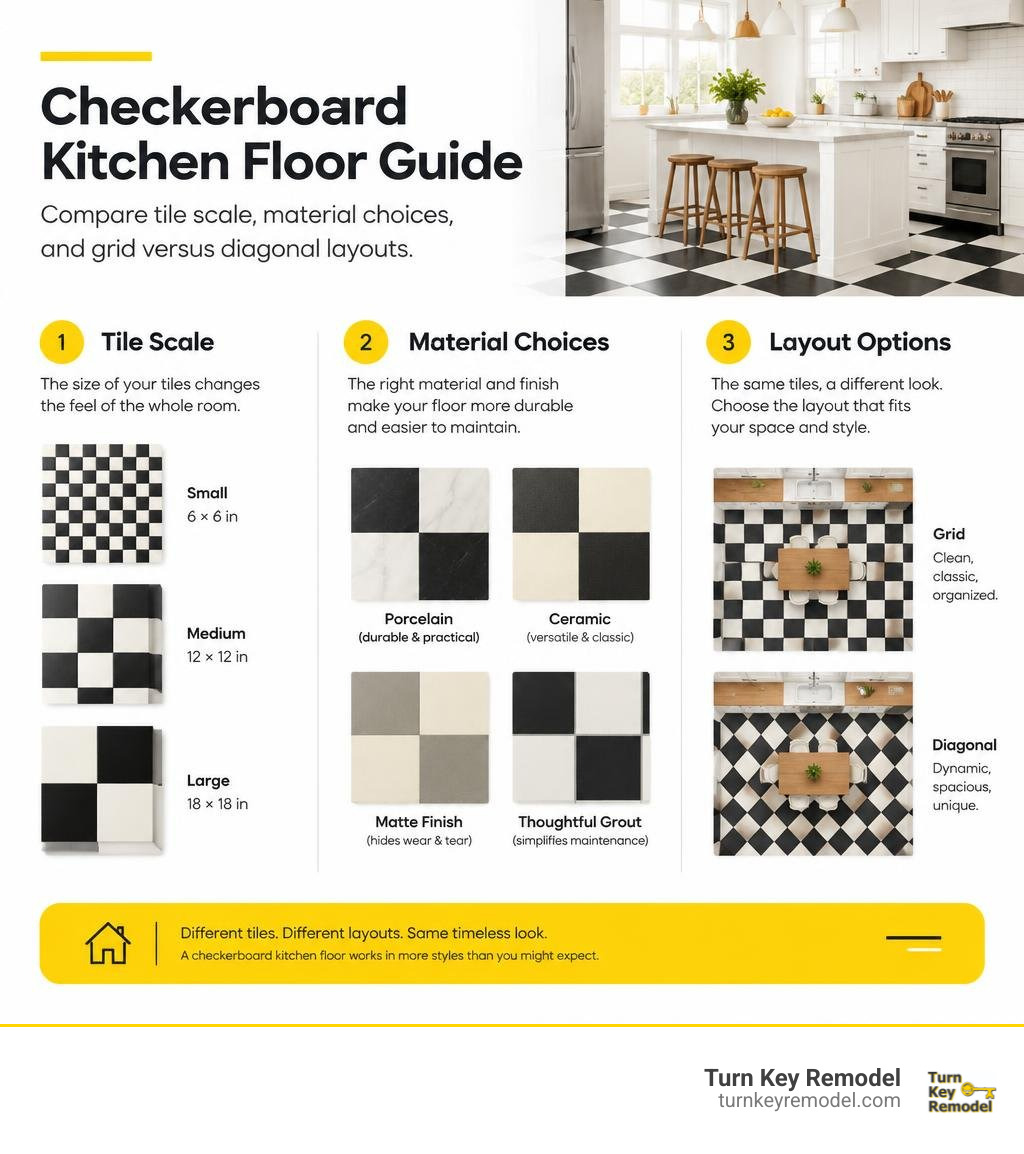
A checkerboard kitchen floor can feel vintage or modern. The difference is in the choices you make: black and white gives you bold contrast, while cream and warm gray feel softer. Start with 12-by-12-inch tiles for a versatile scale, then test the pattern in your kitchen before choosing a straight grid or diagonal layout.
The look is striking, but it can also suit a busy kitchen. Porcelain is a practical choice for heavy foot traffic, while matte finishes and thoughtful grout colors can make everyday upkeep easier.
I’m Mark Apicella, owner and president of Turn Key Remodel in Orange County. I draw on more than eight years of remodeling experience to help homeowners plan kitchen details, including a checkerboard kitchen floor that fits the space and the way they live.
Handy checkerboard kitchen floor terms:
Checkerboard flooring traces its heritage back to Renaissance ballrooms and 1950s diners. Today, this iconic pattern is experiencing a massive revival across residential renovations. It provides graphic contrast that structures open-concept layouts, anchors cabinetry, and adds architectural character to contemporary and traditional homes alike.
1. Choosing the Best Materials for a Checkerboard Kitchen Floor
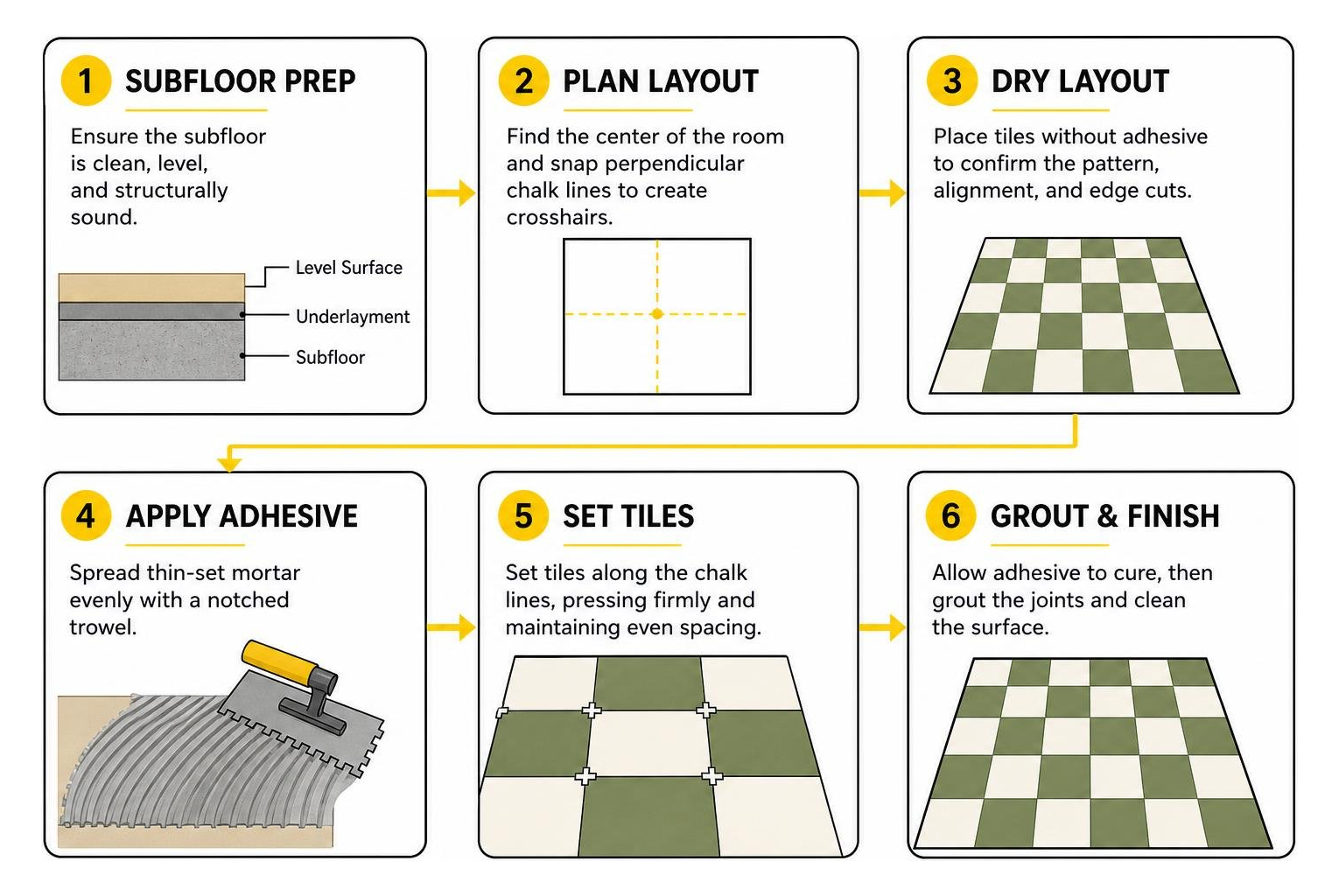
Kitchen flooring must withstand continuous foot traffic, cooking spills, dropped utensils, and frequent cleanings. Selecting the right material ensures your pattern remains pristine for decades. Subfloor preparation is equally crucial: whether installing rigid stone or resilient tile, a level, clean subfloor prevents cracked grout lines and surface unevenness.
| Material | Average Cost per Sq. Ft. | Durability Rating | Water & Slip Resistance | Maintenance Level |
|---|---|---|---|---|
| Porcelain | $3.00 – $10.00 | Extremely High (PEI 4–5) | Waterproof (≤0.5% absorption), R10 Slip Rated | Low (Stain & scratch proof) |
| Glazed Ceramic | $2.00 – $6.00 | Moderate (PEI 2–3) | Glazed water barrier, Moderate slip resistance | Low to Moderate (Prone to chipping) |
| Natural Marble | $10.00 – $30.00+ | Moderate to High | Low absorption when sealed, Honed = Slip-resistant | High (Requires periodic sealing) |
| Luxury Vinyl Tile (LVT) | $3.50 – $7.00 | High (20–28 mil wear layer) | 100% Waterproof, Slip-resistant surface | Very Low (No sealing needed) |
| Composition Tile (VCT) | $2.00 – $5.00 | High (Commercial grade) | Water-resistant, Moderate slip resistance | High (Requires waxing/buffing) |
Porcelain and Ceramic Tile
Porcelain is an ideal tile choice for high-traffic kitchens. Fired at higher temperatures than ceramic, through-body porcelain tile features a water absorption rate of 0.5% or lower, making it practically impervious to moisture and frost. Porcelain tiles carry high Porcelain Enamel Institute (PEI) ratings of 4 or 5, meaning they resist scratching from pet claws, grit, and heavy appliance movement.
Standard glazed ceramic tile is an economical, lightweight alternative best suited for low- to moderate-traffic areas. However, because ceramic’s interior clay body differs in color from its surface glaze, heavy impacts can cause visible chips. For seamless performance, high-grade porcelain offers complete compatibility with underfloor radiant heating systems, distributing warmth evenly across the room. Many homeowners emulate high-end stone looks using specialized porcelain lines, such as Nero Marquina honed field tile specifications, to achieve dark marble aesthetics without natural stone porosity.
Natural Stone and Handcrafted Zellige
Natural stone brings organic depth and variation to a kitchen. Classic combinations like white Carrara paired with black Nero Marquina marble deliver European elegance. When installing natural marble or limestone, a honed finish is preferable over polished; honed surfaces disguise micro-scratches and provide a slip-resistant texture under wet feet. Because natural marble has microscopic pores (Nero Marquina field tiles average a low 0.0044% water absorption rate), it requires a penetrating sealer upon installation and routine resealing to prevent acid etching from lemon juice, vinegar, or wine.
For textural richness, authentic Moroccan clay tiles add artisanal charm. Hand-glazed tiles, such as the handcrafted Bahir checkerboard zellige tile features, introduce delicate tonal shifts and light-catching surfaces that standard machine-pressed tiles cannot replicate. 94% of 274 customer reviews give Bahir 2×2 zellige a 5-star rating, underscoring how well handcrafted tiles perform in busy kitchens, primary bathrooms, and entryways.
Resilient Luxury Vinyl Tile (LVT) and VCT
For homeowners seeking softer footing, acoustic dampening, and waterproof resilience, Luxury Vinyl Tile (LVT) is an outstanding option. Commercial-grade LVT features a 0.70 mm (28 mil) wear layer that resists scuffs, supported by lifetime residential warranties. Unlike pre-printed patterned sheets, high-end checkerboard LVT is sold as individual colored tiles, allowing you to combine complementary shades using a wet-set adhesive.
Vinyl Composition Tile (VCT) is a limestone-composite material traditionally found in schools and vintage diners. As seen in retro-inspired diner renovations, VCT withstands decades of punishment, though it requires periodic waxing and polishing to retain its protective sheen.
2. Trending Color Palettes Beyond Traditional Black and White
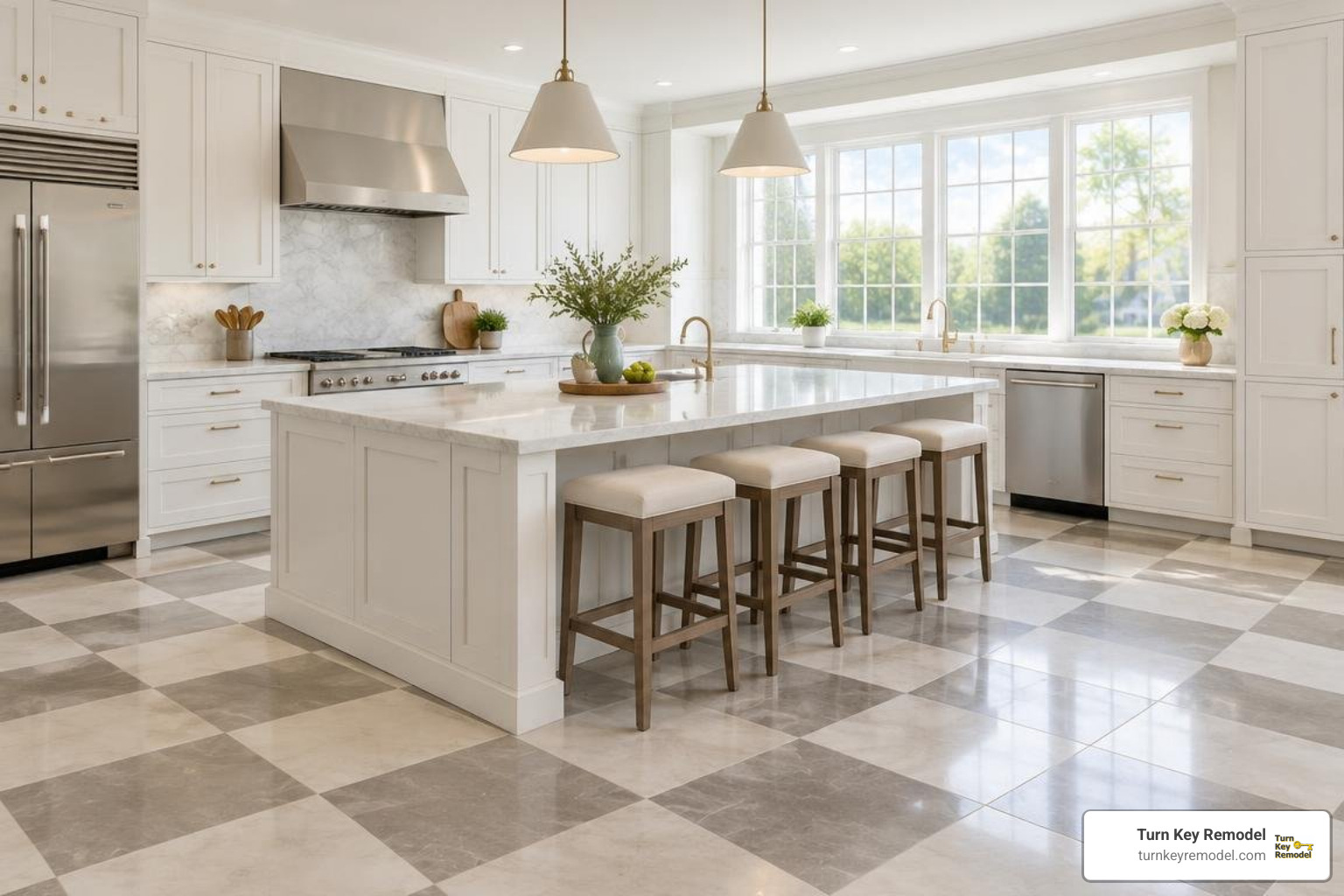
While high-contrast black-and-white remains timeless, current design trends embrace tonal subtlety, warm earth tones, and expressive colors. Using creative flooring palettes elevates the entire space, whether you are gathering creative kitchen design inspiration for a total renovation or refreshing an existing layout.
Earthy Neutrals, Terracotta, and Warm Stone
Modern interior schemes often rely on low-contrast, calming pairings that soften geometric patterns:
- Cream & Warm Taupe: Creates a gentle, grounding floor that complements natural white oak cabinetry and linen textures.
- Travertine Beige & Soft Ivory: Offers an Old World Mediterranean feel with subtle stone veining.
- Terracotta & Sandstone: Infuses organic warmth, pairing well with unlacquered brass hardware and zellige backsplashes.
These muted pairings provide the visual rhythm of a checkerboard without dominating the kitchen’s sightlines. When undertaking modern kitchen remodel planning, choosing warm neutrals allows you to introduce bolder countertop stones and colorful islands without aesthetic clutter.
Bold Jewel Tones, Pastels, and Unexpected Hues
For playful, design-forward spaces, colorful checkerboards add personality:
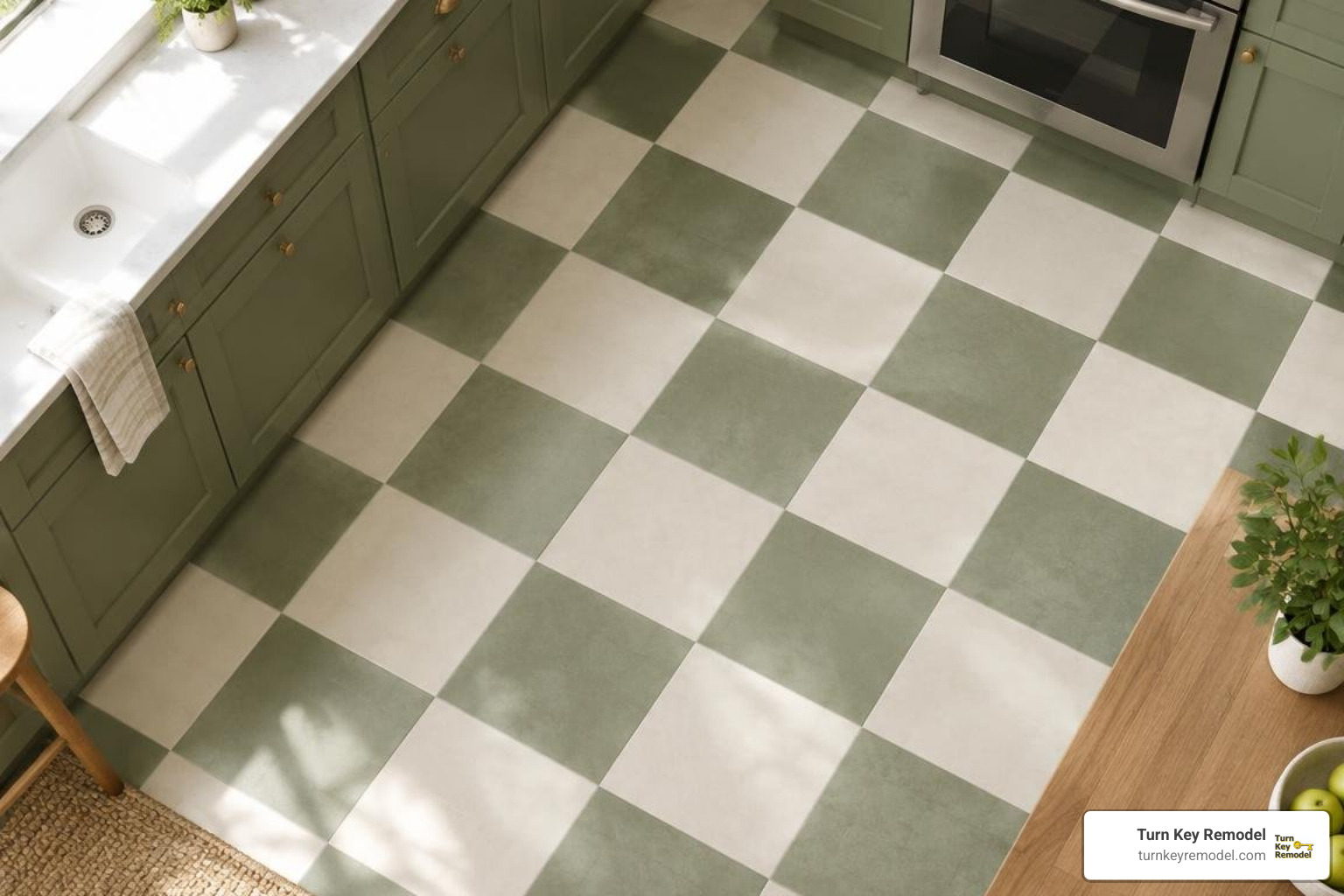
- Forest Green & Alabaster: Brings botanical freshness into modern farmhouse kitchens.
- Aubergine & Blush Pink: A sophisticated pairing shown in pistachio and aubergine kitchen color palettes, where deep jewel tones balance light cabinetry.
- Venetian Red & Chalk White: Evokes retro European bistros and historic 1940s charm.
- Subtle White & Tan: As featured in budget-friendly painted checkerboard floor makeovers, simple paint updates costing as little as $500 can completely revitalize worn flooring.
3. How to Scale and Proportion Your Checkerboard Tile Layout
The scale of your tile directly affects how spacious or intimate your kitchen feels. Balancing the size of each square with the room’s footprint ensures the pattern enhances sightlines rather than overwhelming them, especially around custom kitchen island designs.
Selecting the Right Tile Size for Your Checkerboard Kitchen Floor
Tile dimensions range from compact 2×2 mosaics up to 32×32 large-format tiles:
- Small Mosaics (2×2 to 6×6 inches): Best suited for compact pantries, bar nooks, or historic cottage kitchens. They add intricate charm but increase grout line density.
- Mid-Size Field Tiles (12×12 inches): The most versatile format. A 12×12 tile establishes clean visual rhythm in medium-sized kitchens without crowding narrow walkways, making it an excellent candidate for budget-conscious small kitchen renovations.
- Large Format (18×18 to 24×24 inches): Ideal for open-concept layouts. Larger squares reduce the number of grout joints, creating an expansive, uncluttered visual plane.
Traditional Grid vs. Diagonal Diamond Installation
The orientation of your tiles changes how space is perceived:
- Straight Grid (Traditional Layout): Tiles run parallel to walls and baseboards. This orientation highlights structural symmetry and pairs naturally with modern, clean-lined cabinetry.
- Diagonal Layout (Diamond Pattern): Tiles are set at a 45-degree angle to the walls. The diagonal lines draw the eye outward toward the edges of the room, creating an optical illusion that makes narrow galley kitchens feel wider.
Note on Material Waste: A straight grid requires a 10% overage allowance for cuts and installation waste. A diagonal pattern involves angled cuts along all perimeters, requiring a 15% to 20% waste buffer. Incorporating a solid perimeter border tile can frame diagonal layouts, yielding an elevated, custom finish worthy of high-end surface upgrades.
4. Pairing Grout Colors, Cabinetry, and Architectural Styles
A checkerboard floor serves as a geometric anchor. Integrating it smoothly into your overall design depends on your cabinetry styles, countertop materials, and grout selections.
Integrating a Checkerboard Kitchen Floor Across Vintage and Contemporary Styles
- Modern Farmhouse: Pair a soft charcoal-and-cream porcelain checkerboard with shaker cabinetry, butcher block accents, and warm unlacquered brass hardware.
- Contemporary Minimalist: Ground high-gloss or matte flat-panel cabinets with an oversized 24×24 light gray and white floor. For dramatic contrast, explore sleek dark kitchen cabinetry trends paired with a subtle, honed stone grid.
- Mid-Century Retro: Combine 9×9 resilient LVT or VCT in warm terracotta and vanilla with flat-panel walnut millwork and vintage-inspired light fixtures.
- Transitional Elegance: Combine 12×12 honed marble tiles with inset painted cabinets, quartz countertops, and delicate pendant lighting.
Grout Selection and Long-Term Maintenance
Grout color shapes the overall aesthetic:
- Contrasting Grout: Accentuates individual tile edges, producing a bold, defined grid.
- Matching/Neutral Grout (e.g., Warm Gray, Taupe): Softens transitions between light and dark tiles, creating a unified, flowing surface.
Epoxy vs. Cementitious Grout: For kitchens, high-performance epoxy grout is recommended. Unlike traditional cement-based grout, epoxy is non-porous, highly stain-resistant, and never requires sealing. If you use cementitious grout, apply a high-grade penetrating sealer every 12 to 18 months, and maintain the floor using pH-neutral tile cleaners to prevent sealer breakdown.
Frequently Asked Questions About Checkerboard Kitchen Floors
Are checkerboard kitchen floors timeless or just a passing trend?
Checkerboard floors have remained an architectural mainstay for centuries, spanning classical European estates, Victorian entry halls, mid-century homes, and contemporary renovations. By adjusting tile materials, scale, and color palettes, this pattern adapts to changing design eras while retaining long-term appeal and strong resale value.
How do I keep white and black checkerboard tile clean in a busy kitchen?
High-contrast floors highlight different types of debris: dark tiles show pale dust and flour, while white tiles show dark crumbs and mud. To simplify daily maintenance:
- Choose a matte or honed finish rather than high-gloss polished tile, as matte hides foot smudges and water spots.
- Select soft off-white, light gray, or warm charcoal tones instead of stark, pitch-black and pure optic white.
- Use a microfiber dust mop daily and damp-mop with a pH-neutral cleaner weekly.
Can I install a checkerboard floor over radiant heating systems?
Yes. Porcelain and natural stone tiles are excellent thermal conductors, making them ideal for electric or hydronic underfloor heating. Always install an uncoupling membrane (such as Schluter-DITRA) over the subfloor to accommodate thermal expansion, and use flexible, polymer-modified thin-set mortar to prevent tile cracking.
Conclusion
A checkerboard kitchen floor balances timeless character with striking geometric structure. Whether you prefer the Old World luxury of honed marble, the artisan texture of zellige, or the worry-free durability of modern porcelain, this versatile pattern can be tailored to match your personal aesthetic.
At Turn Key Remodel, our team handles every step from initial concept through precision installation. We provide in-house design support and dedicated project management across Orange County, Yorba Linda, Placentia, Anaheim Hills, Tustin, and Brea. Ready to transform your kitchen into an inviting, beautifully crafted space? Explore our full-service interior design and remodeling options and schedule your design consultation today.