
Dining Table New Design Ideas That Make Small Spaces Feel Huge
Dining Table New Design Ideas for Small Spaces
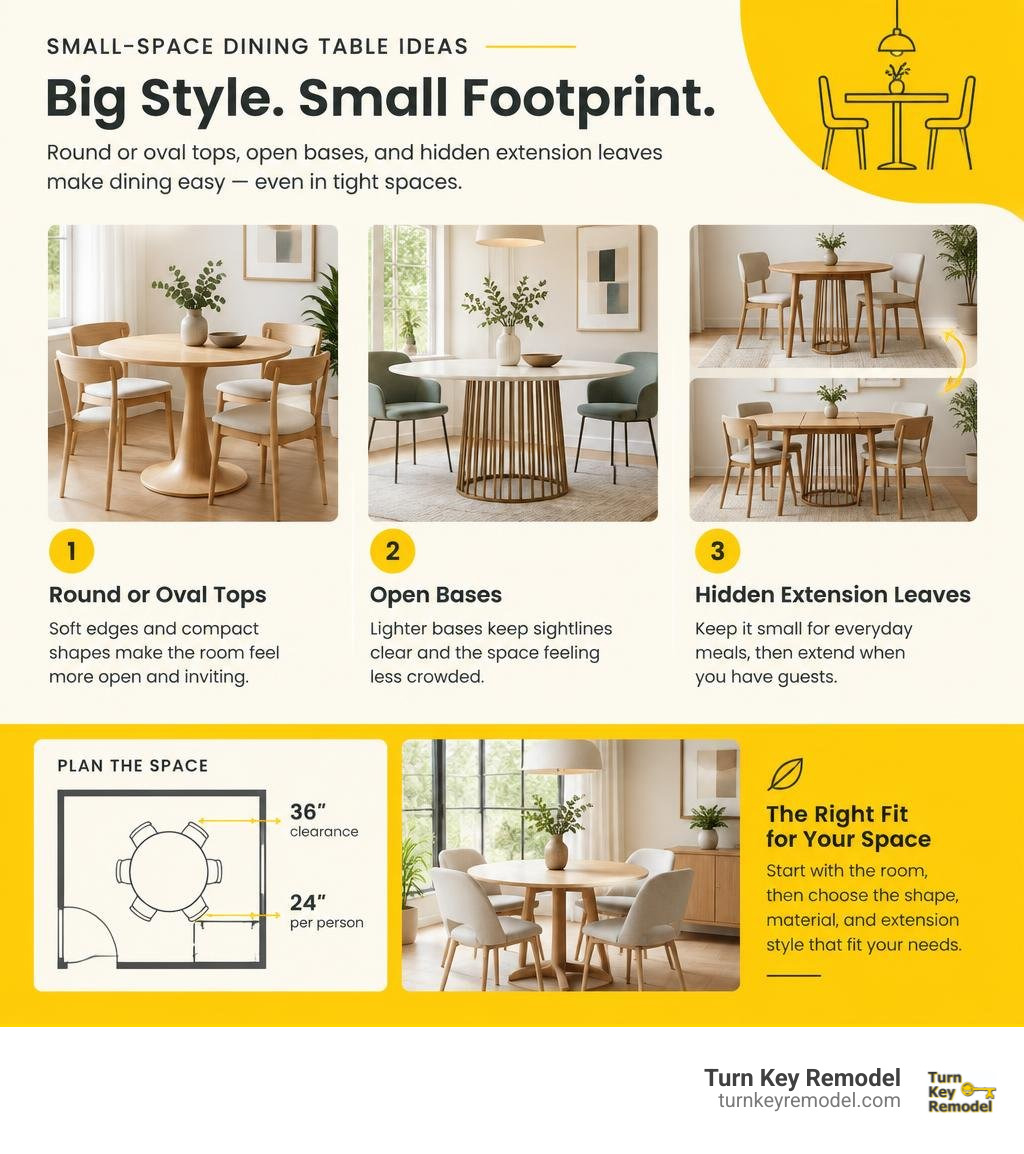
The best new dining table designs for small spaces pair a compact shape with flexible seating. Look for a round or oval top with a pedestal base to keep the room feeling open. If you host guests, choose a table with hidden extension leaves so it stays small on ordinary days. A slim top, light finish, or open metal base can also reduce visual weight without giving up function.
Start with the room, not the table: measure where chairs will pull out and where people need to walk. Then choose the shape, material, and extension style that fit both weeknight meals and larger gatherings. In a compact dining area, every inch matters, so the right new dining table design should work as hard as you do. It should support daily breakfasts, remote work, homework sessions, and weekend entertaining without forcing you to rearrange the room each time.
I’m Mark Apicella, owner and president of Turn Key Remodel, with more than eight years of remodeling experience and a team that includes in-house interior design. I use that background to weigh new dining table design options against the layout, seating needs, and traffic flow of a home. Over the years, I have seen how the wrong table can make a small dining space feel cramped and unusable, while the right one can make the same square footage feel open, polished, and ready for guests.
Space-Conscious Shapes and Dimensional Proportions
When planning a compact dining area, traffic clearance and perimeter flow dictate comfort. A cramped table turns every meal into an obstacle course, while an appropriately scaled piece preserves visual breathing room. In small spaces, leaving 36 inches of clearance between the table edge and the nearest wall or piece of furniture allows people to walk past without shifting chairs. For seated comfort, allow at least 24 inches of horizontal width per person along the perimeter.
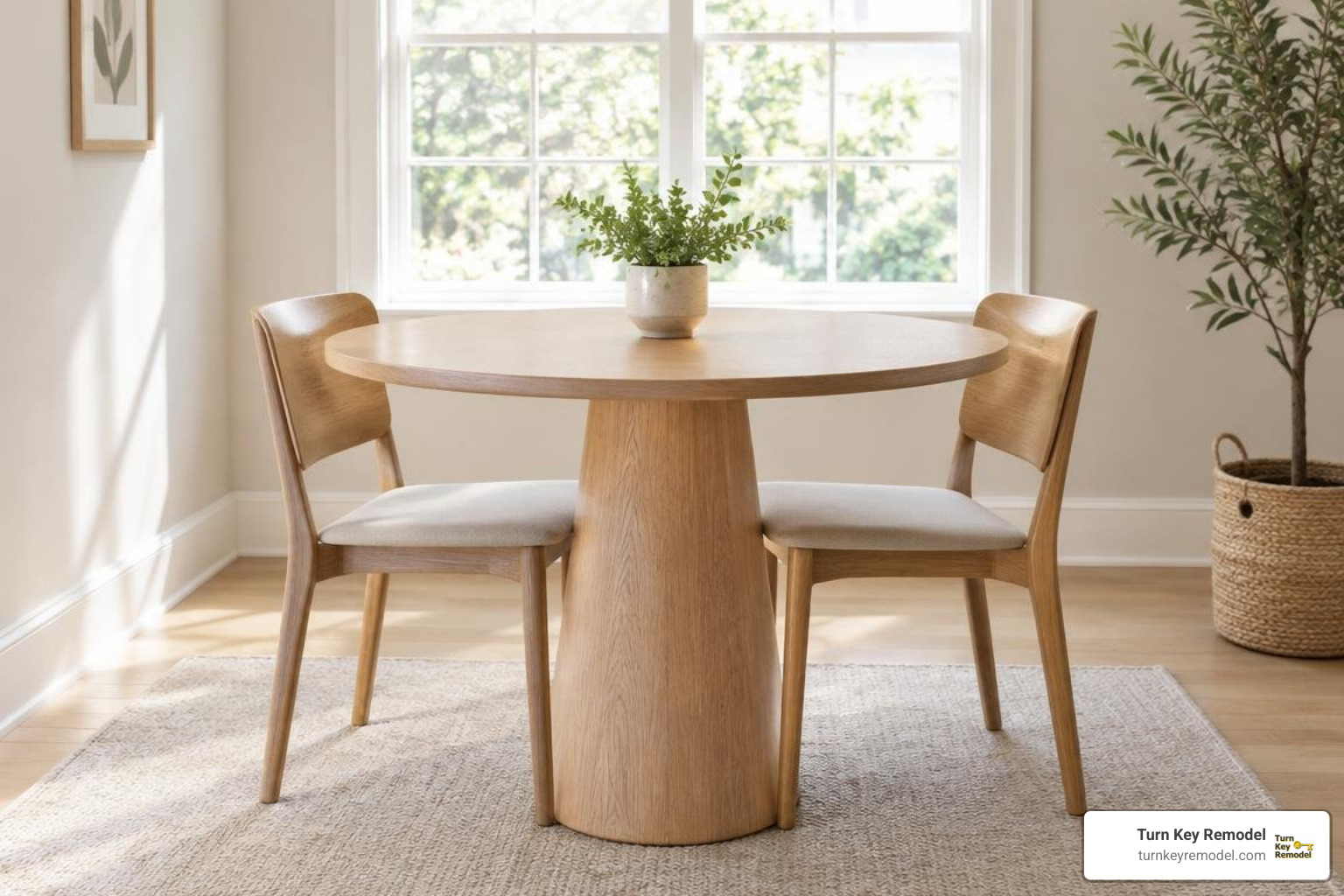
Table Shapes That Maximize Usable Square Footage
Choosing the right geometric profile can visually double the perception of floor area. Round silhouettes and organic oval profiles eliminate sharp corners, smoothing the path of travel through breakfast nooks and open layouts. Sculptural designs inspired by natural tree canopies—such as the Canope Rectangular Dining Table · SECOLO—showcase how asymmetric tops with concentric wood grains draw the eye inward to optimize spatial flow.
Pedestal bases take this spatial efficiency further by centralizing structural support. Replacing standard four-corner legs with a central column frees up outer floor space, allowing chairs to tuck entirely underneath when not in use. This is especially useful in galley-style dining zones, where even a few inches of reclaimed walkway can make the difference between a room that feels navigable and one that feels blocked.
Seating Capacity by Table Dimensions and Diameter
To select the right piece, balance your household’s daily seating needs against room dimensions. The quick-reference guide below details seating capacities across popular circular and rectangular dimensions:
| Table Shape | Dimensions / Diameter | Seating Capacity | Best Layout Fit |
|---|---|---|---|
| Round | Ø 60–70 cm (24–28 in) | 2 seats | Studio nooks & small bistro corners |
| Round | Ø 80–110 cm (31–43 in) | 3–4 seats | Compact kitchen dining areas |
| Round | Ø 120–140 cm (47–55 in) | 5–6 seats | Dedicated square dining rooms |
| Round | Ø 150–170 cm (59–67 in) | 7–8 seats | Open-plan entertaining zones |
| Round | Ø 180–200 cm (71–79 in) | 9–10 seats | Spacious dining layouts |
| Rectangular | 48–60 in Length (122–152 cm) | 4–6 seats | Narrow galley dining zones |
| Rectangular | 72–84 in Length (183–213 cm) | 6–8 seats | Open-concept main living areas |
| Rectangular | 96–108 in Length (244–274 cm) | 8–10 seats | Large formal gathering spaces |
That these figures assume standard dining chairs. If you plan to use armchairs, benches, or upholstered seating, add a few extra inches per place setting to avoid a squeezed feel.
Dining Table New Design Trends Redefining Small-Space Aesthetics
Modern dining design trends treat furniture as architectural art that defines an interior without adding visual clutter. Rather than relying on heavy, dark forms, designers use sleek lines, tailored geometry, and material balance to create statement focal points that maintain an airy feel. The result is a new dining table design that feels intentional and sculptural, yet never overwhelms the room.
Sculptural Bases and Op Art Dining Table Concepts
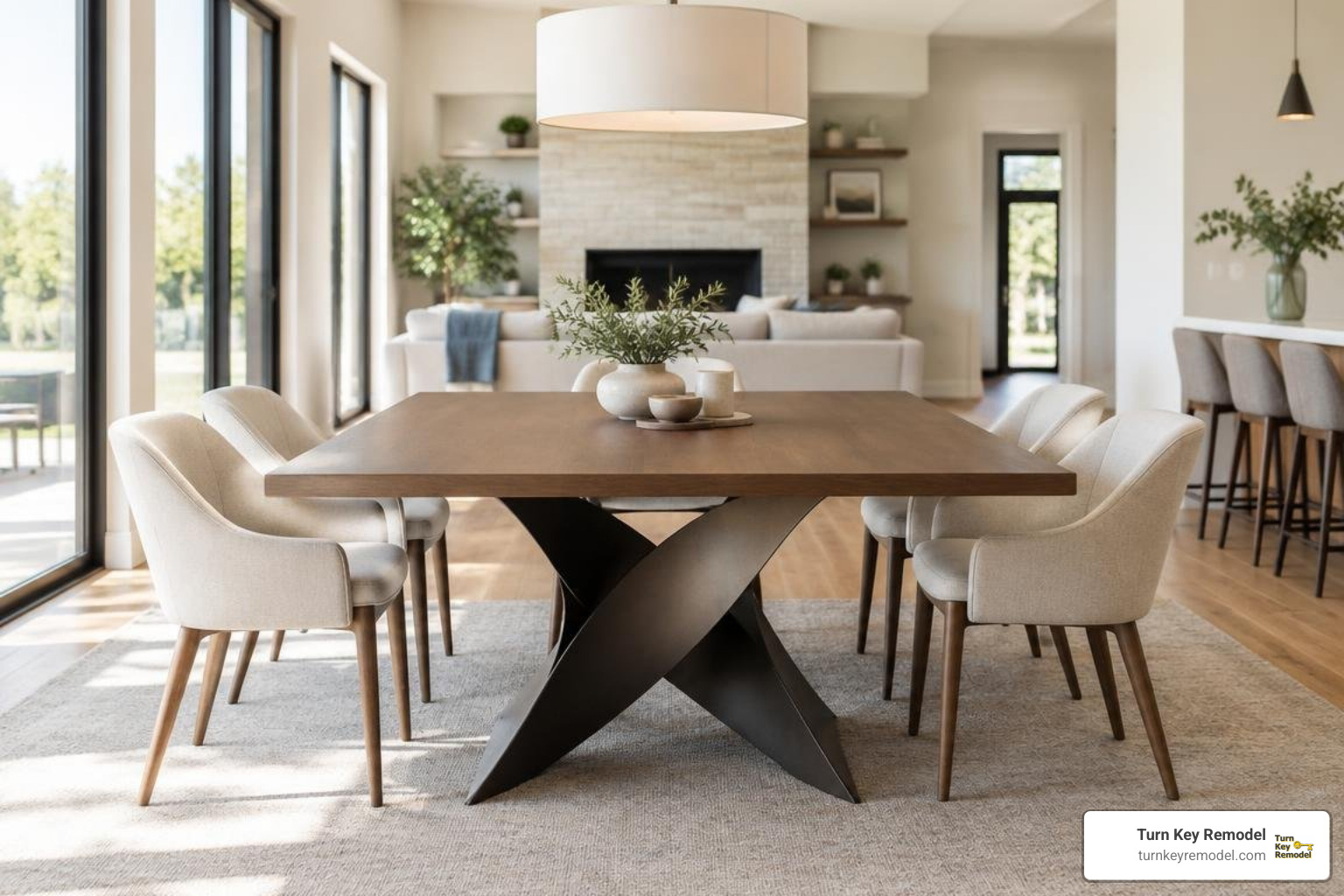
Innovative leg designs manipulate perspective to make compact rooms feel expansive. For instance, the Phantom Dining Table uses slatted mild steel legs that create an Op Art visual effect; the base forms an ethereal circular pattern that shifts as you walk past. This transparency lets light pass straight through, keeping the room visually open.
Similarly, monolithic and minimalist structures redefine luxury without excess bulk. The AB Dining modern table – Designed by Aldo Bakker reinterprets classical console balance with a wood top featuring a rounded underside and rigid elliptical polyurethane legs in matte lacquer. These smooth contours eliminate harsh shadow lines, softening the room’s visual boundaries.
Mixed Materials and High-Performance Finishes
Today’s leading furniture surfaces blend durability with refined aesthetics. Matte lacquers, tempered glass, and mixed metal frames are paired with stain-resistant dining and kitchen surfaces like non-porous ceramic slabs and stone-composite tops. Ceramic offers exceptional resistance to heat, scratches, and stains, making it an ideal surface for work-from-home tasks and daily family dining alike.
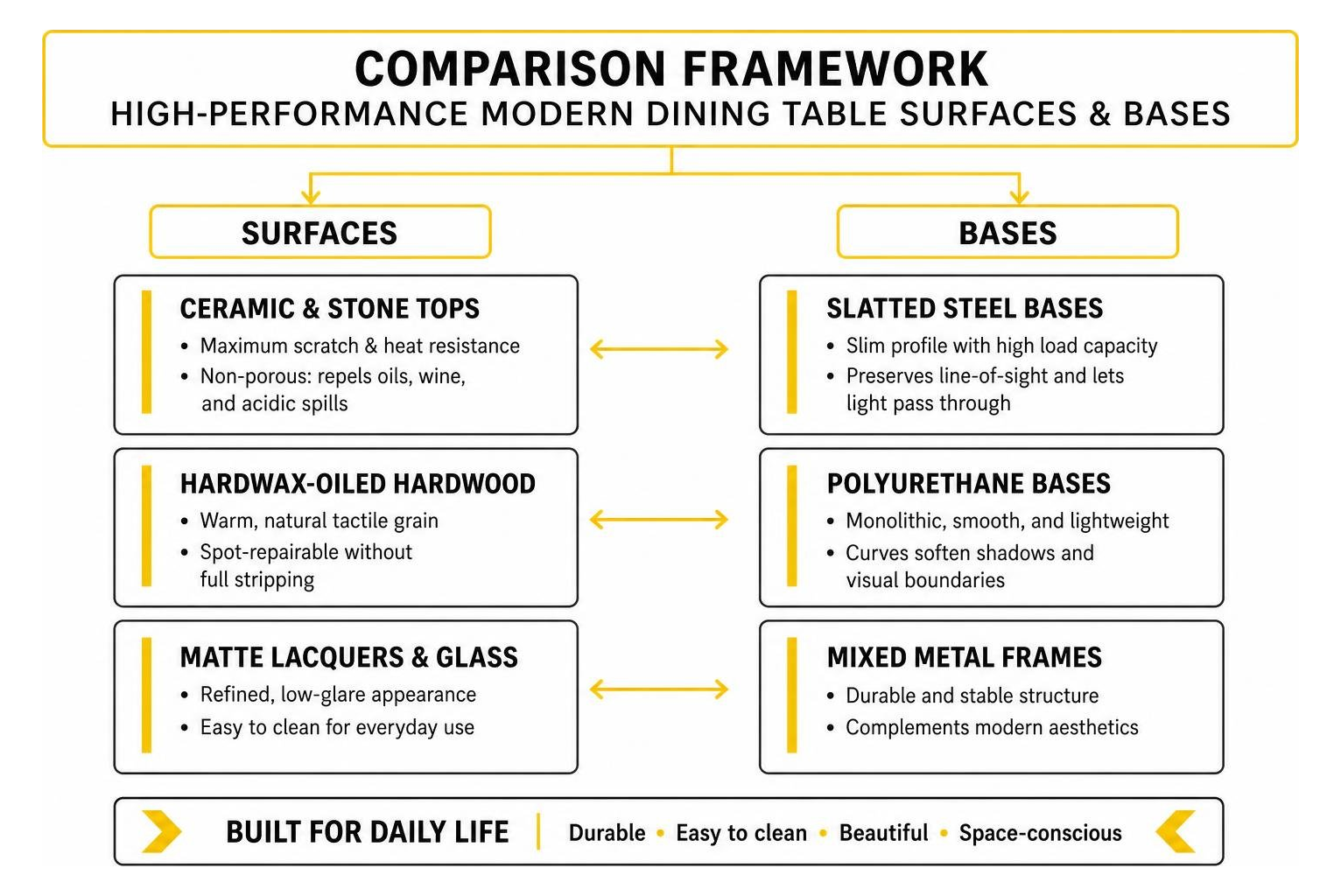
Solid woods treated with non-toxic oils, such as plant-based hardwax oil, preserve the tactile warmth of natural timber while providing water repellency. This combination of performance and natural character is especially appealing in small spaces, where the table often serves as both dining surface and visual anchor.
Smart Extension Mechanisms and Modular Flexibility
Modern extendable tables avoid clunky mechanisms and bulky seams. Today’s high-performance engineering balances a tidy, compact daily footprint with the capacity to host larger gatherings on demand. For small-space homeowners, this flexibility is essential: the table can stay modest for everyday use, then expand smoothly when friends or family arrive.
Concealed Butterfly and Rotating Leaf Innovations
New extension hardware makes expanding a table smooth and effortless. The Sipario Ext Wood Table by Tonin Casa utilizes a soft-closing rail system that glides open to reveal concealed leaves, keeping moving parts tucked away beneath a clean wood top.
Round extendable models, like the LAYLA | Extendable Round Dining Table – Dark Walnut, use modular leaf additions where each 40 cm leaf insert adds two comfortable seats. This approach allows a 4-person circular table to smoothly expand for 6 to 10 guests without requiring tools or off-site leaf storage. Because the leaves store inside the table itself, you never have to find closet space for bulky panels.
Integrated Benches and Drop-Leaf Versatility
To reclaim perimeter walkway space, pair your table with space-saving custom cabinetry or low-profile bench seating. Built-in banquettes and slide-under benches allow tables to rest closer to perimeter walls, saving floor space while retaining seating capacity. When paired with drop-leaf sides, modern compact tables can fold down flat against a wall or island when not in use. This wall-hugging layout is particularly effective in studio apartments, breakfast nooks, and open-plan kitchens where every square foot must serve multiple purposes.
Sustainable Craftsmanship and Tailored Customization
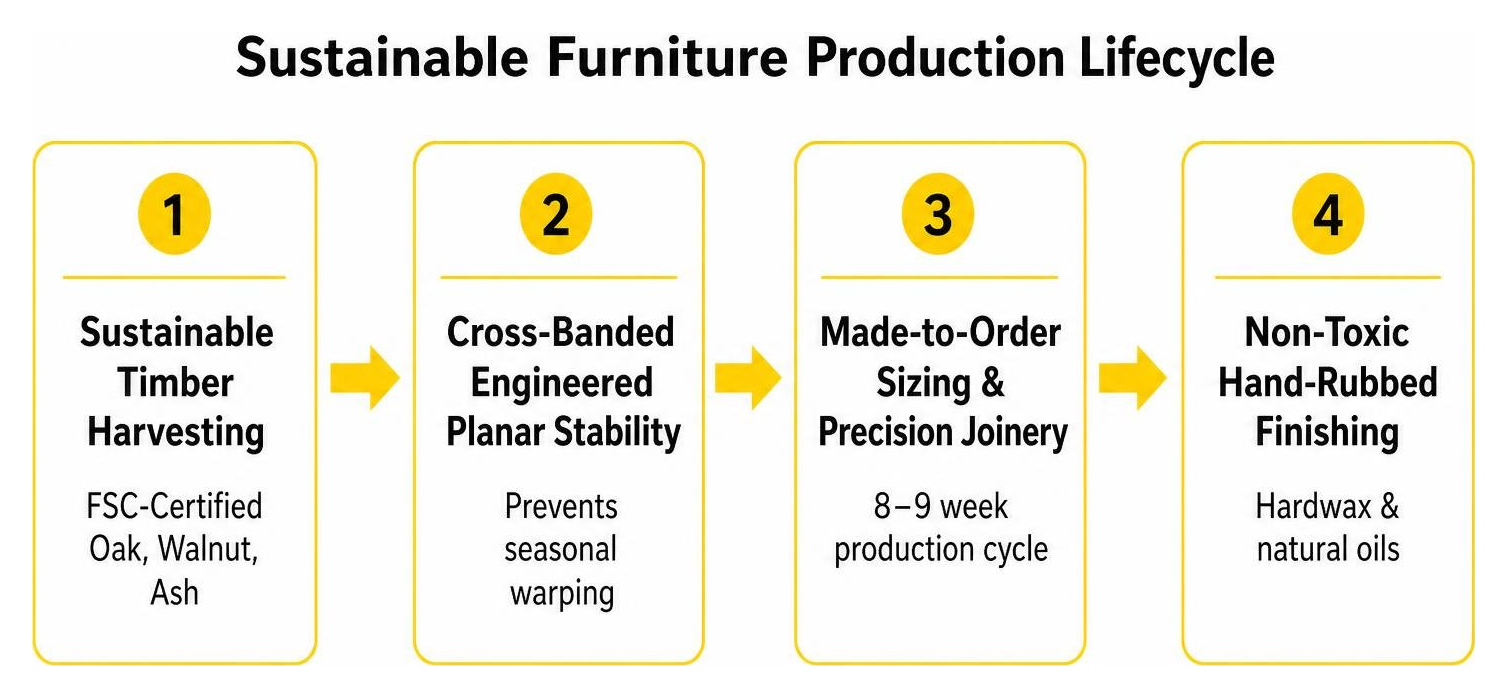
Modern dining tables increasingly emphasize mindful material sourcing and made-to-order construction, especially in homes designed around open-concept kitchen and dining integration. For homeowners who want a new dining table design that lasts, sustainable materials and repairable finishes offer long-term value beyond fast-furniture trends.
FSC-Certified Solid Woods and Engineered Stability
Craftsmen today rely on responsibly harvested timbers such as American black walnut, white oak, and European ash. Pieces like the OCTOBER DINING TABLE – De La Espada USA use solid wood structural framing paired with engineered solid wood tops. Cross-banding the interior solid planks improves planar stability across seasons, preventing the warping or splitting common in wide timber tables exposed to humidity shifts.
Bespoke Sizing, Palette Matching, and Repairability
Made-to-order builds allow you to tailor dining furniture to your home’s exact layout. Selecting custom RAL leg lacquer shades or specific timber stains ensures the table coordinates with surrounding cabinetry and trim. Unlike synthetic laminate surfaces that chip irreversibly, natural timber finished with hand-applied wax oils can be spot-repaired and refreshed over time, preserving heirloom-quality furniture for years to come. This repairability is a major advantage in busy households, where a scratched surface should not mean replacing the entire table.
Frequently Asked Questions About Dining Table Selection
What is the best dining table shape to make a small room look bigger?
Round and oval pedestal tables are the most effective shapes for making a compact room feel larger. By eliminating sharp corners, they open up perimeter floor area and ease foot traffic. A central pedestal eliminates corner legs, creating clearer sightlines and letting chairs tuck away neatly. This keeps the visual footprint light while preserving legroom clearance for everyone seated.
How do new extendable table mechanisms differ from traditional drop-leaf tables?
Modern extendable tables use internal aluminum rail systems, soft-close dampers, and hidden butterfly folding mechanisms. These allow a single person to glide the top open smoothly. The expansion leaves store neatly within the internal frame, eliminating visible side hinges or loose support arms. Traditional drop-leaf tables, by contrast, often rely on external hinges and fold-down sides that can look dated and take up wall space.
Which dining table top materials offer the highest durability for daily multi-use spaces?
Ceramic and stone composite tops provide the highest resistance to heat, scratches, and stains. If you prefer the look of natural timber, solid hardwoods treated with plant-based hardwax oils offer excellent durability along with easy, spot-repairable maintenance. For busy households that use the table for dining, homework, and remote work, these high-performance surfaces reduce the worry of everyday wear.
Conclusion
Maximizing a compact dining area does not mean compromising on high-end craftsmanship or hosting capability. By pairing open sculptural bases, durable surfaces, and smooth extension systems, modern dining table designs turn tight floor plans into inviting, functional gathering spaces. The right new dining table design can make a small room feel larger, more organized, and more welcoming without requiring a major remodel.
At Turn Key Remodel, we help Orange County homeowners create balanced, open-concept living spaces through tailored interior design and space planning. Whether you are reconfiguring a dining nook in Yorba Linda, updating a kitchen layout in Anaheim Hills, or undergoing a whole-home renovation in Tustin, our team delivers seamless project execution from concept to completion. Contact us today to discuss your next project.