
How Much Does an Orange County Kitchen Renovation Cost
What Does an Orange County Kitchen Renovation Cost?
Plan on roughly $25,000 to $75,000 for an Orange County kitchen renovation. The final price depends on the size of your kitchen, whether you change the layout, and the cabinets, countertops, and appliances you choose. Set aside another 15% to 20% for hidden issues or changes during construction.
The remodel itself often takes 6 to 10 weeks, but design, material orders, and permits can add time before work begins. A detailed scope and a written estimate will help you compare contractors and keep the budget clear. According to the National Kitchen and Bath Association, kitchen projects typically allocate about 30% of the budget to cabinetry, 14% to countertops, and 5% to lighting, which serves as a helpful benchmark when budgeting for a kitchen renovation orange county homeowners can rely on.
I’m Mark Apicella, owner and president of Turn Key Remodel. I’ve spent more than eight years helping homeowners plan and manage kitchen renovations in Orange County, from design through construction.

Helpful guides for planning your project:
Real Cost Breakdown of a Kitchen Renovation Orange County Project
When planning a kitchen remodel in Southern California, understanding where every dollar goes is the key to preventing budget creep. Orange County housing stock ranges from mid-century ranch homes in Anaheim Hills and Placentia to newer custom builds in Yorba Linda, Tustin, and Brea. Because home values and labor markets in our region reflect higher standards, renovation costs are structured around specific tiers of finish and structural complexity.
To help you establish realistic parameters before swinging a single hammer, we have compiled a quick overview of costs across different renovation tiers:
| Remodel Tier | Typical Price Range | Key Scope Elements | Average Labor & Trade Share |
|---|---|---|---|
| Minor / Cosmetic | $25,000 – $40,000 | Cabinet painting or refacing, quartz overlay or entry-tier slab, luxury vinyl plank flooring, updated sink/faucet, standard appliance suite replacement (same footprint). | 30% – 35% |
| Midrange / Custom | $40,000 – $75,000 | Semi-custom solid wood cabinets, full slab quartz or granite countertops, designer tile backsplash, layout reconfigurations within existing walls, upgraded LED task lighting, mid-tier stainless appliances. | 35% – 40% |
| Upscale / Luxury | $75,000 – $130,000+ | Full custom cabinetry to the ceiling, premium natural stone (marble, quartzite), wall removals, plumbing/gas relocations, integrated high-end appliances, structural beam engineering, smart home automation. | 40% – 50% |
Before signing contracts, review our comprehensive kitchen remodel cost and process cheat sheet to ensure your budget accounts for materials, labor, city fees, and architectural drafts.
Minor vs. Major Remodel Cost Expectations
A minor kitchen remodel focuses primarily on cosmetic and surface-level upgrades while keeping the existing footprint intact. If your cabinet boxes are structurally sound, you can refresh them by repainting or swapping out the door fronts. Pairing updated cabinets with durable quartz counters and sleek modern hardware can give your space a completely new personality for a fraction of the price. If you are working within a compact footprint, exploring realistic budgets for small kitchen renovations can help you achieve an upscale aesthetic without overspending.
Major kitchen remodels, by contrast, involve taking the space down to the wall studs. This approach allows you to:
- Remove load-bearing or partition walls to establish an open-concept great room.
- Relocate the sink, dishwasher, or range to create a more functional kitchen work triangle.
- Re-route plumbing, update 50-year-old electrical panels, and bring mechanical infrastructure up to current building codes.
While major renovations require a larger initial investment, they deliver a dramatic lifestyle upgrade and eliminate the hidden plumbing or wiring hazards common in older homes.
Major Budget Drivers: Cabinets, Countertops, and Labor
In almost every kitchen project, your budget breaks down into three heavy hitters:
- Cabinetry (30% to 40% of overall budget): As the architectural backbone of your kitchen, cabinets absorb the largest share of material costs. Options range from budget-friendly modular units to handcrafted custom builds. Utilizing professional cabinetry services and installations ensures tight reveals, soft-close hardware, and seamless integration with ceiling crown moldings.
- Countertops and Surfaces (10% to 15% of overall budget): Kitchen counters must balance durability with elegance. Sourcing premium materials through dedicated surfaces services and natural stone slabs provides heat, scratch, and stain resistance suited for active culinary spaces.
- Skilled Trade Labor and Engineering (35% to 45% of overall budget): High-quality finish carpentry, certified master plumbing, and licensed electrical work require skilled tradespeople. Complex jobs involving structural wall removal also necessitate structural engineering calculations and architectural drafting fees to ensure home safety and code compliance.
Project Timelines and Step-by-Step Remodeling Process

A successful kitchen renovation moves forward in distinct, orderly phases. In Orange County, the typical construction phase runs between 6 and 10 weeks. However, the comprehensive timeline—from initial design concepts to final trade walkthroughs—spans 12 to 18 weeks when accounting for 3D renderings, material lead times, and municipal permitting.

Phase 1: Planning, Design, and 3D Visualizations
Every great kitchen begins with thoughtful planning. During this stage, we take precise laser measurements of your space and discuss your culinary routines, storage pain points, and aesthetic preferences.
Working through how to plan a successful home remodeling project allows you to explore photorealistic 3D renderings of your future space. These visualizations remove the guesswork, letting you preview how cabinet finishes, island dimensions, and stone veining harmonize before ordering materials. All slab selections, plumbing fixtures, tile patterns, and paint schedules are finalized during this phase to prevent costly mid-construction change orders.
Permitting Requirements for Kitchen Renovation Orange County Projects
Permits are legally required across Orange County municipalities—including building departments in Yorba Linda, Placentia, Anaheim Hills, Tustin, and Brea—whenever a project involves:
- Altering existing plumbing runs or moving drain lines.
- Modifying electrical circuitry, adding dedicated appliance circuits, or updating panel capacity.
- Moving or removing load-bearing and shear walls.
- Modifying HVAC ductwork or exterior ventilation hoods.
Navigating municipal building departments requires submitting detailed schematic plans and Title 24 energy compliance documentation. A full-service design-build contractor handles plan drafting, permit processing, and city inspection scheduling on your behalf, ensuring your renovation passes rough and final inspections smoothly.
Phase 2: Demolition, Rough-Ins, and Final Installation
Once permits are secured and materials arrive at our staging warehouse, physical construction begins:
- Selective Demolition: The old space is dismantled while protective dust barriers, floor coverings, and negative-air scrubbers keep the rest of your home clean and livable.
- Rough Trades: Plumbers, electricians, and HVAC technicians run new supply lines, gas pipes, dedicated 20-amp circuits, and ventilation ducts behind the open studs.
- Drywall and Subfloor Prep: Walls are closed, taped, textured, and primed, while subfloors are leveled to receive finished flooring.
- Cabinetry and Countertop Setting: Cabinet bases and uppers are anchored and leveled. Precise laser templates are taken for countertop fabrication, followed by slab installation and sink mounting. Incorporating functional kitchen island design ideas during this step adds valuable prep space, under-counter storage, and casual seating.
- Fixtures and Lighting: Backsplashes are set and grouted, plumbing fixtures are hooked up, and strategic kitchen lighting plans and layouts—including under-cabinet task LEDs and statement pendant lights—are brought to life.
- Appliance Installation and Punch List: Final appliances are fitted and calibrated, trim molding is detailed, and a comprehensive walkthrough ensures every drawer, hinge, and switch meets high standards.
Material Selections and Strategic Value Upgrades
Selecting durable, high-performance materials guarantees that your newly renovated kitchen retains its beauty and utility through decades of daily use.
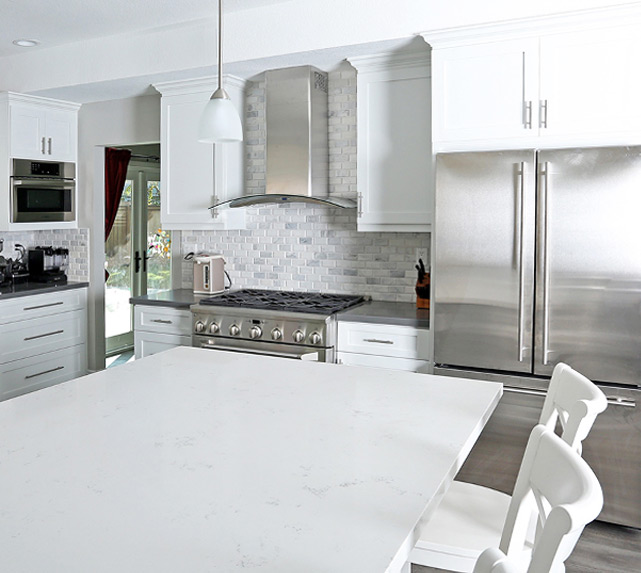
- Countertop Surfaces: Engineered quartz remains the top choice for local homeowners due to its non-porous surface, stain resistance, and minimal maintenance. Natural quartzite and granite provide unique organic movement and high heat tolerance for high-traffic cooking zones.
- Cabinet Materials: Solid hardwood face frames (maple, oak, or alder) paired with 3/4-inch plywood box construction deliver long-lasting durability against Southern California humidity shifts, easily outperforming standard particleboard.
- Flooring: Large-format porcelain tile and luxury engineered hardwood are popular choices. Waterproof luxury vinyl plank (LVP) also offers an attractive balance of scratch resistance, water protection, and underfoot comfort.
- Appliances: High-efficiency induction cooktops, ultra-quiet dishwashers (under 42 dBA), and counter-depth smart refrigeration maximize usable floor space and lower long-term utility costs.
Maximizing Resale ROI on a Kitchen Renovation Orange County Property
In our regional real estate market, the kitchen remains the single most scrutinized room during home tours. Over 60% of Orange County homeowners cite increasing home value as their main motivation for remodeling.
Historically, kitchen renovations in Orange County recoup 60% to 80% of their cost at resale. Minor to midrange remodels perform exceptionally well, yielding up to a 72.1% return on investment. Furthermore, modernizing your space with energy-efficient smart appliances, LED fixtures, and sustainable materials can boost your property value by up to 10%. Buyers in communities like Tustin and Yorba Linda consistently pay a premium for turnkey, move-in-ready kitchens that eliminate the need for immediate updates.
Avoiding Costly Remodeling Mistakes and Contractor Selection
A kitchen renovation is an investment in your home’s equity and your family’s daily comfort. To prevent avoidable headaches, keep these best practices in mind:
- Avoid Ordering Materials Mid-Project: Late delivery on a single sink faucet or specialty tile can halt construction for weeks. We ensure all long-lead items are safely warehoused before demolition begins.
- Maintain a Dedicated Contingency Fund: Even well-planned projects can reveal hidden subfloor dry rot, out-of-code plumbing, or past electrical shortcuts once walls are opened.
- Resist Layout Changes Mid-Stream: Moving a gas line or sink after rough inspections have closed causes schedule delays and extra administrative costs.
- Vet Your General Contractor Thoroughly: Always confirm active CSLB licensing, workers’ compensation policies, general liability coverage, and local client references. Following a structured guide for vetting licensed kitchen cabinet installers and general contractors helps protect your home from unbonded operators.
Frequently Asked Questions About Orange County Kitchen Remodeling
How long does an average kitchen remodel take in Orange County?
The physical construction phase typically takes 6 to 10 weeks. However, when including initial 3D design iterations, material procurement, and city permit reviews, you should plan for a total timeline of 12 to 18 weeks. Approximately 40% of remodeling delays across the industry stem from material backorders, which is why ordering all fixtures and finishes before demo day is critical.
Do I need a permit for a cosmetic kitchen refresh?
If your remodel is purely cosmetic—such as repainting existing cabinets, replacing laminate countertops with quartz in the same footprint, or swapping out light fixtures without altering wiring runs—a building permit is generally not required. However, if you plan to move walls, add new electrical outlets to meet current code, or relocate sink drains and gas lines, your local municipal building department requires formal permits and site inspections.
What percentage should I allocate for unexpected contingency costs?
We recommend setting aside a 15% to 20% contingency reserve above your base contract estimate. In older Orange County neighborhoods, opening walls frequently uncovers hidden plumbing leaks, undersized wiring, unvented drain lines, or uneven subfloors that must be corrected before installing new cabinets and stone finishes.
Conclusion
Renovating your kitchen is one of the most rewarding investments you can make in your home, blending daily functional convenience with substantial long-term equity growth. Navigating material selections, trade scheduling, city building codes, and structural layouts requires an experienced team committed to quality craftsmanship and transparent communication.
At Turn Key Remodel, our design-build approach handles every detail of your renovation under one roof—from initial 3D concepts and permit processing to master carpentry and final fixture installations. Whether you are modernizing a family kitchen in Yorba Linda, updating a classic floor plan in Placentia, or designing a luxury open-concept space in Anaheim Hills, Tustin, or Brea, our team provides 24/7 project communication and a 20-year track record of delivering projects on time and on budget.
Ready to bring your culinary vision to life? Explore our expert kitchen remodel services today to schedule your comprehensive design consultation.