
From Brush to Budget: What Kitchen Cabinet Painting Really Costs
What Does Kitchen Cabinet Painting Cost in 2026?
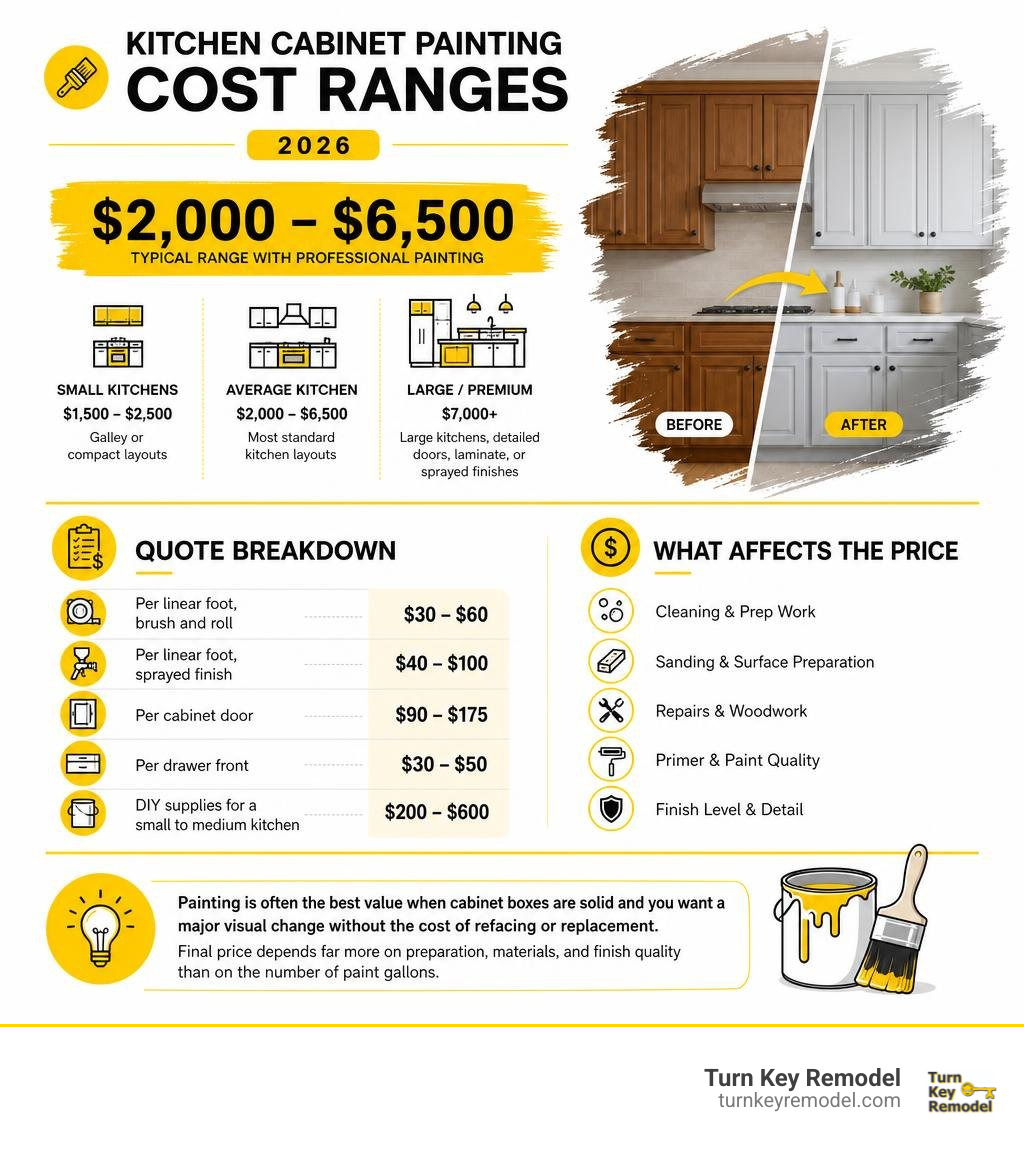
In 2026, the typical kitchen cabinet painting cost is $2,000 to $6,500 when done by a professional. Small galley kitchens may start near $1,500 to $2,500, while large kitchens, detailed doors, laminate surfaces, and sprayed finishes can reach $7,000 or more.
A quick way to sanity-check a quote:
| Pricing method | Typical 2026 range |
|---|---|
| Per linear foot, brush and roll | $30-$60 |
| Per linear foot, sprayed finish | $40-$100 |
| Per cabinet door | $90-$175 |
| Per drawer front | $30-$50 |
| DIY supplies for a small-to-medium kitchen | $200-$600 |
Painting is often the best value when cabinet boxes are solid and you want a major visual change without the cost of refacing or replacement. The final price depends far more on cleaning, sanding, repairs, primer, masking, and finish quality than on the number of paint gallons.
I am Mark Apicella, Owner and President of Turn Key Remodel in Orange County, with more than eight years of residential remodeling experience and a team focused on clear scopes, design support, and reliable project management. In this guide, I will break down kitchen cabinet painting cost so you can compare options, spot incomplete quotes, and choose the right level of finish for your home.
Kitchen cabinet painting cost terms made easy:
The Real Kitchen Cabinet Painting Cost: 2026 Pricing Breakdown
When estimating cabinet projects, homeowners often assume that paint makes up the bulk of the invoice. In reality, paint materials account for only 10% to 20% of an estimate. Because cabinets undergo rigorous daily use—getting touched dozens of times a day—the labor required to achieve a durable finish represents 70% to 85% of total costs.
Industry data from Cabinet Painting Estimate Benchmarks shows that typical projects range between $5.40 and $10.79 per square foot of cabinet surface area. Below is a breakdown of what homeowners can expect across common kitchen sizes and metrics:
| Kitchen Scale / Metric | Approximate Scope | Typical Cost Range | Primary Method |
|---|---|---|---|
| Small Galley Kitchen | 10–15 linear feet (12–16 pieces) | $1,500 – $2,500 | Brush/Roll or Onsite Spray |
| Mid-Size Kitchen | 20–25 linear feet (20–30 pieces) | $3,000 – $5,500 | Offsite Shop Spray (Doors) |
| Large / Custom Kitchen | 30+ linear feet (35+ pieces) | $5,500 – $8,500+ | Full Industrial HVLP Spray |
| Per Opening (Door) | Single cabinet door (front/back) | $90 – $175 per door | Spray booth finish |
| Per Opening (Drawer) | Single drawer front | $30 – $50 per drawer | Spray booth finish |
Estimating Kitchen Cabinet Painting Cost by Size and Layout
Kitchen layout directly affects containment, masking, and labor hours. A compact galley setup in a condo across Tustin or Brea often requires less square footage, but tight quarters mean masking appliances and containment walls takes extra care.
Most established painting specialists enforce a minimum job charge between $1,500 and $1,800 to cover equipment mobilization, shop prep, and travel. For larger U-shaped or open-concept kitchens featuring islands and pantries, costs climb because of the sheer quantity of openings. For a wider perspective on overall budgeting, reviewing our kitchen remodel budget guidelines helps place cabinet work within a complete project scope.
Calculating Kitchen Cabinet Painting Cost: Per Piece vs. Linear Foot
Contractors typically calculate estimates using either linear footage or per-piece (per-opening) counts:
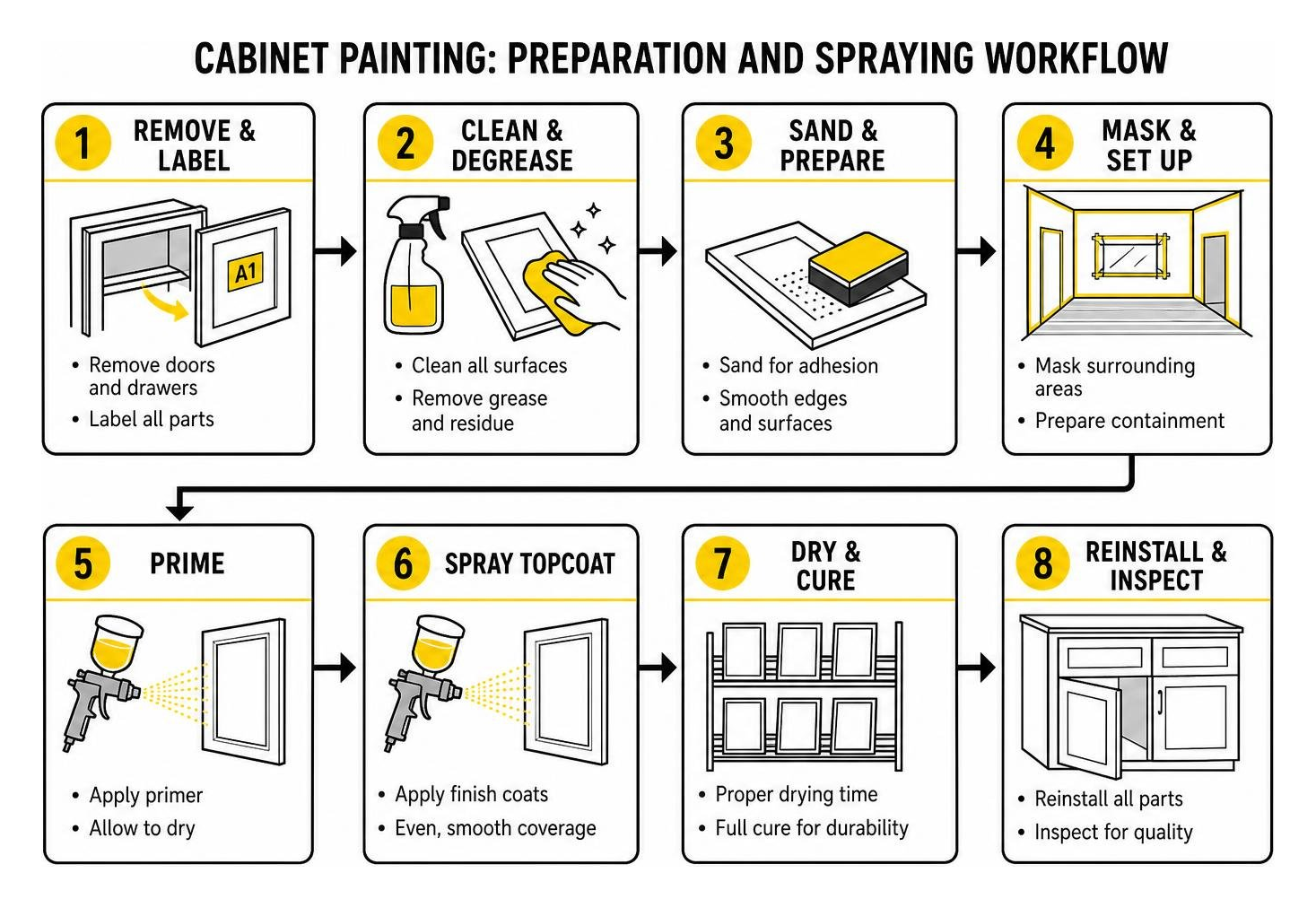
- Per-Piece Pricing: Counting every door ($90–$175) and drawer face ($30–$50) provides the most accurate pricing. This reflects the actual labor required to remove, label, transport, spray, and remount each component.
- Linear Foot Pricing: Standard brush-and-roll applications average $30 to $60 per linear foot, while high-volume low-pressure (HVLP) sprayed finishes run $40 to $100 per linear foot.
To test your own kitchen dimensions, you can experiment with an interactive Cabinet Painting Cost Calculator to check preliminary material and labor calculations.
Key Variables That Shape Your Cabinet Painting Estimate
Cabinet refinishing is far more complex than painting standard drywall. A wide array of technical variables dictate whether a quote lands on the lower or higher end of the pricing spectrum.
Cabinet Material, Condition, and Surface Preparation
The base material dictates the level of preparation and primer chemistry required:
- Solid Wood (Oak, Maple, Cherry): Open-grained woods like oak often require wood-grain filler if a smooth, modern aesthetic is desired, adding $300 to $800 in labor.
- MDF (Medium-Density Fiberboard): Stable and smooth, MDF takes paint exceptionally well, making it a cost-effective substrate.
- Laminate and Thermofoil: Non-porous surfaces require a dedicated bonding primer (such as an industrial solvent-borne or specialized waterborne bonding agent) to prevent peeling. This requires extra mechanical scuff sanding and adds 15% to 25% to prep labor.
Spraying vs. Brushing: Labor, Equipment, and Industrial Finishes
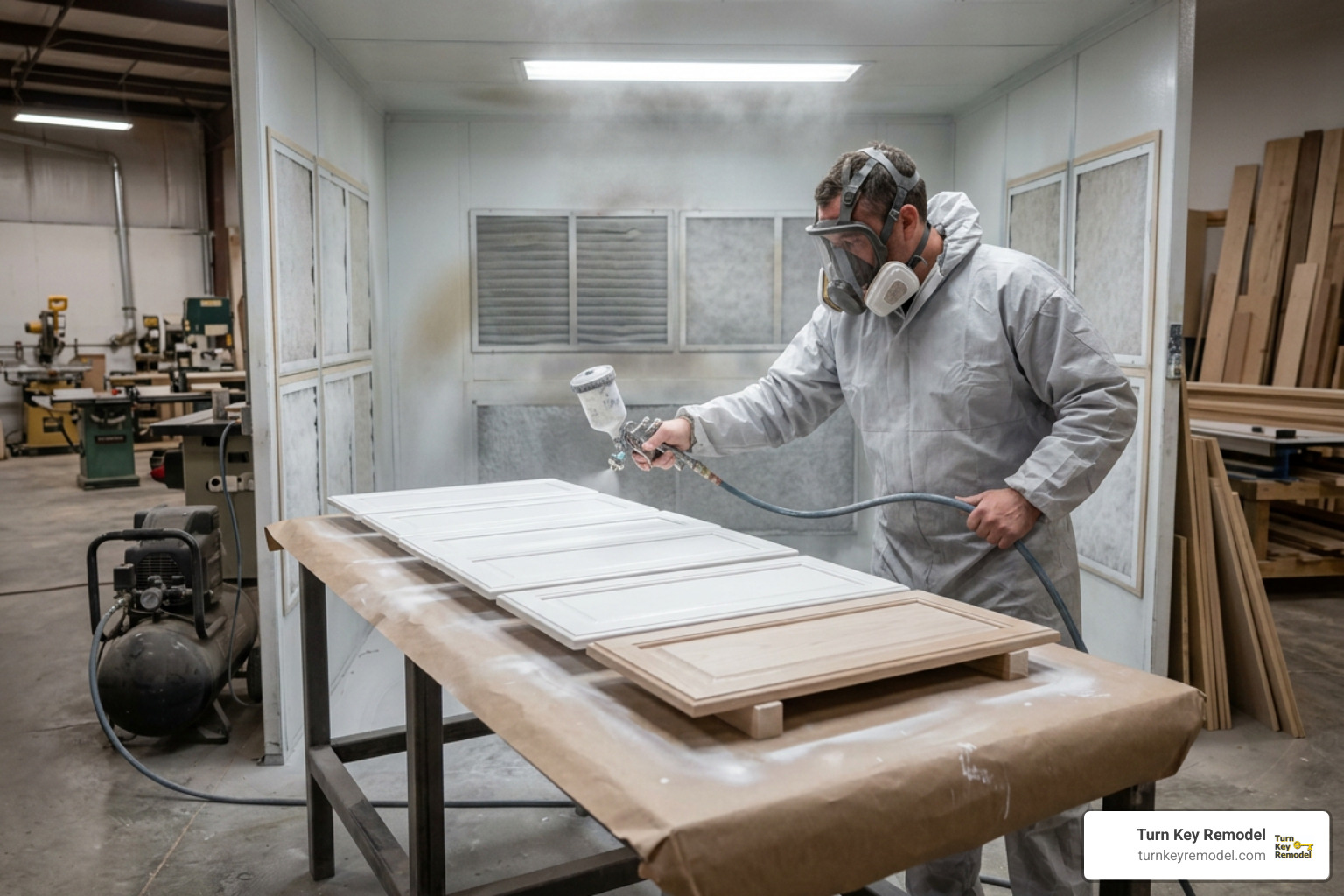
Application method defines both aesthetics and longevity. While brush-and-roll methods are slightly less expensive upfront, they leave micro-textures and roller stipple.
Professional cabinet specialists rely on HVLP spray systems paired with high-performance coatings:
- 2K Polyurethanes & Industrial Acrylics: Cure through chemical cross-linking rather than simple air drying, reaching high pencil hardness ratings for extreme scratch and moisture resistance.
- Waterborne Alkyd Enamels: Provide excellent leveling and durability with low odor and easy cleanup.
- Pre-Catalyzed Lacquers: Fast-curing industrial coatings that produce an ultra-smooth, furniture-grade finish.
Painting vs. Refacing vs. Replacement: Durability, Lifespan, and ROI
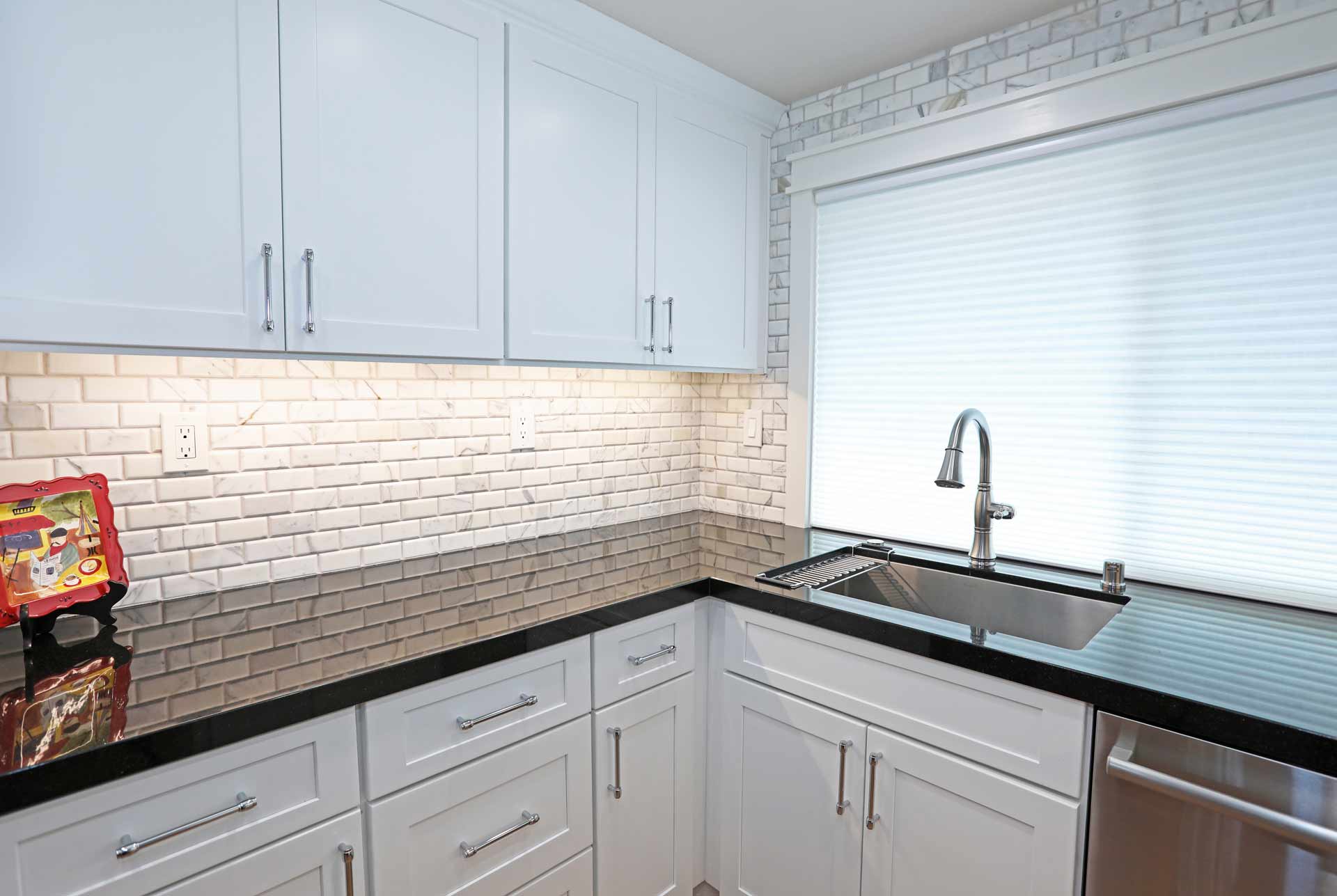
When evaluating kitchen upgrades, homeowners often weigh painting against refacing or full replacement.
Comparing Costs and Longevity Across Cabinet Renovation Options
- Painting ($2,000 – $6,500): Retains existing boxes, face frames, and doors. Lasts 8 to 10+ years with proper industrial coatings.
- Refacing ($4,000 – $15,000): Keeps existing cabinet boxes but replaces all doors, drawer fronts, and applies matching veneer to the face frames.
- Full Replacement ($12,000 – $35,000+): Involves total demolition and installation of new casework. For homeowners seeking layout changes or upgraded internal storage, exploring our custom cabinetry solutions provides the ultimate flexibility.
Return on Investment at Resale
Cabinet painting delivers one of the highest cost-to-value ratios in interior remodeling, frequently recouping 70% to 100% of its cost at resale. Updated, modern colors—such as clean whites, warm taupes, or rich navy accents—instantly elevate buyer perception without the extended disruption of a gut renovation.
Professional vs. DIY Cabinet Painting: Time, Risks, and Red Flags
Deciding whether to take on cabinet painting as a weekend DIY project or hire a professional crew comes down to assessing the value of your time, equipment access, and tolerance for imperfections.
DIY Reality Check: Material Costs and Hidden Pitfalls
While DIY supplies cost between $200 and $600 for high-grade primer, enamel, masking materials, and sprayer rentals, the hidden cost is time. A standard kitchen demands 30 to 60 hours of tedious degreasing, sanding, priming, and multi-coat spraying. Without a dedicated spray booth, airborne dust particles, drips, and improper curing can lead to premature chipping within the first 12 months.
How to Vet Contractor Quotes and Spot Low-Ball Red Flags
When evaluating contractor proposals, keep these guidelines in mind:
- Unrealistically Low Bids: Any whole-kitchen quote under $1,500 is a major red flag that often indicates a wall painter using basic wall latex rather than an industrial cabinet coating.
- Deposit Limits: Legitimate contractors rarely ask for more than 10% to 20% down. Avoid contractors demanding 50% or more upfront.
- Detailed Scope: Ensure the contract explicitly lists cleaning/degreasing, mechanical sanding, specific primer types, topcoat brands, and the total number of coats. When structural adjustments are involved alongside finishing, working with experienced cabinet installers ensures all doors hang level and operate smoothly.
Frequently Asked Questions About Cabinet Painting
How long does professional cabinet painting take, and can I use my kitchen?
A standard professional project takes 3 to 5 business days. Doors and drawer faces are typically removed and taken to an off-site spray facility, while face frames and fixed boxes are prepped and sprayed in place. The kitchen is typically out of commission for heavy cooking for 2 to 4 days during masking and spraying.
What is the best paint for kitchen cabinets to ensure long-term durability?
Industrial 2K waterborne polyurethanes, pre-catalyzed lacquers, and premium hybrid alkyd enamels deliver superior durability. These industrial coatings resist hand oils, cleaning chemicals, and moisture far better than standard residential wall paints.
How can I reduce cabinet painting costs without sacrificing finish quality?
To lower your overall costs:
- Stick with a single paint color across all cabinetry rather than multi-tone combinations.
- Keep your existing hardware configuration to avoid filling and redrilling handle holes.
- Clean and clear your cabinet surfaces and countertops before the crew arrives to reduce prep hours.
Conclusion
A factory-grade cabinet finish can completely reinvent your home without the price tag of a full demolition. At Turn Key Remodel, we bring design-build precision, clear communication, and dedicated craftsmanship to every project across Orange County, Yorba Linda, Placentia, Anaheim Hills, Tustin, and Brea. Whether you are seeking a standalone cabinet refresh or exploring comprehensive kitchen remodeling services, our team ensures your project is completed on time, on budget, and built to last. Contact us today to plan your kitchen transformation.