All About Finding the Best Custom Cabinet Makers
Find the Right Custom Cabinet Maker for Your Home
The best custom cabinetry is built around your room, storage needs, and style – not standard cabinet sizes. To find the right cabinet maker, look for a team that measures your home carefully, provides clear design help and 3D plans, explains materials and construction, gives a written timeline and warranty, and manages installation professionally.
Custom cabinets can cost more than stock options, but they can solve problems that pre-made cabinets cannot: uneven walls, awkward corners, unusual ceiling heights, tight bathrooms, and storage gaps. They can also be designed for kitchens, baths, home offices, closets, laundry rooms, and built-ins.
I am Mark Apicella, Owner and President of Turn Key Remodel in Orange County, with more than eight years of remodeling experience and a team focused on full-service design, project management, and custom cabinetry. In this guide, I will help you understand what to ask, what quality looks like, and how to choose a cabinet maker with confidence.
The Real Value and Benefits of Custom Cabinetry
Choosing custom millwork transforms your home into an exceptionally organized, aesthetically unified living space. Unlike mass-manufactured boxes designed to fit generic templates, custom casework is engineered around your lifestyle, cooking habits, and personal aesthetic. Every partition, pull-out, and panel serves a practical purpose.
Custom casework offers distinct advantages over off-the-shelf units:
- Tailored Storage: Deep drawers for cookware, specialized spice organizers, concealed charging stations, and custom pantry rollouts keep your countertops clean and clutter-free.
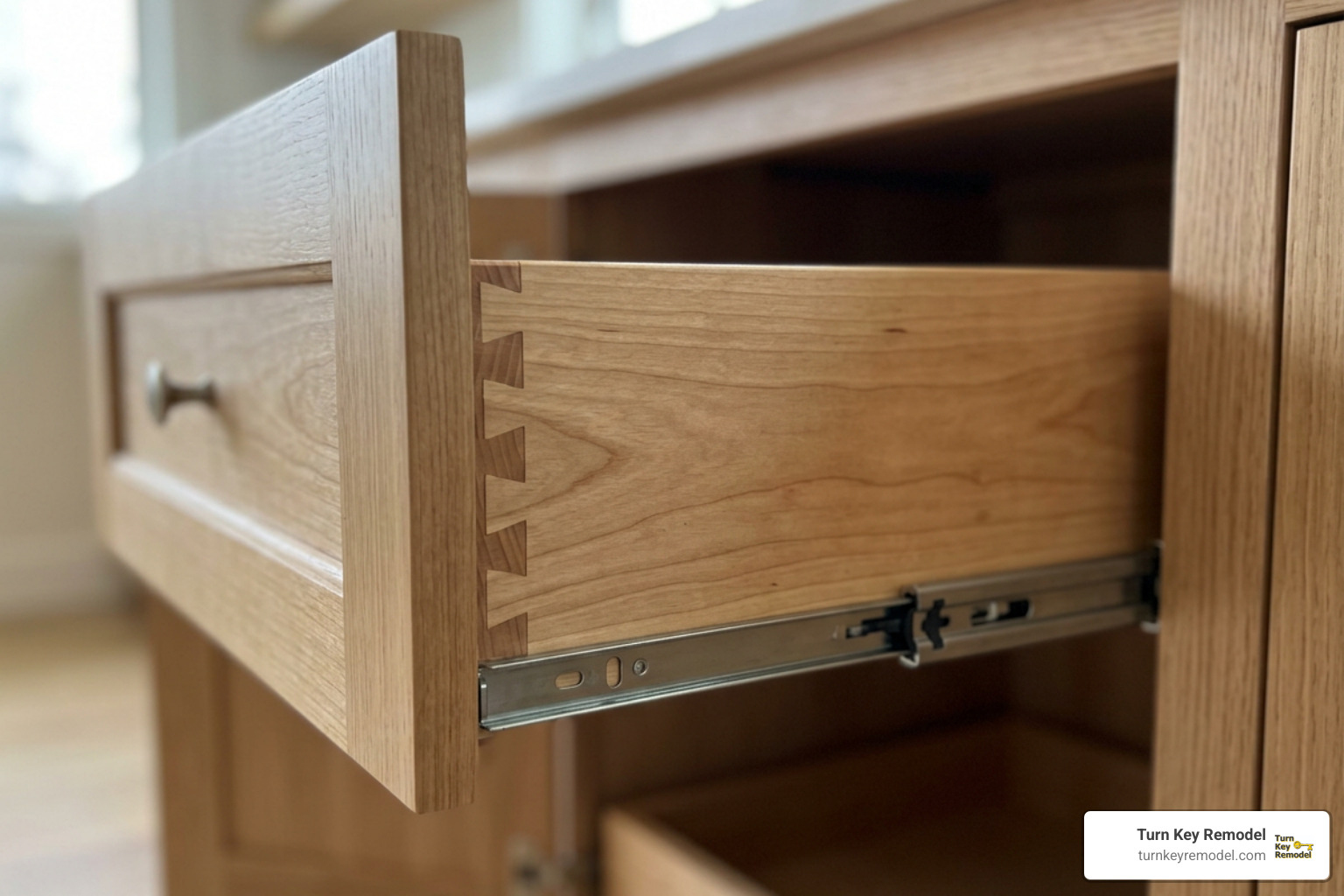
- Heirloom Durability: Handcrafted construction utilizing robust joinery ensures your investment easily withstands daily family use.
- Aesthetic Flexibility: You can select bespoke paint finishes, unique wood grains, intricate door profiles, and integrated accent lighting.
- Seamless Space Integration: Cabinets are built to exact wall fractions, eliminating awkward dead zones or filler strips.
- Soft-Close Hardware: Heavy-duty soft-close hinges and drawer glides protect the woodwork from wear and eliminate slamming doors.
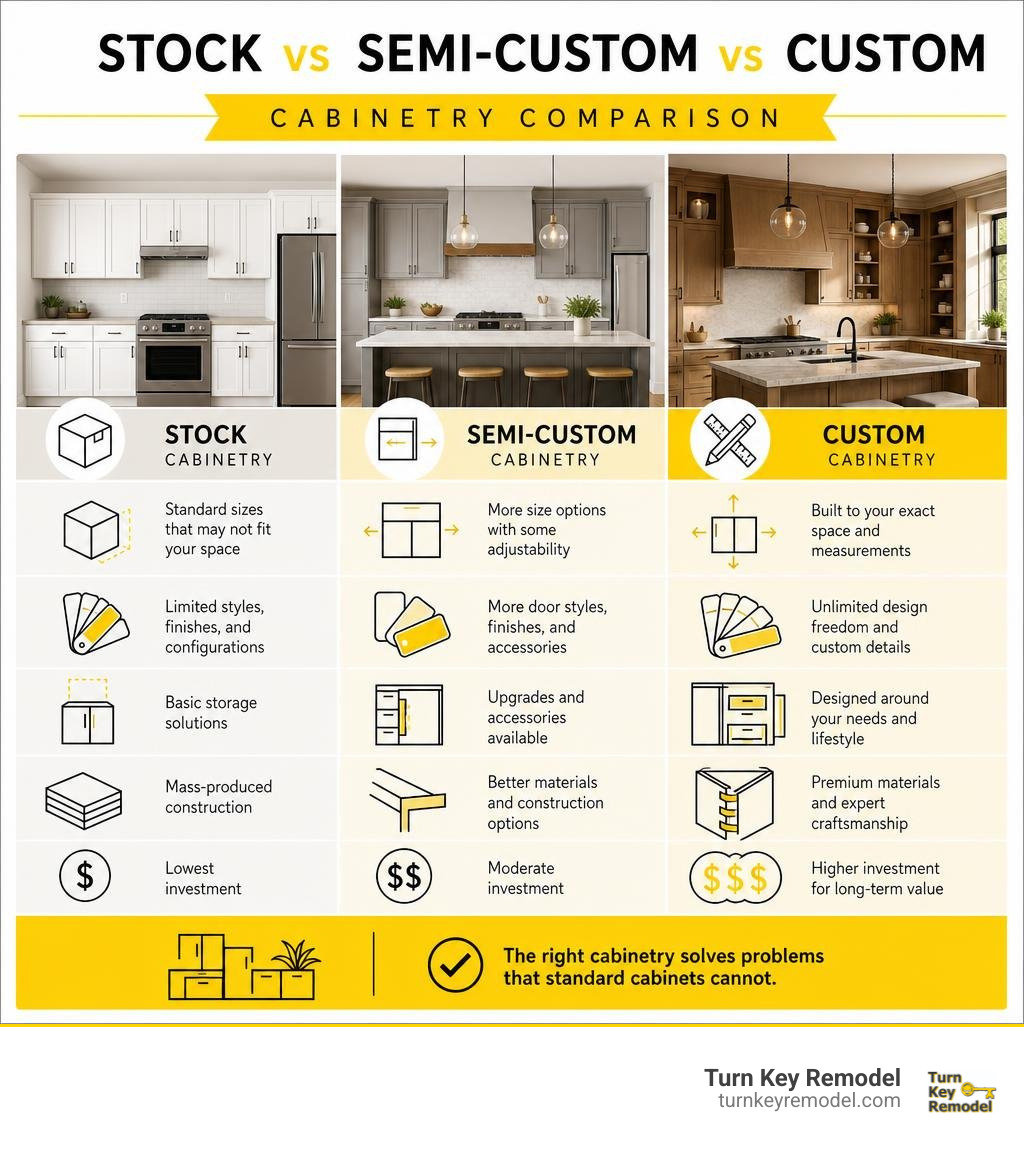
Comparing Stock, Semi-Custom, and Custom Cabinetry
Understanding the key differences between cabinet categories helps you establish realistic expectations for budget, timelines, and design flexibility:
- Stock Cabinets: Mass-manufactured in standard 3-inch modular increments (typically 12 to 36 inches wide) with fixed depths and heights. While readily available for quick delivery, they offer zero dimensional flexibility, limited finish options, and rely heavily on wide filler strips to cover leftover wall space.
- Semi-Custom Cabinets: Built using standard core box dimensions while offering moderate adjustments, such as modifying cabinet depth by an inch or two, expanding the door style selection, and choosing from a larger catalog of stains and paints. They provide a balance between affordability and customization but remain constrained by factory limitations.
- Custom Cabinetry: Built entirely to order with no preset modular restrictions. Any width, height, angle, wood species, and finish combination can be engineered to fit your floor plan down to the exact 1/16 of an inch.
Premium Materials and Dovetail Construction Methods
The longevity of fine millwork comes down to core materials and assembly techniques. Budget units frequently rely on low-density particleboard or thin MDF that sags over time or swells when exposed to humidity.
High-end custom casework uses furniture-grade materials:
- Cabinet Boxes: Constructed from 5/8-inch or 3/4-inch furniture-grade, all-plywood cores that resist moisture, hold screws securely, and provide superior structural stability across long spans.
- Drawer Boxes: Solid hardwood construction (such as maple, birch, or beech) featuring classic dovetail joinery. The interlocking fingers of a dovetail joint offer high tensile strength, ensuring the drawer face will never pull loose from its frame under heavy loads.
- Hardware and Finishes: Heavy-duty, concealed undermount drawer runners and multi-axis adjustable soft-close door hinges. Finishes are applied in clean, climate-controlled spray booths using multi-step conversion varnishes or catalyzed polyurethanes that resist heat, food stains, and daily wear.
Pricing Breakdown and Cost Factors for Custom Storage
Investing in tailored woodwork requires understanding the variables that influence total project costs. To budget effectively, reference our detailed guide to kitchen renovation costs and process.
Pricing by Linear Foot and Project Scope
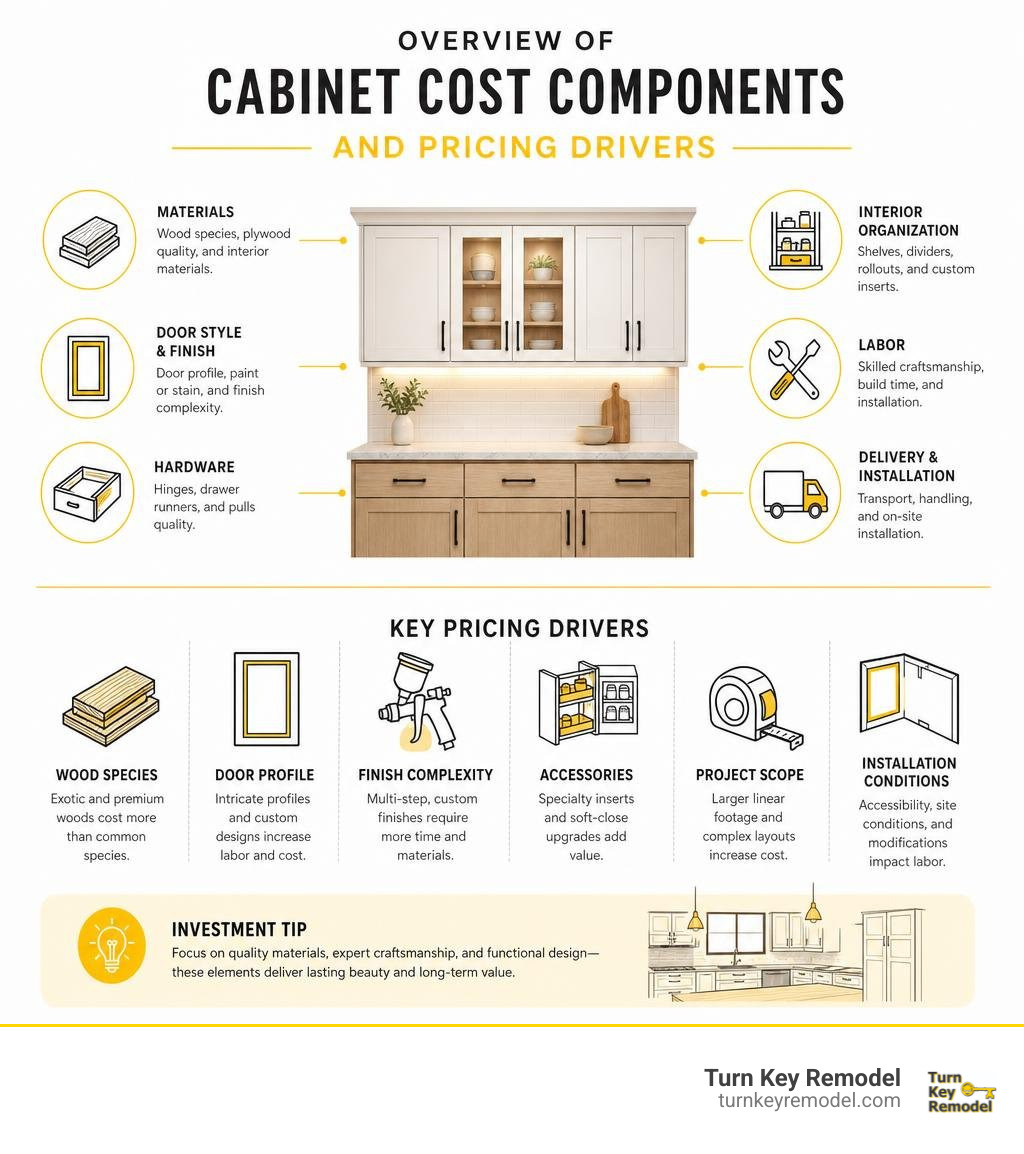
Custom cabinets generally cost between $500 and $1,500 per linear foot installed. Your final cost depends on the wood species, door profiles, finish complexity, interior organizational inserts, and installation requirements.
- Small Projects ($7,000 to $15,000): Tailored bathroom vanities, compact laundry room storage, or entryway drop zones.
- Mid-Sized Projects ($15,000 to $40,000): Standard 10×10 kitchen remodels, complete master bathroom vanity suites, or dedicated home office built-ins.
- Large Scope Packages ($40,000+): Expansive luxury kitchens featuring oversized islands, integrated architectural appliance panels, walk-in pantries, and whole-home millwork packages.
| Cabinet Category | Installed Cost per Linear Foot | Typical 10×10 Kitchen Cost | Standard Lead Time | Sizing Flexibility |
|---|---|---|---|---|
| Stock | $100 – $300 | $3,000 – $8,000 | 1 – 3 Weeks | Fixed 3-inch increments |
| Semi-Custom | $250 – $650 | $8,000 – $18,000 | 4 – 8 Weeks | Limited modifications |
| Custom | $500 – $1,500+ | $15,000 – $40,000+ | 6 – 12+ Weeks | Fully bespoke to 1/16″ |
Long-Term ROI and Impact on Resale Value
High-quality kitchen and bathroom millwork delivers strong returns on investment. Prospective homebuyers consistently prioritize updated kitchens and luxurious master suites.
Custom storage maximizes functional space, eliminates clutter, and establishes an upscale architectural feel that boosts overall home appraisal value. When built using solid hardwoods, robust plywood cores, and durable conversion varnishes, custom casework lasts for decades—outliving stock alternatives several times over without requiring early replacement.
Designing for Unique Layouts and Specialized Rooms
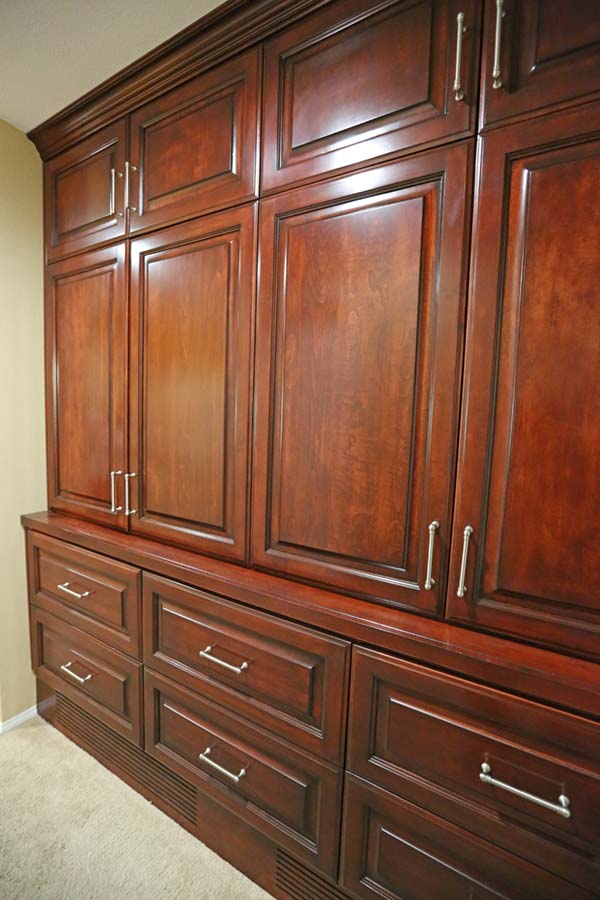
Standard catalog units struggle when paired with unique floor plans or architectural quirks. Working with a dedicated craftsman allows you to optimize every square foot of your home. You can explore how we approach custom layouts through our dedicated kitchen remodeling services.
How Custom Cabinetry Accommodates Non-Standard Spaces
Older homes throughout Southern California often feature uneven subfloors, out-of-square walls, and irregular ceiling heights. Stock cabinets installed in these spaces often reveal glaring gaps and require awkward trim fillers.
Bespoke builders take precise on-site laser measurements to fabricate cabinet boxes that compensate for uneven surfaces, seamlessly integrate around structural posts, wrap smoothly under stairwells, and extend fully to high or sloped ceilings.
Custom Solutions for Kitchens, Bathrooms, Offices, and Closets
Tailored casework enhances utility throughout every room in the home:
- Kitchens: Concealed appliance garages, deep pots-and-pans drawers with heavy-duty slides, multi-tiered pull-out spice racks, vertical tray dividers, and integrated paneled refrigerators.
- Bathrooms: Floating vanities that maximize floor space, linen towers with built-in laundry hampers, and moisture-resistant finishes tailored for humid environments.
- Home Offices: Built-in desks with concealed wire management, integrated filing drawers, printer pull-outs, and display shelving.
- Closets & Mudrooms: Walk-in closet islands with velvet-lined jewelry drawers, adjustable shoe cubbies, integrated LED shelf lighting, and durable mudroom lockers.
The Fabrication Timeline and Working with a Cabinet Maker
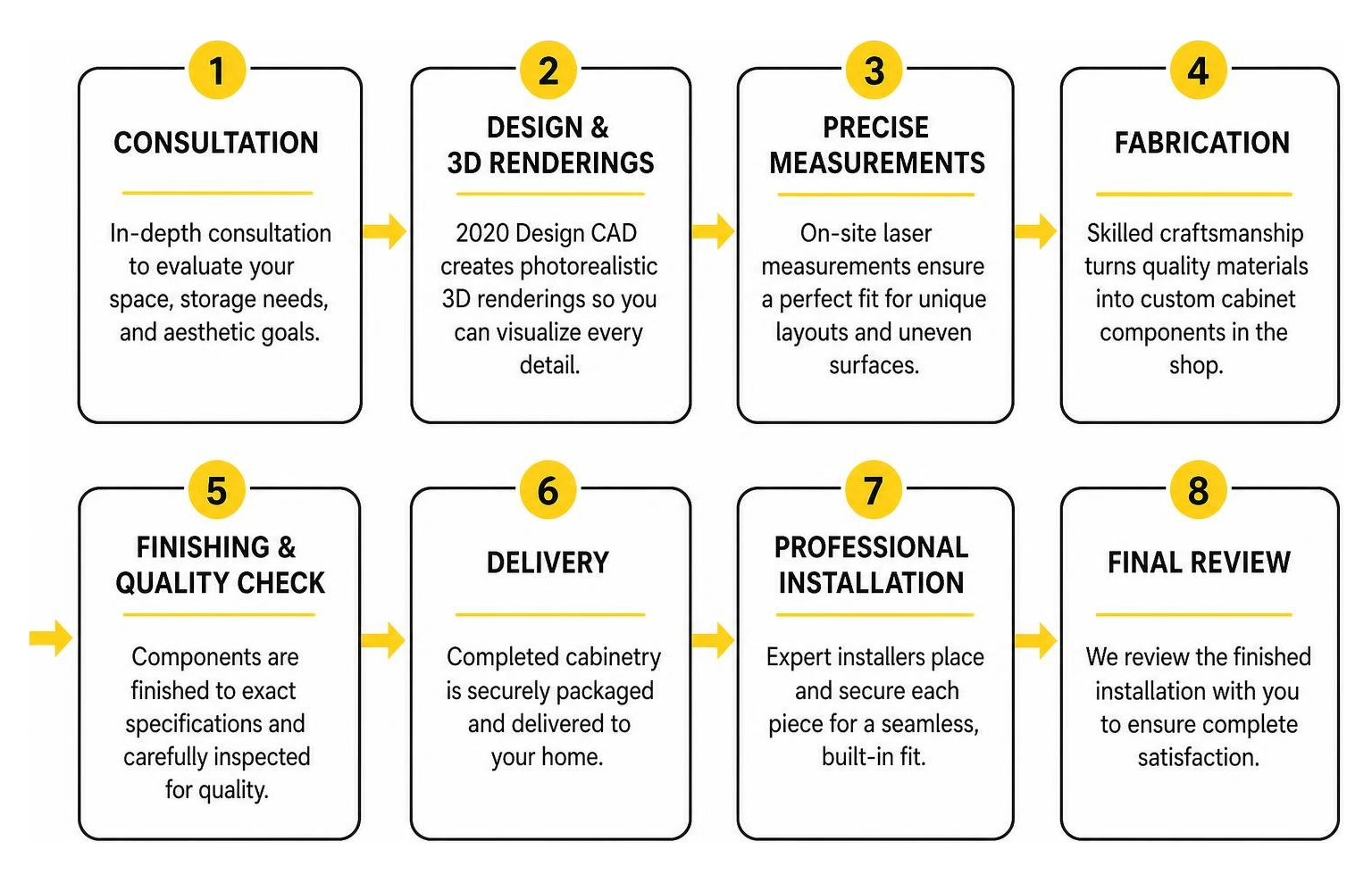
Transforming raw lumber into finely detailed architectural casework involves structured planning and master craftsmanship.
Consultation, 3D Renderings, and Design Planning
Every successful project begins with an in-depth design consultation. Our team evaluates your room dimensions, storage needs, and aesthetic goals. We utilize 2020 Design CAD software to generate photorealistic 3D renderings.
These digital models allow you to visualize door styles, color palettes, island proportions, and hardware placement before manufacturing starts. For comprehensive guidance on space planning, explore our custom interior design assistance.
Production Lead Times, Installation, and Warranties
From signed design approval to completed installation, custom cabinet lead times typically range from 6 to 12 weeks. This timeline can shift seasonally, extending to 10 to 12 weeks during peak building periods:
- Engineering & Milling (Weeks 1–3): Creating detailed shop drawings, sourcing hardwoods, and cutting cabinet box panels.
- Assembly & Joinery (Weeks 4–6): Crafting dovetail drawers, assembling face frames, and fitting custom storage inserts.
- Finishing (Weeks 7–9): Applying multi-step stains, hand glazes, or catalyzed lacquer finishes in a controlled spray booth.
- In-House Installation (Weeks 10–12): Skilled carpenters handle on-site delivery, leveling, anchoring, molding installation, and hardware alignment.
Professional cabinet makers stand behind their craftsmanship with comprehensive warranties ranging from 5-year coverage to lifetime guarantees on wood structures and moving hardware. You can learn more about scheduling and timelines in our guide to planning a successful remodeling project.
How to Choose the Best Local Cabinet Makers and Maintain Your Investment
Partnering with the right artisan guarantees a smooth remodeling experience and an exceptional finished product. You can review our past millwork projects in our cabinet craftsmanship portfolio.
Selecting Door Styles, Finishes, and Hardware
Your selection of door styles, finishes, and decorative hardware defines the architectural tone of your room:
- Door Styles: Timeless Shaker profiles work well in transitional and modern farmhouse spaces; sleek, flat slab panels suit contemporary interiors; and intricate raised-panel doors complement traditional estates. Inset doors sit flush inside the face frame for a classic, bespoke furniture appearance.
- Finishes: Choose between rich natural wood stains (like white oak, walnut, or cherry) and custom paint matches. Catalyzed finishes protect the wood from UV discoloration, moisture, and daily handling.
- Hardware: Select solid brass, matte black, or brushed nickel pulls and knobs that balance ergonomics with your room’s plumbing fixtures and lighting.
Vetting Craftsmen, Reviewing Portfolios, and Maintenance Tips
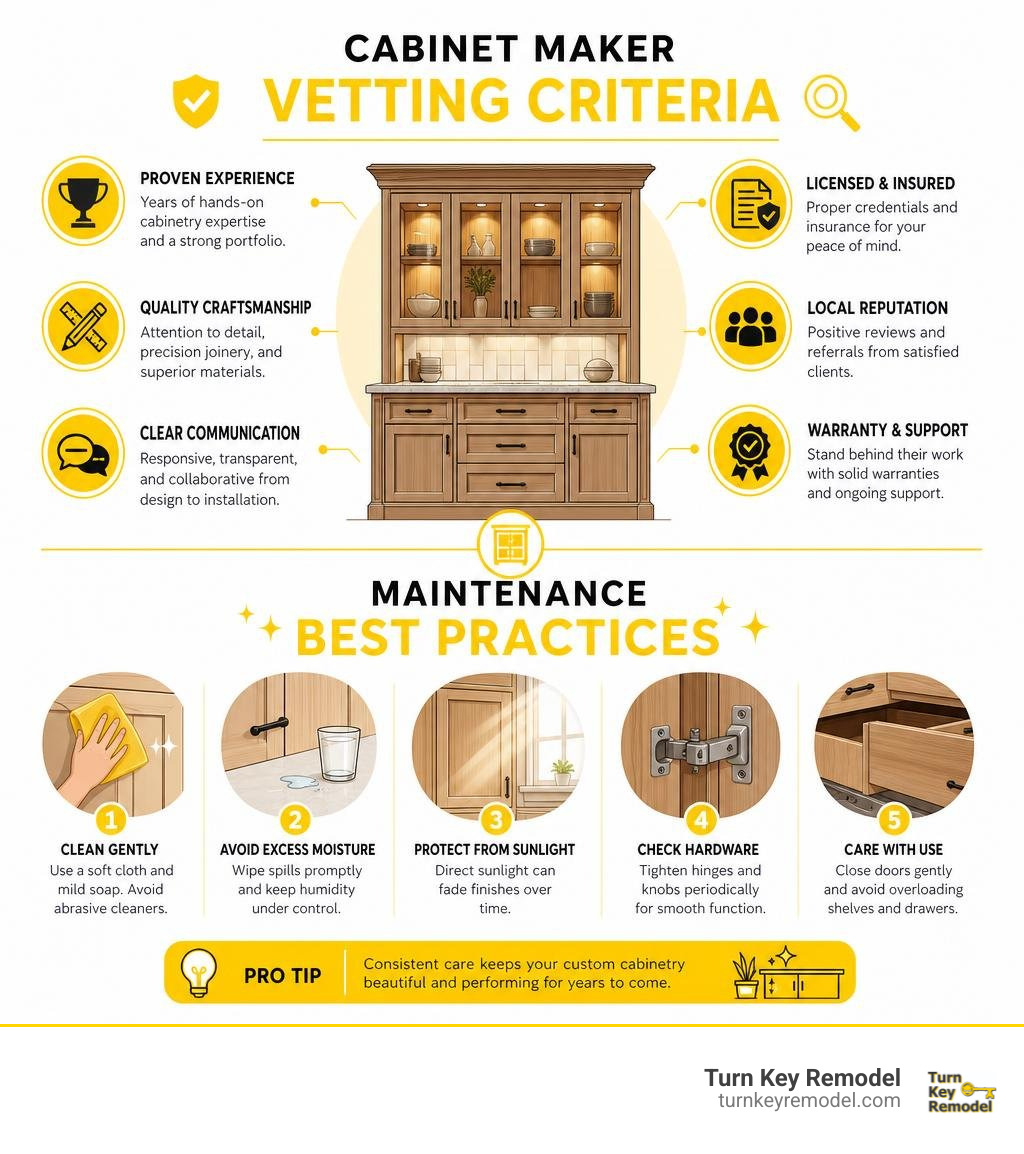
When interviewing prospective cabinet makers, keep these vetting guidelines in mind:
- Verify Credentials: Confirm active contractor licensing, general liability coverage, and worker’s compensation insurance.
- Review Real Portfolios: Ask to see detailed photos of recent installations, paying close attention to tight miter joints, flush seams, and level door reveals.
- Inspect Construction Standards: Verify they use 3/4-inch plywood cores, solid hardwood dovetail drawer boxes, and soft-close hardware rather than low-grade particleboard.
To keep your custom woodwork looking like new for decades, follow these basic care routines:
- Clean surfaces regularly using a soft microfiber cloth lightly dampened with warm water and a mild, pH-neutral soap.
- Avoid abrasive scrubbing pads, ammonia-based glass cleaners, bleach, or silicone-based polishes that can degrade protective topcoats.
- Wipe away steam and water droplets around sink bases, dishwashers, and coffee stations to prevent long-term moisture damage.
- Maintain indoor relative humidity levels between 35% and 55% to minimize natural wood expansion and contraction.
Frequently Asked Questions About Custom Cabinet Makers
How much do custom cabinets typically cost per linear foot?
Custom cabinets generally cost between $500 and $1,500 per linear foot installed. Final pricing depends on your choice of wood species (such as maple, rift-sawn white oak, or walnut), door profile complexity, specialty interior organizers, multi-step finish treatments, and local installation labor.
What is the average lead time from contract signing to final installation?
Lead times for residential custom cabinetry typically run between 6 and 12 weeks. During slower seasonal periods, production may take 6 to 8 weeks, while peak remodeling seasons can extend build times to 10 to 12 weeks or more. This window covers shop engineering, wood milling, dovetail joinery, booth finishing, and on-site fitting.
How do I maintain and clean high-end custom wood cabinets?
Clean your cabinetry using a clean microfiber cloth dampened with warm water and a small amount of mild dish soap. Dry the surfaces immediately with a clean, lint-free towel. Never use harsh chemical solvents, abrasive powders, or spray polishes containing wax or silicone, as these can soften and cloud the durable catalyzed finish.
Conclusion
Bespoke cabinetry elevates your living spaces with personalized organization, premium materials, and timeless architectural beauty. Whether you are reconfiguring an expansive gourmet kitchen, modernizing a primary bath, or adding built-in storage to your home office, working with an experienced craftsman ensures every cabinet fits your space seamlessly.
At Turn Key Remodel, our team brings over 20 years of craftsmanship experience to homeowners across Orange County, Yorba Linda, Placentia, Anaheim Hills, Tustin, and Brea. We manage every phase of your renovation under one roof—from initial 3D visualization and material selection to precision shop fabrication and meticulous in-house installation—supported by 24/7 client communication. Contact us today to schedule your design consultation for expert custom cabinetry solutions.