The Real Average Cost of Tub to Shower Conversion Before Hiring a Contractor
What Is the Real Average Cost of a Tub to Shower Conversion?
In 2026, the average cost of a tub to shower conversion is usually $3,000 to $7,000, though projects can range from about $2,000 to $12,000 or more. A basic prefab acrylic shower in the existing tub space is often the most affordable path. A custom tile walk-in shower, plumbing relocation, or curbless entry can push the total much higher.
For a realistic starting budget, plan for:
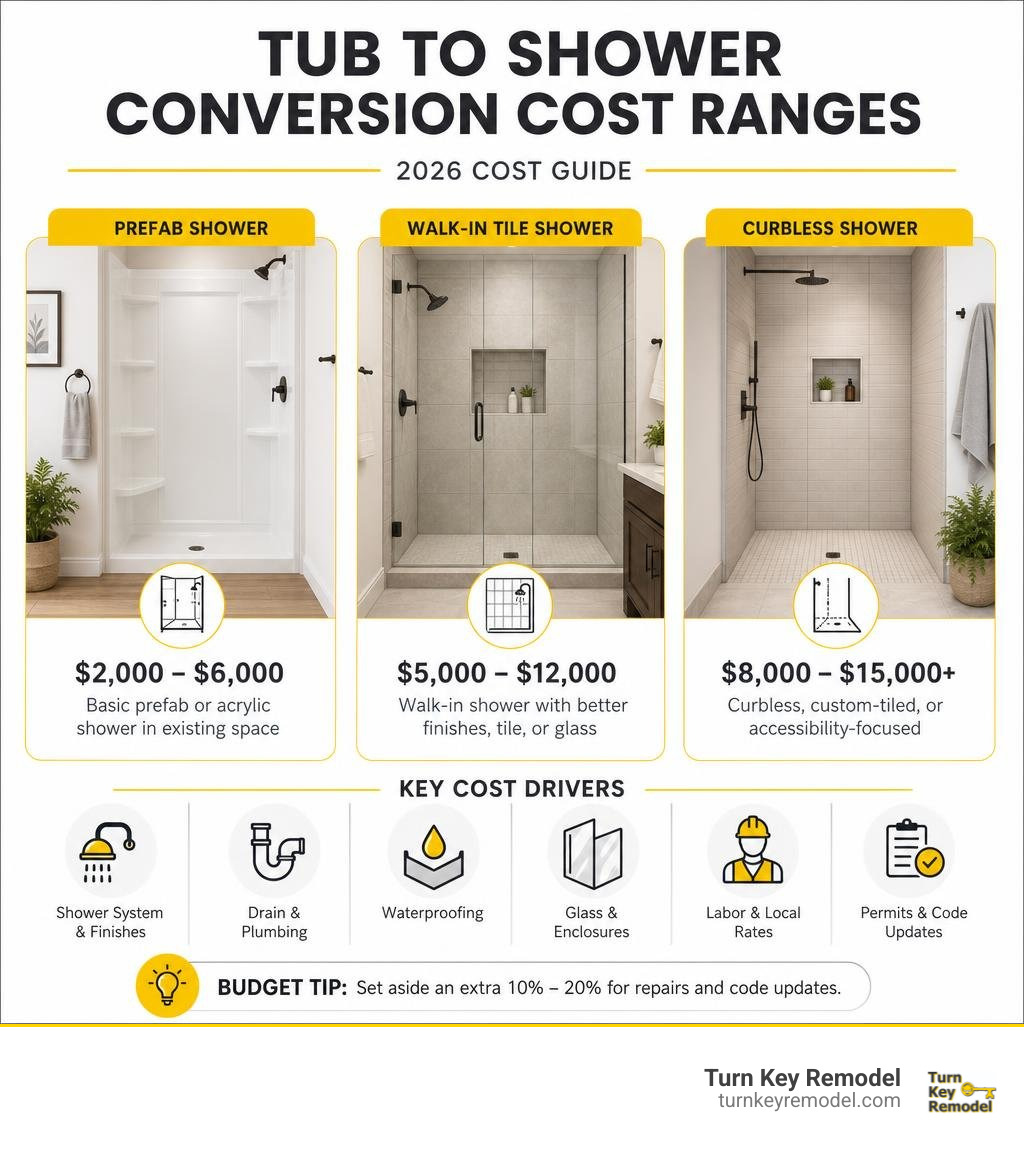
- $2,000 to $6,000: Prefab shower stall or acrylic wall system
- $5,000 to $12,000: Walk-in shower with better finishes, tile, or glass
- $8,000 to $15,000+: Curbless, custom-tiled, or accessibility-focused conversion
The biggest cost drivers are the shower system, drain and plumbing work, waterproofing, glass, local Orange County labor rates, permits, and any rot or water damage uncovered after the tub comes out. Set aside an extra 10% to 20% for repairs and code updates so a surprise behind the walls does not derail the project budget.
I’m Mark Apicella, Owner and President of Turn Key Remodel in Orange County, with more than eight years of experience managing bathroom renovations from design through final installation. I help homeowners understand the real average cost of tub to shower conversion by building clear scopes, accounting for the details behind the walls, and planning for a finished space that fits both their needs and budget.
Easy average cost of tub to shower conversion word list:
Understanding the Average Cost of Tub to Shower Conversion by System Type
When evaluating the overall budget for your bathroom update, the system type you select establishes the baseline for your investment. Across the remodeling industry, costs scale directly with material complexity, site preparation, and structural modification. While simple updates fall at the lower end of national pricing benchmarks, extensive architectural changes naturally require a higher budget.
To better plan your project, third-party cost calculation tools provide initial estimates based on basic square footage. However, a personalized quote accounts for the exact physical conditions of your home.
| Conversion Type | Average Price Range | Typical Timeline | Best Suited For |
|---|---|---|---|
| Tub Cut (Walk-Thru) | $800 – $1,800 | 0.5 – 1 Day | Fast accessibility retrofits on a tight budget |
| Prefab Stall / Acrylic Kit | $2,000 – $6,000 | 1 – 2 Days | Guest baths, rental units, cost-effective updates |
| Custom Tiled Walk-In | $6,000 – $12,000 | 5 – 8 Days | Primary bathrooms, personalized style, long-term durability |
| Curbless / Zero-Threshold | $8,000 – $15,000+ | 8 – 14 Days | Full ADA mobility, modern open-concept aesthetics |
Average Cost of Tub to Shower Conversion for Prefab Kits
Prefabricated shower units—often constructed from durable composite acrylic or molded fiberglass—represent the most direct, economical approach to swapping out a tub. These assemblies feature engineered shower pans combined with multi-piece or seamless wall panels designed to fit into a standard 60-by-32-inch bathtub alcove.
Because these units require minimal structural prep work and eliminate the extended labor associated with traditional masonry, installation typically wraps up within one to two business days. Material costs for reliable prefab panels range from $800 to $2,500, with total installed costs generally settling between $2,000 and $6,000. While prefab systems offer limited aesthetic variation, their non-porous surfaces resist soap scum and mildew, making them popular for hall bathrooms and rental properties.
Average Cost of Tub to Shower Conversion for Custom Tile Walk-In Showers
Homeowners looking for high-end styling and tailored dimensions often choose a custom tiled walk-in shower. This approach allows complete freedom in selecting porcelain, ceramic, or natural stone tile, as well as integrated niches, built-in corner benches, and premium frameless glass enclosures.
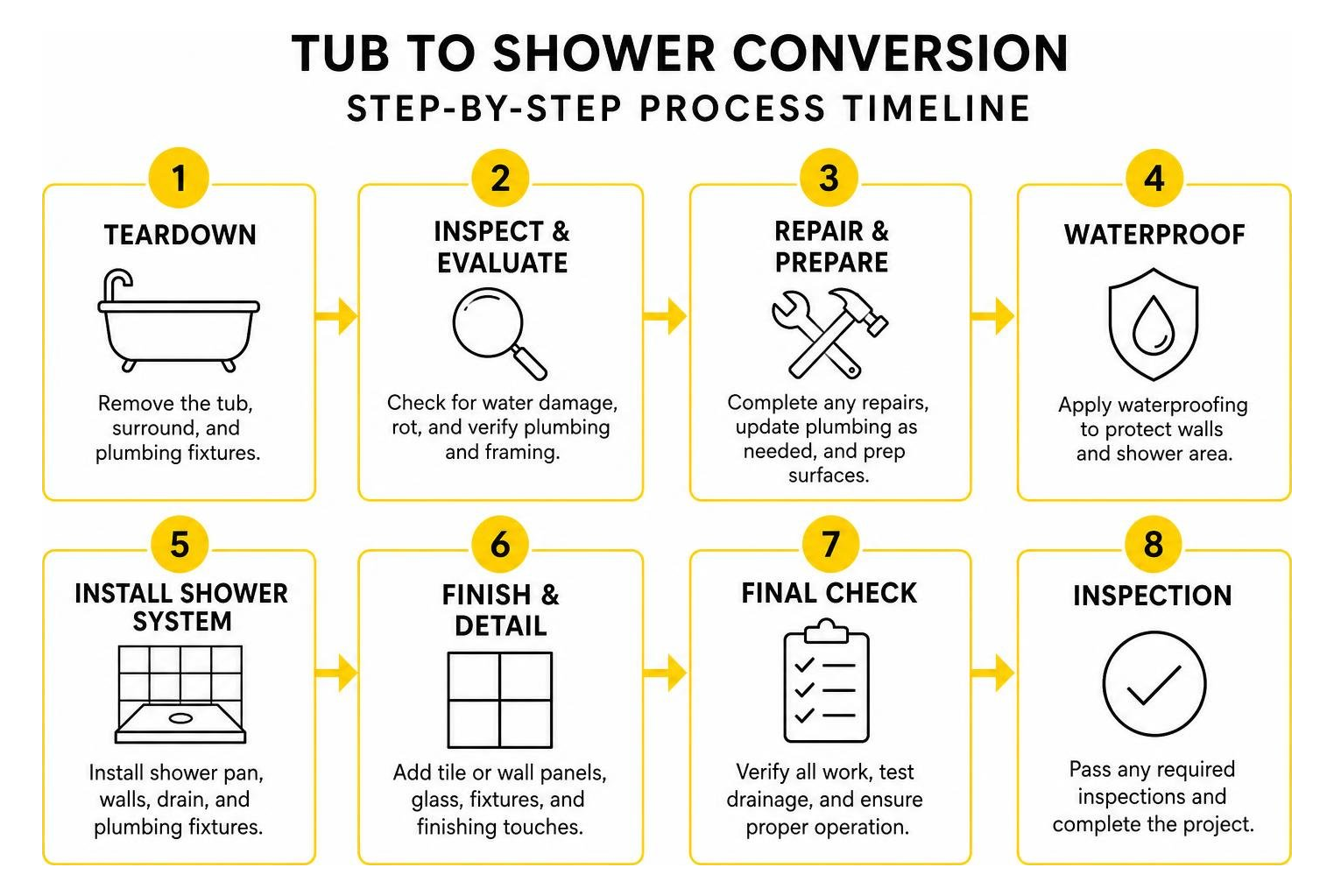
Building a custom shower involves constructing a solid mortar bed or installing an engineered foam pan, applying an uncoupling waterproof membrane, laying field and accent tile, and finishing with stain-resistant epoxy or urethane grout. Labor is the primary investment here; setting intricate tile patterns and achieving perfect water containment requires seasoned tradespeople. Total costs for a custom tile walk-in typically land between $6,000 and $12,000. Homeowners exploring this level of customization can reference our comprehensive conversion guide to evaluate architectural options and material durability.
Curbless and Zero-Threshold Accessible Conversions
A curbless (or zero-threshold) shower removes the traditional step-over curb entirely, creating a seamless transition from the main bathroom floor straight into the shower area. This design represents the gold standard for universal design and aging-in-place, allowing seamless access for individuals with limited mobility or wheelchairs.
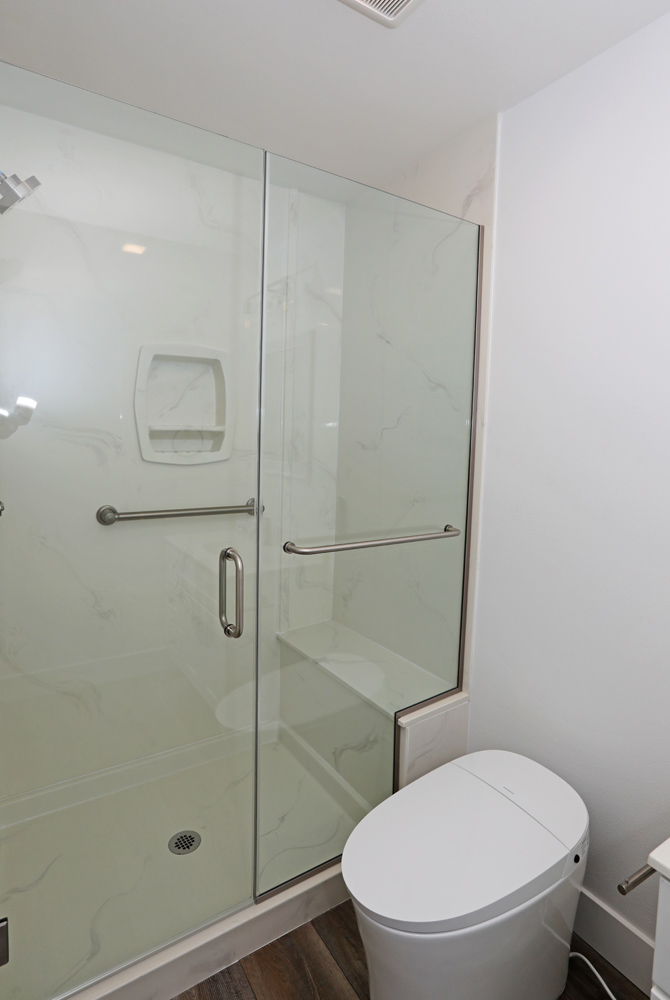
Achieving a flush entry requires structural adjustments. The subfloor beneath the shower zone must be recessed, or the entire bathroom floor built up, to ensure water drains properly toward a single-slope linear drain without spilling into the room. Because of the necessary floor framing modifications, specialized waterproofing, and extended glass work, curbless conversions range from $8,000 to $15,000 or more.
Critical Factors and Line Items That Drive Conversion Costs
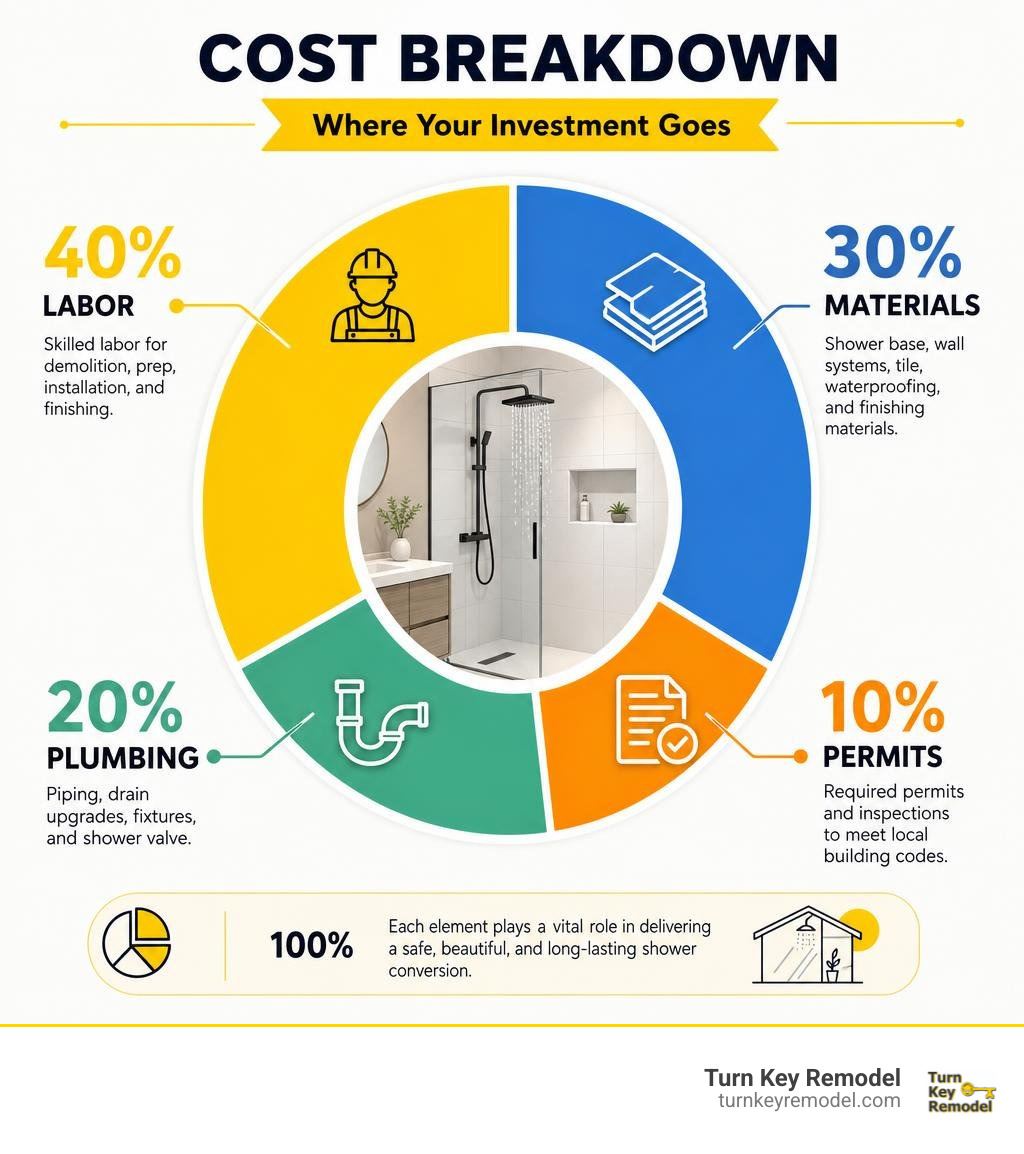
Understanding where your money goes is essential when reviewing contractor estimates. The overall project cost breaks down into demolition, structural prep, specialized plumbing, continuous waterproofing, tile or panel installation, and final finish trim. For a comprehensive overview of how these expenses fit into a total bathroom budget, review our general conversion expense breakdown.
Plumbing Upgrades and Drain Relocation
The plumbing rough-in represents one of the most critical mechanical line items in a conversion. Standard bathtubs are plumbed with a 1.5-inch drain line. However, standard building codes mandate a minimum 2-inch drain pipe for standalone showers to handle the higher flow rates of modern multi-function shower heads and prevent water pooling.
Upgrading this drain line involves cutting into the subfloor or trenching through a concrete slab foundation to connect the new 2-inch P-trap to the home’s main waste stack. If you choose to reposition the drain from an off-center tub location to the center of your new shower floor, plumbing labor increases accordingly.
Additionally, replacing an outdated two-handle valve with a pressure-balanced, thermostatic mixing valve ensures scald protection and code compliance. Plumbing modifications typically add between $500 and $2,400 to the total scope, as outlined in modern plumbing estimation guides.
Waterproofing Systems and Subfloor Protection
Waterproofing is the most crucial layer of any shower build. Water damage behind finished walls can compromise structural studs and lead to costly repairs down the road.
Professional conversions use continuous sheet membranes or liquid-applied waterproof barriers applied over cement backer boards. Before any tile is installed, a standard 24-hour flood test must be completed by plugging the drain and filling the shower pan with water to confirm complete containment. Dedicated waterproofing materials and certified installation typically range from $800 to $2,500, protecting your investment for decades.
Doors, Hardware, and Custom Enclosures
The enclosure you choose significantly influences both the final look and budget:
- Curtain Rods: A basic tension or fixed rod costs under $50, making it an easy budget choice.
- Framed or Semi-Frameless Sliding Doors: Durable bypass glass systems typically cost between $400 and $1,100 installed.
- Custom Frameless Heavy Glass: Thick (3/8-inch or 1/2-inch) tempered glass with premium hardware offers an open, spa-like aesthetic. These custom enclosures range from $1,200 to $3,200 depending on panel size and layout.
- Safety Hardware: Solidly anchored grab bars, handheld spray wands, and comfort-height built-in benches add $300 to $1,000 in hardware and structural backing.
Hidden Expenses, Permitting, and Budget Contingencies
Approximately 70% of bathroom remodels uncover at least one unforeseen condition once the old bathtub is removed. Because cast iron and acrylic tubs can hide wall cavities for decades, setting aside a 10% to 20% contingency fund is standard practice. To keep your project organized from initial planning through the final walkthrough, consult our step-by-step renovation checklist.
Uncovering Hidden Water and Structural Damage
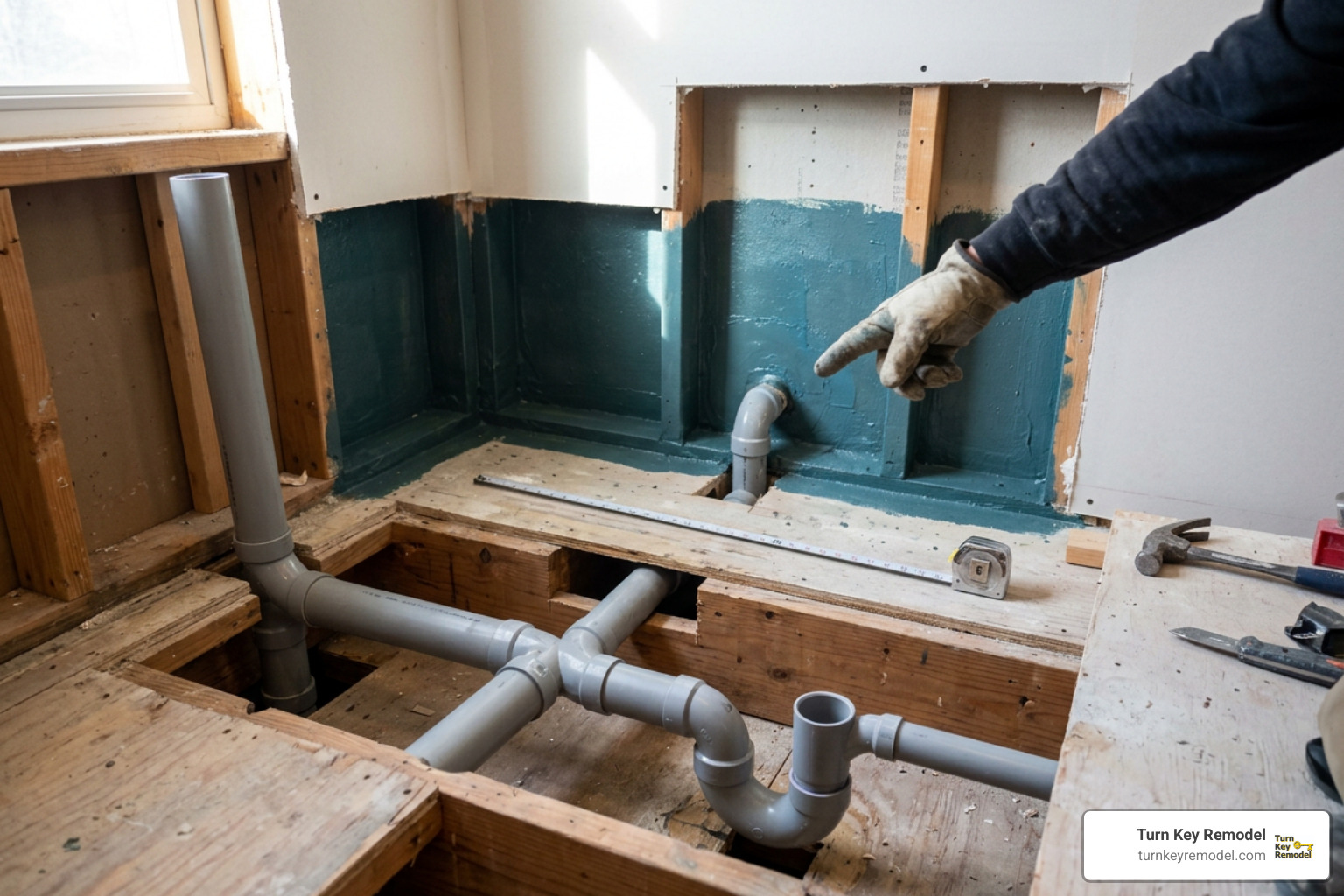
When the old tub skirt comes off, contractors frequently discover subfloor rot, rusted piping, or mold resulting from years of slow leaks around old grout joints or tub spouts. Remedying these conditions before installing new materials is essential:
- Subfloor Reinforcement or Replacement: $300 – $1,500
- Framing Sistering and Stud Repair: $250 – $800
- Localized Mold Remediation: $500 – $2,000
- Supply Line Replacements (replacing old galvanized pipes with PEX or copper): $400 – $1,200
Regional Labor Rates and California Permitting
Labor costs vary significantly by region. In Southern California communities such as Yorba Linda, Placentia, Anaheim Hills, Tustin, and Brea, trade rates reflect higher regional living costs and strict licensing requirements.
Pulling a residential building and plumbing permit through local city building departments or the County of Orange is mandatory when altering drainage systems or moving plumbing lines. Municipal permit and plan-check fees typically add $250 to $800 to the project total. Working with a contractor licensed by the California Contractors State License Board (CSLB) ensures all work meets California Plumbing Code (CPC) and Title 24 energy and water conservation mandates.
Resale Value, Financing Programs, and Cost-Saving Strategies
A professionally executed tub-to-shower conversion delivers strong aesthetic appeal and everyday convenience, typically yielding a 60% to 70% return on investment (ROI) at resale. For prospective buyers without small children, a spacious walk-in shower is often viewed as a major upgrade over an outdated tub.
If your home features only one bathtub, consider preserving it in a secondary bath before converting your primary bathroom. Removing the sole tub in a home can narrow your buyer pool when selling to families with toddlers. If you are exploring broader layout possibilities, you might also look into adding a tub to your walk-in shower space as part of a larger primary suite remodel.
For homeowners modernizing for safety or medical necessity, several financial assistance programs can help offset costs:
- VA HISA Grants: The Home Improvements and Structural Alterations grant provides up to $6,800 for veterans with service-connected disabilities to construct accessible, barrier-free showers.
- Medi-Cal CalAIM: California’s Community Supports program may offer funding for environmental accessibility adaptations (home modifications) that assist seniors and individuals with mobility challenges.
- Zero-Interest Financing: Many homeowners use unsecured home improvement loans or short-term, zero-interest contractor financing packages to spread project costs over 12 to 24 months.
To view practical layout concepts, browse our bathroom portfolio inspiration to see completed projects across our local service areas.
Frequently Asked Questions About Tub-to-Shower Conversions
Does removing the only tub in a home hurt resale value?
Yes, removing the single bathtub from a one-bathroom home or a starter home can decrease appeal for young families who need a tub for bathing small children. However, in homes with two or more full bathrooms, converting the primary bathtub into a luxury walk-in shower is widely considered a value-add that aligns with modern buyer preferences.
How long does a professional tub-to-shower conversion take?
A basic prefabricated acrylic conversion typically takes 1 to 3 business days. A custom tile walk-in shower requires 5 to 8 working days to allow proper cure times for mortar, waterproofing membranes, tile setting, and grouting. Complex curbless conversions involving structural framing and custom frameless glass fabrication generally take 2 to 3 weeks.
Can Medicare or government grants help pay for an accessible conversion?
Original Medicare (Part A and Part B) does not cover bathroom remodeling or tub-to-shower conversions, as they are classified as physical home modifications. However, certain Medicare Advantage (Part C) plans, VA HISA grants, and California’s Medi-Cal CalAIM programs offer grants or reimbursements for qualified accessibility modifications.
Conclusion
Converting an underutilized, hard-to-clean bathtub into an open walk-in shower improves everyday comfort, safety, and modern home value. While basic acrylic swaps start around $2,000 to $6,000, high-end custom tile and accessible curbless designs typically land between $6,000 and $15,000+. Knowing these price drivers beforehand ensures you can design a space that fits both your lifestyle and your budget.
At Turn Key Remodel, we provide clear, upfront pricing, in-house design guidance, and end-to-end project management across Orange County, Yorba Linda, Placentia, Anaheim Hills, Tustin, and Brea. When you are ready to update your space, connect with our team for expert bathroom remodeling services or reach out to our team directly to schedule your in-home design consultation. You can also explore our full range of remodeling services to see how we help transform homes from top to bottom.