Finding and Vetting Reliable Local Bathroom Remodel Contractors
Finding a Reliable Bathroom Contractor Remodel Partner
A bathroom contractor remodel should give you one clear plan for design, permits, construction, and communication – not a string of surprises after demolition begins.
For an Orange County homeowner, the quick answer is simple: hire a licensed, insured contractor with proven bathroom experience, a detailed written scope, clear project management, and a process for handling permits and inspections. A good fit should also help you make design choices before work starts, explain what is included in the price, and provide a realistic schedule.
Bathroom projects can range from a focused cosmetic update to a full gut renovation with new plumbing, electrical work, waterproofing, tile, and layout changes. The visible finishes matter, but the work behind the walls matters just as much. Poor waterproofing, ventilation, or plumbing can turn a beautiful new bathroom into an expensive repair.
I am Mark Apicella, Owner and President of Turn Key Remodel in Orange County, and I have more than eight years of experience managing bathroom contractor remodel projects from design through completion. Our team focuses on full-service planning, in-house design support, dependable communication, and craftsmanship that keeps projects moving toward an on-time, on-budget finish.
Understanding Costs, Timelines, and Scope for a Bathroom Contractor Remodel
When planning a bathroom contractor remodel, understanding the numbers and timeline early on keeps stress levels low and prevents costly mid-project pivots. About 33% of homeowners abandon their renovation plans simply because the planning phase becomes too overwhelming. Having a crystal-clear breakdown of budget tiers and scope helps you navigate the decision-making process with complete confidence.
Bathroom remodeling costs vary depending on square footage, material selections, and whether structural or plumbing changes are involved. Across Southern California and Orange County communities like Yorba Linda, Anaheim Hills, and Tustin, investment tiers typically break down as follows:
- Powder Room / Half-Bath ($12,000 – $25,000): Focuses on surface updates, replacement of the vanity, sink, toilet, lighting, and updated flooring without changing the existing footprint.
- Full Bath Remodel ($25,000 – $50,000): Involves replacing the bathtub or shower, custom tile work, updated vanity, modern fixtures, new lighting, and improved exhaust systems.
- Primary Bath / Luxury Suite ($50,000 – $95,000+): Encompasses full layout modifications, curbless walk-in showers, freestanding soaking tubs, radiant heated flooring, high-end double vanities, and custom lighting.
Financially, bathroom renovations remain one of the smartest investments you can make in your home. A full bath remodel typically recoups up to 60–78% of its cost upon resale, making it one of the highest-yielding home improvement projects available.
| Project Scope | Cost Range | Average Timeline | Resale ROI | Key Scope Included |
|---|---|---|---|---|
| Partial / Cosmetic Remodel | $12,000 – $25,000 | 1 – 3 Weeks | 55% – 70% | Surface updates, fixture swaps, paint, vanity replacement |
| Full Gut Remodel | $25,000 – $60,000 | 3 – 6 Weeks | 60% – 78% | Total teardown, new waterproofing, tile, shower, plumbing rough-in |
| Primary Suite Expansion | $50,000 – $95,000+ | 6 – 10 Weeks | 50% – 68% | Structural changes, custom tile, luxury wet room, radiant floors |
For a step-by-step breakdown of how to prepare your project budget and expectations, check out our ultimate checklist for bathroom remodel costs and steps.
Partial Remodel vs. Full Gut Bathroom Contractor Remodel
Choosing between a partial refresh and a full gut remodel comes down to the condition of your home’s infrastructure and your ultimate functional goals.
A partial remodel preserves the existing layout and major plumbing lines. It focuses primarily on swapping out tired surfaces—such as replacing an outdated vanity, changing out light fixtures, laying new tile flooring over a clean subfloor, or installing a new toilet. If your plumbing and subfloor are in sound structural condition and the existing layout works well for your routine, a partial remodel provides a budget-friendly facelift.
A full gut bathroom contractor remodel, on the other hand, strips the space down to the bare framing studs and subfloor. This complete teardown is necessary when:
- You want to alter the layout (such as moving the toilet or expanding the shower footprint).
- The home was built decades ago and contains outdated galvanized steel supply pipes or corroded cast-iron drains that need replacing.
- Demolition reveals hidden moisture damage, subfloor rot, or underlying mold behind old shower walls.
- You are converting a traditional tub-and-shower combination into a zero-threshold curbless walk-in shower.
Project Timelines and Permitting Responsibilities
Understanding the distinction between overall project duration and active, on-site construction prevents unnecessary frustration.
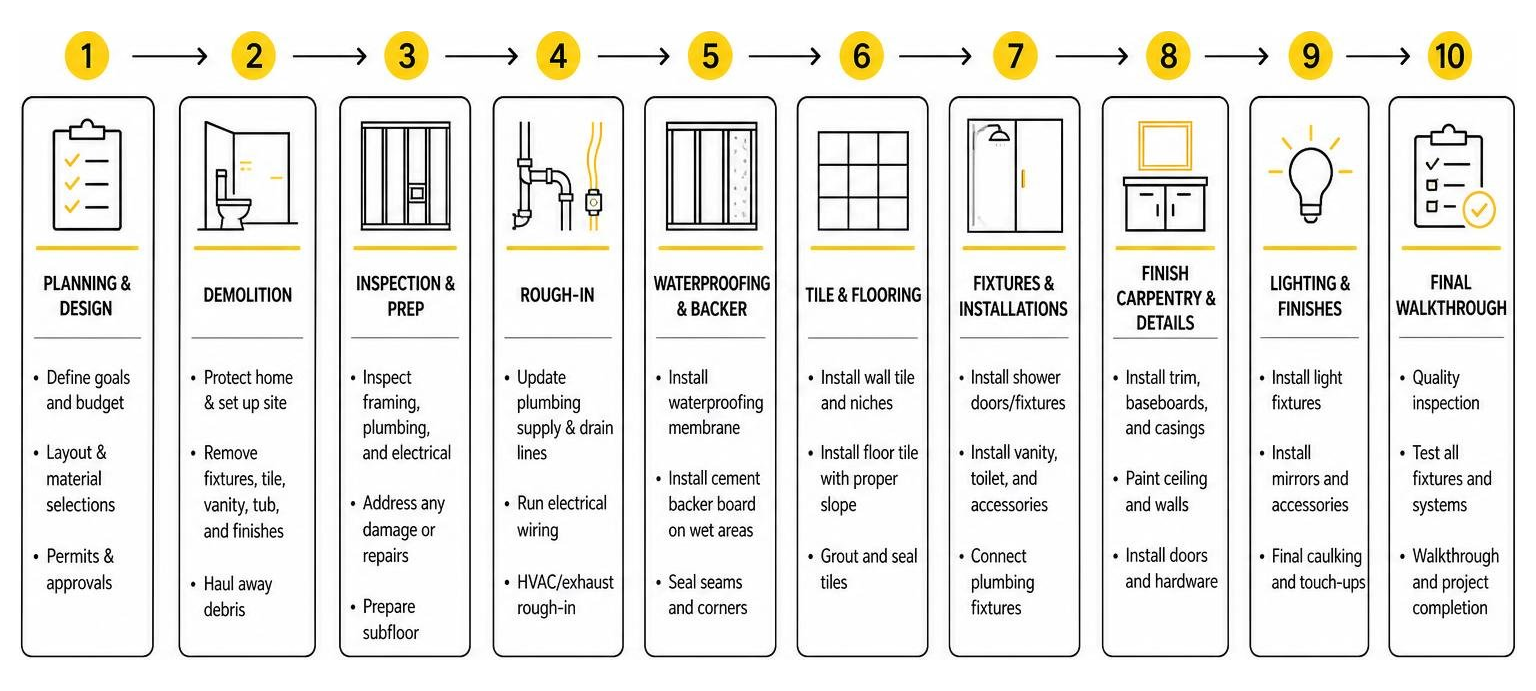
A standard on-site construction phase for a full bathroom renovation typically takes between 3 to 6 weeks once demolition starts. However, the total lead time from your initial consultation to final inspection spans several additional weeks due to design, planning, and ordering phases.
- Design & Selection Phase (2–4 Weeks): Selecting finish materials, approving 3D renderings, and finalizing construction plans.
- Permitting & Material Procurement (2–6 Weeks): Sourcing lead-time items such as custom vanities, imported tile, or specialty glass enclosures while securing necessary building permits.
- Active Construction (3–6 Weeks): Demolition, structural framing, plumbing and electrical rough-in, municipal inspections, waterproofing, tiling, fixture installation, and final punch-list walkthrough.
In cities across Orange County—such as Brea, Placentia, and Yorba Linda—municipal building permits are legally required whenever structural framing is modified, electrical circuits are added, or plumbing lines are relocated. A professional contractor handles all permit filings, submits technical plan drawings, and coordinates mandatory city inspections on your behalf.
Key Differences: General Contractors vs. Specialized Bathroom Remodeling Companies
When hiring a contractor, you will generally choose between a basic trade general contractor and a specialized design-build bathroom remodeling company.
A standard general contractor frequently acts as a coordinator who subcontracts out every phase—plumbing, electrical, tile setting, drywall, and painting—to separate third-party crews. While this works for simple rebuilds, managing multiple separate subcontractors can sometimes lead to scheduling delays, inconsistent installation quality, and fragmented communication.
Specialized design-build contractors provide a unified single-contract model where interior design, material selection, permitting, and skilled construction trades operate seamlessly under one roof. To explore how integrated project delivery simplifies your renovation, explore full-service bathroom remodeling services.
Hiring a Design-Build Bathroom Contractor Remodel Specialist
Working with an experienced design-build team removes the disconnect between aesthetic vision and real-world construction execution.
Instead of visiting dozens of retail showrooms alone and guessing whether a tile pattern will work with your plumbing rough-in, our in-house design specialists guide you through spatial planning, 3D visual renderings, and material pairing right from the start.
- Single point of contact: You communicate with a dedicated project manager rather than juggling four or five independent trade subcontractors.
- 3D Renderings & VR Walkthroughs: Visualizing your bathroom in full detail before demolition ensures you love the layout, tile pattern, and lighting placement before a single hammer swings.
- Accurate up-front budgeting: Because design and construction are managed together, line-item estimates accurately reflect your selected finishes, virtually eliminating mid-project change orders.
- In-house quality control: Dedicated crews handle critical technical installations—such as shower pan slope preparation and hot-mop or membrane waterproofing—ensuring long-lasting durability.
Popular High-Value Upgrades and Universal Design
Today’s home bathroom updates balance luxury aesthetic appeal with functional long-term accessibility. Incorporating smart design features boosts daily comfort while protecting your home’s future resale value.
- Curbless Walk-In Showers: Eliminating the step-over curb creates a sleek, modern spa aesthetic while making shower entry effortless for individuals of all ages and mobility levels.
- Radiant Heated Flooring: Installing thin electric heating mats beneath bathroom floor tiles provides efficient, customizable warmth underfoot on cool mornings.
- Low-Maintenance Tile & Grout Systems: Utilizing large-format porcelain tile paired with advanced non-porous stain-resistant grout eliminates periodic sealing requirements and resists mold growth.
- Universal Design Features: Blending stylish integrated grab bars (which double as towel racks), wider entryways, non-slip textured flooring, and built-in shower benches ensures your bathroom supports aging in place without looking institutional.
To discover more ideas for creating an elegant, relaxing space, read our guide on the top 5 must-have features for a luxury bathroom remodel.
How to Vet and Verify a Bathroom Contractor
Choosing the right partner requires thorough verification. A flashy sales presentation means little if a contractor lacks active licensing, adequate liability coverage, or a history of sound work.

Checking Licensing, Insurance, and References
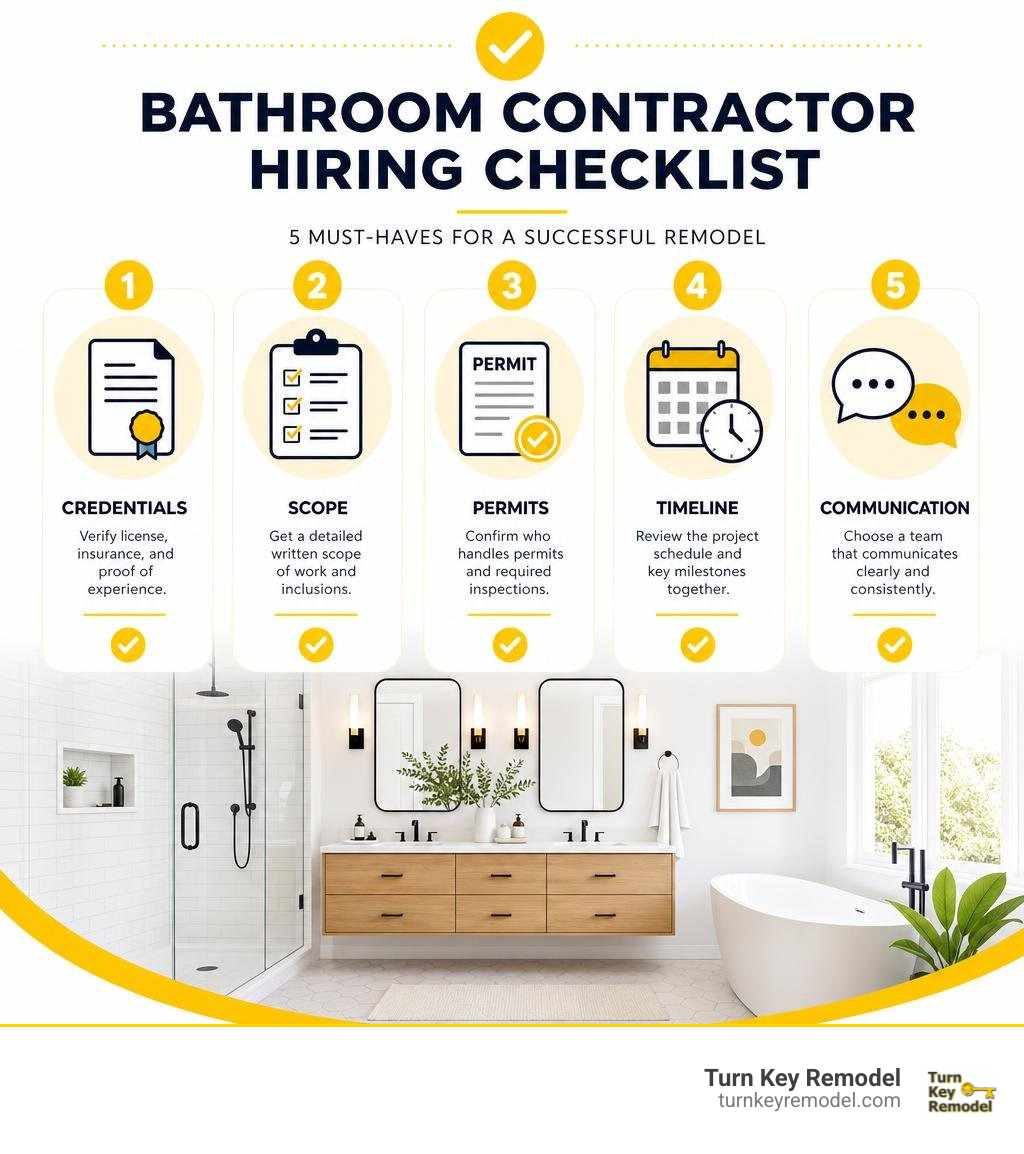
Before signing any contract or paying a deposit, perform these four verification steps:
- Verify the License Status: In California, any home renovation project exceeding $500 in combined labor and material costs legally requires a valid license from the California Contractors State License Board (CSLB). Search the contractor’s license number on the official CSLB portal to ensure it is active, in good standing, and free of outstanding legal bond claims or unresolved consumer complaints.
- Confirm Insurance Coverage: Request official certificates of insurance directly from the contractor’s insurance provider. They must hold both General Liability Insurance (to protect your property against accidental damage) and Workers’ Compensation Insurance (to cover crew members injured on your property).
- Check Professional Certifications: Look for active trade affiliations such as membership in the National Association of the Remodeling Industry (NARI) or certifications like Certified Kitchen and Bath Remodeler (CKBR).
- Review Local Project References: Ask for recent references from completed projects in your immediate geographic area (such as Anaheim Hills or Tustin). Speaking directly with past clients provides honest feedback regarding team punctuality, site cleanliness, and budget adherence.
Essential Questions to Ask Before Signing a Contract
When meeting with prospective remodeling partners, asking pointed questions helps separate genuine professionals from high-pressure salespeople.
- “Will you handle all city permits and schedule required inspections?” (A reputable contractor always pulls permits under their own corporate license name.)
- “Do you use dedicated in-house trade specialists or outsource to unvetted subcontractors?”
- “What waterproofing system do you install behind shower wall tiles, and how is it tested?”
- “How do you protect the rest of my home from dust and construction debris?”
- “What is your detailed policy for handling unexpected structural or plumbing repairs uncovered during demolition?”
- “What specific written warranties do you provide on labor and craftsmanship?”
To review our track record of detailed planning and client satisfaction, you can read verified customer reviews and experiences.
Ensuring Your Remodel Maximizes Home Value and Longevity
Because bathrooms are constantly exposed to moisture, humidity, and daily traffic, technical construction quality determines how well your investment holds up over time.
To ensure your newly remodeled bathroom maintains its value for decades:
- Prioritize Impermeable Waterproofing: Shower tile and grout lines are not inherently waterproof. Utilizing complete uncoupling membranes or hot-mop shower pan liners behind wall tile prevents moisture intrusion, subfloor rot, and structural drywall damage.
- Upgrade Mechanical Exhaust Ventilation: Installing correctly sized, quiet CFM (cubic feet per minute) exhaust fans wired to automatic humidity sensors actively exhausts moist air outdoors, preventing ceiling mold and peeling paint.
- Invest in Quality Tile Backing: Tile should never be installed directly over standard drywall or greenboard in wet zones. Require solid cementitious backer board or waterproof foam building panels.
- Choose High-Performance Materials: Non-porous quartz countertops, solid wood cabinet boxes with soft-close hardware, and solid brass plumbing fixtures deliver superior resistance against daily wear and chemical cleaners.
Take a look at real-world transformations by exploring our complete project showcase—you can browse our gallery of completed bathroom projects to gather inspiration for your home.
Frequently Asked Questions About Bathroom Contractor Remodels
Do I need building permits for a bathroom remodel?
Yes. In Orange County municipalities, building permits are required whenever you relocate plumbing lines, re-wire electrical outlets or lighting, alter structural framing, or perform a complete gut renovation. Simple cosmetic updates—such as replacing a faucet, swapping a mirror, or painting walls—typically do not require permits. A licensed contractor manages permit filings and schedules required municipal inspections directly with the local city building department.
How long does a typical bathroom remodel take from start to finish?
While active on-site construction generally spans 3 to 6 weeks, the complete process from initial design consultation to final walkthrough usually takes 8 to 12 weeks. This overall timeline accounts for 3D layout design, material selection approvals, city permit processing, and ordering long-lead finish items like custom vanities or glass enclosures prior to beginning demolition.
Which bathroom upgrades offer the highest return on investment?
Converting an underutilized tub into a spacious, low-maintenance walk-in tile shower with frameless glass delivers exceptional resale appeal. Other high-ROI upgrades include replacing outdated vanities with dual-sink quartz countertop setups, installing radiant electric floor heating, adding energy-efficient LED lighting, and incorporating modern, low-flow plumbing fixtures.
Conclusion
A successful bathroom contractor remodel transforms one of the most frequently used spaces in your home into a beautiful, functional sanctuary that enhances your daily routine and boosts long-term property equity.
By choosing a licensed design-build specialist who prioritizes behind-the-wall waterproofing, handles municipal permits, and maintains clear communication, you protect your home investment from unexpected delays and hidden costs.
At Turn Key Remodel, we bring over two decades of residential renovation expertise, full-service in-house interior design, and dedicated project management to homeowners across Orange County—including Yorba Linda, Placentia, Anaheim Hills, Tustin, and Brea.
Ready to bring your vision to life with zero stress? Schedule a consultation for your bathroom remodel with our expert team today!