Understanding the Average Cost of a Tub to Shower Conversion
What Is the Average Cost of a Tub to Shower Conversion in 2026?
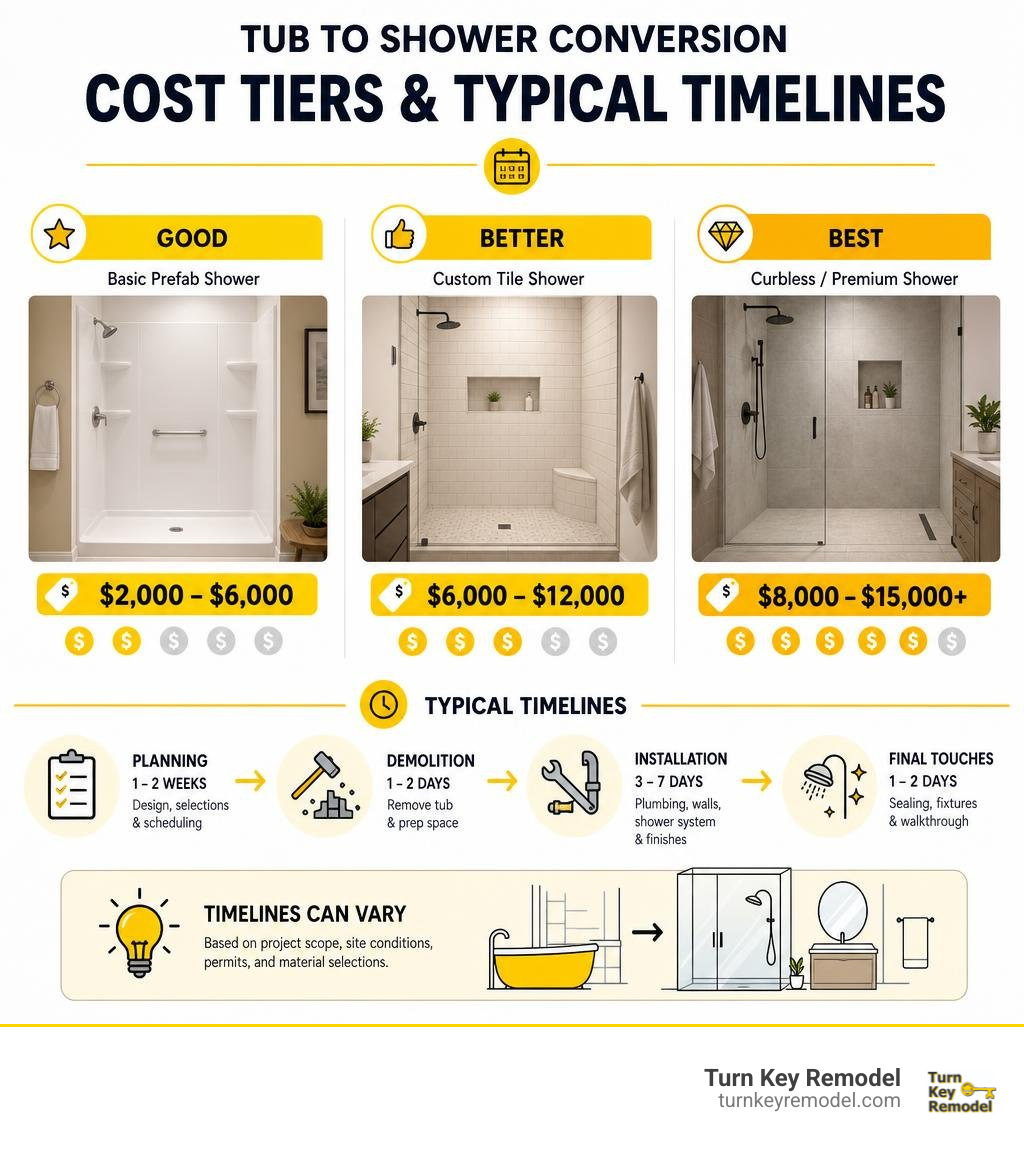
In 2026, the average cost of a tub to shower conversion is roughly $2,000 to $12,000. A straightforward prefab acrylic shower in the existing tub space usually costs $2,000 to $6,000, while a custom tiled walk-in shower often runs $6,000 to $12,000. Plan on $8,000 to $15,000 or more for a curbless shower that requires floor changes, upgraded drainage, or accessibility features.
The fastest way to set a realistic budget is to choose the shower system first, then confirm whether plumbing can stay in place. Keeping the same footprint helps control costs, while custom tile, frameless glass, drain relocation, water damage repairs, and permits can quickly raise the final price.
I am Mark Apicella, Owner and President of Turn Key Remodel in Orange County, with more than eight years of remodeling experience and a team focused on managed kitchen and bath projects. I help homeowners understand the average cost of a tub to shower conversion by defining the scope early, accounting for design choices and site conditions, and building a clear plan before construction begins.
Average cost of a tub to shower conversion vocab explained:
Average Cost of a Tub to Shower Conversion by System Type
When we evaluate a bathroom upgrade, the overarching system style establishes your baseline investment. Labor accounts for 40% to 60% of most project estimates, so the structural complexity of your shower selection determines both the timeline and the trades required on site. Exploring everything to know about bathroom conversion from tub to shower helps clarify which approach fits your budget and lifestyle.
| Conversion Type | Typical Price Range | Installation Timeline | Key Advantages | Best Suited For |
|---|---|---|---|---|
| Tub Cut Modification | $800 – $1,800 | 0.5 – 1 Day | Lowest price, zero tile demolition | Immediate accessibility on a strict budget |
| Prefab Acrylic / Fiberglass Kit | $2,000 – $6,000 | 1 – 2 Days | Grout-free, rapid installation, durable | Secondary baths, rental units, quick turnarounds |
| Custom Tiled Walk-In | $6,000 – $12,000 | 5 – 10 Days | High aesthetic value, built-in niches, custom bench | Primary suites, maximum resale appeal |
| Curbless / Zero-Threshold | $8,000 – $15,000+ | 8 – 14 Days | Barrier-free entry, seamless modern look | Aging-in-place, luxury visual expansion |
Prefabricated Acrylic and Fiberglass Shower Kits
Prefabricated units represent the most straightforward way to swap an old bathtub for an easy-entry shower stall. Material costs for a prefab pan and matching surround panels range from $400 to $1,500, keeping the all-in installed cost between $2,000 and $6,000.
These multi-piece systems install rapidly directly against bare wall framing or moisture-resistant drywall. Because acrylic and fiberglass feature non-porous surfaces, they eliminate grout maintenance entirely and resist soap scum. While they do not provide the high-end tailored look of stone or custom tile, home renovators can check a national pricing calculator to see how prefab units minimize labor hours.
Custom Tiled Walk-In Showers
A custom tiled shower transforms a standard bathroom into an open, spa-like retreat. Ranging from $6,000 to $12,000, this tier involves framing adjustments, a custom sloped mortar bed (or high-density foam shower tray), a professional waterproofing membrane system, and handcrafted tile installation.
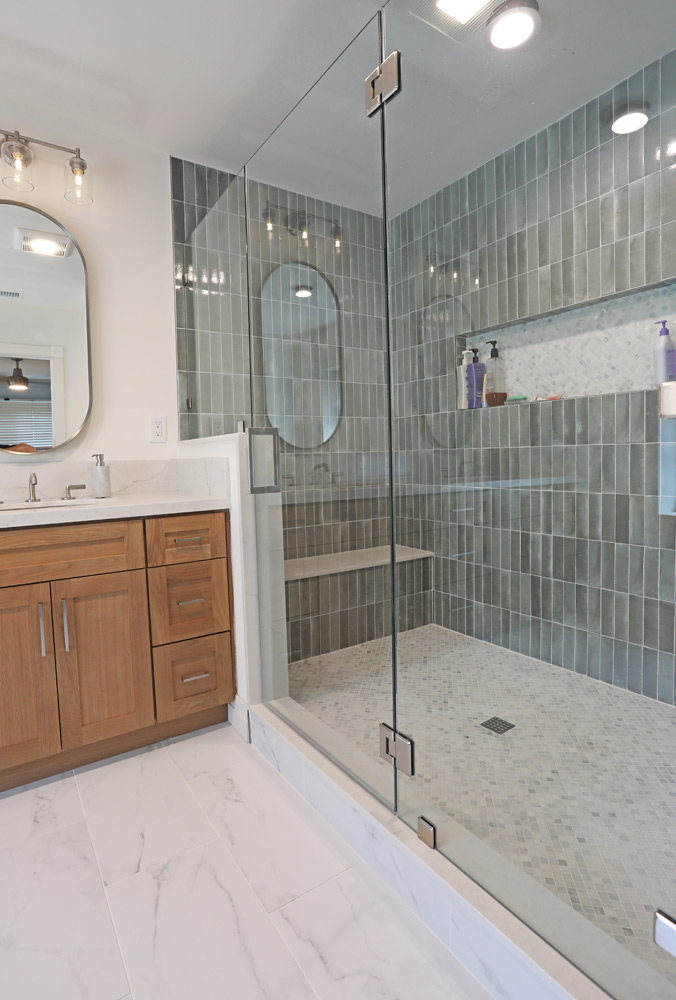
Tile materials cost anywhere from $2 to $30 per square foot for ceramic, porcelain, or natural stone, but the primary cost driver is artisan labor. Each square foot requires precise cutting, back-buttering, setting, and grouting. This option gives homeowners complete creative control over shower dimensions, built-in shampoo niches, floating corner benches, and contrasting mosaic accents.
Curbless and Zero-Threshold Walk-In Showers
Curbless showers eliminate the traditional 3- to 5-inch raised curb at the entrance, creating a flush floor transition from the main bathroom into the shower pan. Achieving this seamless aesthetic requires specialized structural work, which pushes total costs into the $8,000 to $15,000+ range.
Contractors must either lower the subfloor joists or cut into a concrete slab foundation to recess the shower base, ensuring water slopes toward a linear drain without escaping into the dry room area. Zero-threshold conversions are ideal for universal design and aging-in-place, allowing seamless wheelchair roll-in entry or effortless walk-in access for individuals with limited mobility.
Low-Cost Tub Cut Modifications
For homeowners who need fast accessibility without full demolition, a tub cut retrofit costs between $800 and $1,800. A technician cuts out a central section of your existing fiberglass, acrylic, or steel tub wall and seals a custom step-in insert over the opening.
This process lowers the threshold to roughly 4 to 6 inches above the floor in less than half a day. While it does not deliver a modern, fully open walk-in shower or resolve outdated plumbing, it serves as an economical safety modification.
Key Factors Influencing Conversion Pricing and Material Choices
Beyond the system tier, several individual job components dictate where your final quote lands. Knowing how materials, plumbing, and glass choices affect pricing enables you to allocate your budget effectively.
Estimating the Average Cost of a Tub to Shower Conversion with Tile vs Acrylic
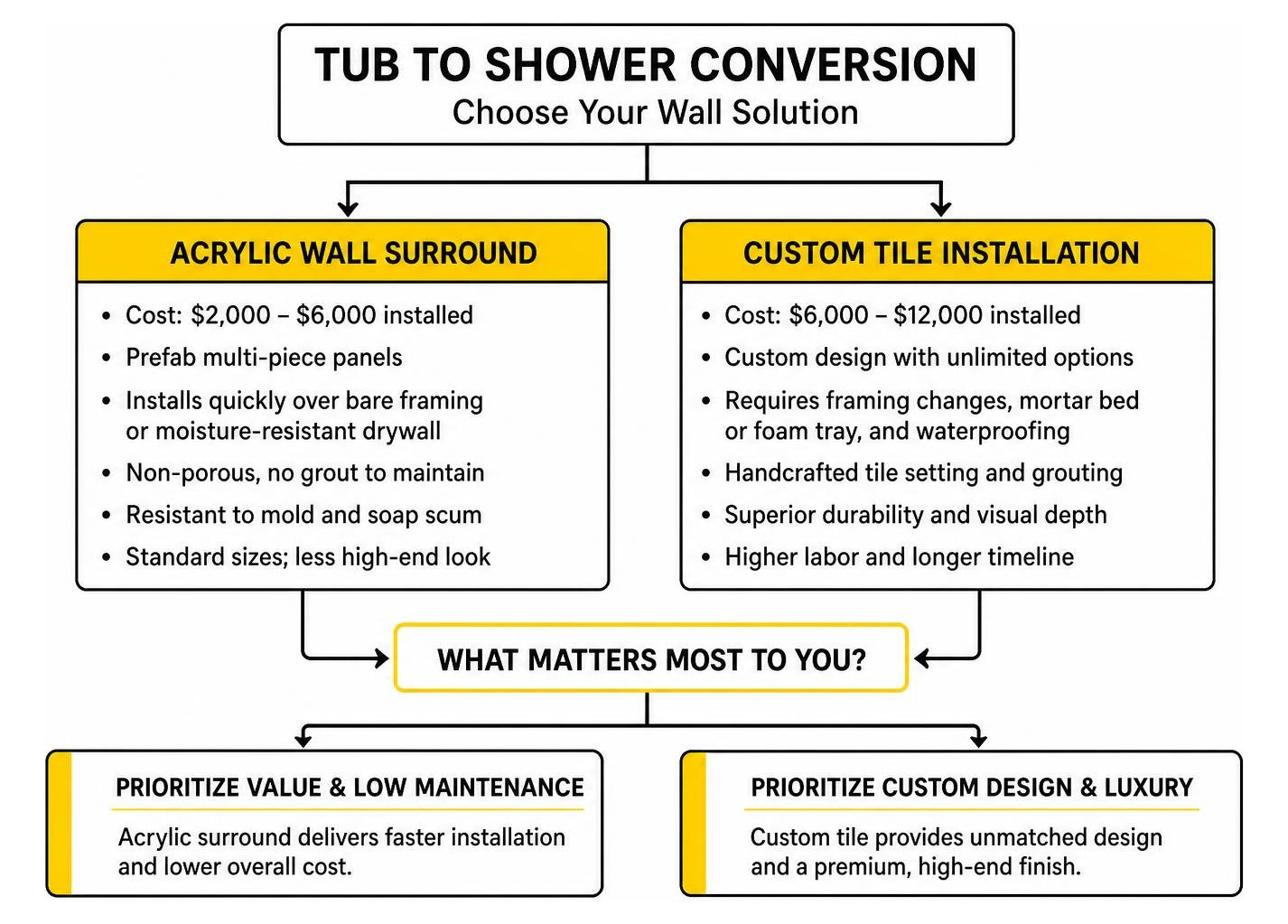
The choice between acrylic wall panels and custom tile represents one of the biggest pricing divides in any remodel:
- Acrylic Wall Surrounds: Budget-friendly and engineered for longevity, solid-surface acrylic panels cost between $2,000 and $6,000 installed. They offer zero-grout upkeep, will not crack from house settling, and resist mold growth. However, they are constrained to standard dimensions and lack the luxury feel that prospective buyers look for in primary bathrooms.
- Custom Tile Installations: Ranging from $6,000 to $12,000, tile work provides superior durability, unmatched visual depth, and endless design combinations. However, tile requires meticulous surface preparation, multi-step waterproofing, periodic grout sealing, and additional labor days that increase overall project expenses.
Plumbing Footprint and Drain Relocation Requirements
Plumbing scope heavily influences conversion costs. Standard residential bathtubs rely on a 1.5-inch drain pipe located at one end of the footprint. However, building codes require walk-in showers to use a 2-inch drain line to handle uninterrupted high-volume water flow without pooling.
Upgrading the drain line below the floor and installing a modern pressure-balanced or thermostatic shower valve costs between $500 and $2,400. If your layout requires moving the drain from the side to the center of the stall—or trenching through a concrete slab—plumbing labor can add $1,500 to $3,000 to the total bill.
Glass Enclosure Styles: Framed vs Frameless Doors
The shower door serves as both a splash barrier and a major design element. Your enclosure selection will affect your total budget accordingly:
- Curtain Rod Setup ($50 – $150): The simplest and most economical option.
- Framed Sliding Doors ($400 – $800 installed): Standard thin glass held in aluminum tracks, offering reliable splash protection at an accessible price.
- Semi-Frameless Pivot Doors ($700 – $1,500 installed): Heavier glass panels with minimal perimeter metal, balancing aesthetics and cost.
- Custom Frameless Heavy Glass ($1,200 – $2,500+ installed): Features 3/8-inch or 1/2-inch tempered architectural glass secured by sleek wall clips and hinges. This option maximizes light and modern appeal.
Hidden Costs, Building Permits, and Timeline Expectations
Demolition frequently uncovers pre-existing conditions behind old tub surrounds. Industry data indicates that nearly 70% of bathroom remodels reveal at least one surprise expense. Setting aside a 10% to 20% contingency budget ensures you can address unexpected issues without derailing your project. Following our ultimate checklist for bathroom remodel costs and steps helps you prepare for every phase of construction.

Subfloor Water Damage and Structural Framing Repairs
Decades of minor leaks around tub spouts, faulty caulking, and condensation often lead to hidden moisture damage. Once the existing tub is pulled away, contractors may find rotted subfloors, rusted framing nails, or active mold growth.
- Subfloor plywood replacement: $300 – $1,000
- Framing wall stud reinforcement / sistering: $400 – $1,200
- Localized mold remediation: $500 – $2,000
Permit Fees and Mandatory Code Upgrades
Modifying drain lines, moving supply pipes, and updating electrical switches requires municipal building and plumbing permits. Permit fees typically range from $180 to $600 depending on your local city building department. Permitted work ensures that your plumbing slope, venting, shower pan flood testing, and anti-scald mixing valves adhere strictly to current safety codes.
Phase-by-Phase Project Timeline
A professionally managed conversion proceeds through defined construction milestones to ensure lasting waterproof integrity.

- Demolition and Haul-Away (Days 1–2): Tear out the old tub, surround materials, backing board, and exposed plumbing trim.
- Plumbing Rough-In & Structural Prep (Days 2–3): Upgrade the subfloor drain line to 2 inches, rough in the mixing valve, and sister any compromised studs.
- Waterproofing System Installation (Days 3–4): Install solid backer boards, pre-sloped pans or mortar beds, and continuous sheet/liquid waterproofing membranes, followed by a mandatory 24-hour flood test.
- Tile Setting & Grouting (Days 5–8): Set, cut, and grout wall tile, shower floor mosaics, and recessed storage niches.
- Trim, Glass Installation & Final Handover (Days 8–10): Install shower heads, valve trim kits, grab bars, and measure/mount custom glass enclosures.
Return on Investment and Resale Value Impact
Upgrading an outdated bathtub to a modern walk-in shower generally recoups 60% to 70% of its initial cost upon resale. Today’s homebuyers prioritize spacious, accessible primary bathrooms over rarely used drop-in tub basins. If you want to explore hybrid layouts that balance open space with soaking features, review how to add a tub to your walk-in shower space.
Calculating the Average Cost of a Tub to Shower Conversion Against Real Estate ROI
Mid-range conversion projects delivering clean, contemporary tile and frameless glass yield strong market appraisal results. Prospective buyers view a completed, high-end walk-in shower as an immediate lifestyle upgrade that eliminates the need for messy renovations after move-in.
Tub Retention Rules for Family Bathrooms
Before tearing out your tub, evaluate your home’s total bathroom configuration:
- Multi-Bathroom Homes: Converting a tub in the primary suite while preserving a standard bathtub in a secondary hall bathroom provides the best of both worlds. You gain daily luxury in your master suite without alienating buyers who have young children or pets.
- Single-Tub Homes: Eliminating the sole bathtub in a two- or three-bedroom starter home can shrink your pool of prospective buyers. If the property only features one full bath, consider upgrading to a deep soaking tub-and-shower combination rather than a shower-only layout.
Frequently Asked Questions About Tub to Shower Conversions
Can You Convert a Tub to a Shower Without Moving the Plumbing?
Yes. You can keep the showerhead and valve controls on the existing wet wall and align the new shower pan drain with the original tub drain opening. However, you must still enlarge the below-floor drain pipe from 1.5 inches to 2 inches to satisfy municipal plumbing codes and prevent standing water.
How Long Does a Typical Conversion Project Take to Complete?
A one-piece or multi-panel acrylic system can be installed in 1 to 2 business days. A custom tiled walk-in shower typically takes 1 to 2 weeks from demolition to final clean-up, allowing proper drying times for thin-set mortar, waterproofing membranes, grout, and silicone seals.
Does Removing the Only Bathtub in a House Hurt Resale Value?
In a home with only one full bathroom, eliminating the sole bathtub can negatively impact resale value for buyers with toddlers or infants. In homes with multiple full baths, removing a tub in favor of a larger walk-in shower is widely viewed as a valuable, modern upgrade.
Conclusion
Converting an outdated, difficult-to-enter bathtub into a spacious walk-in shower improves everyday comfort, elevates bathroom safety, and updates the look of your home. Whether you opt for an efficient prefabricated acrylic surround or an artisan-crafted curbless tile installation, establishing your scope early ensures your project stays on schedule and on budget.
When you are ready to design a bathroom tailored to your routine, Turn Key Remodel delivers complete design-build remodeling backed by transparent communication and skilled craftsmanship. Explore our full suite of bathroom services or contact us today to schedule your in-home consultation and detailed estimate. For more details on our process, visit our frequently asked questions page.