
Ultimate Checklist for Bathroom Remodel Costs & Steps
Understanding 2026 Bathroom Remodel Costs
When planning a bathroom remodel, the first question on every homeowner’s mind is simple: What is this going to cost?
In 2026, the national average for a full bathroom remodel sits at approximately $18,000, with typical project costs ranging between $8,000 and $32,000. However, in high-demand areas across Southern California, such as Orange County, Yorba Linda, and Anaheim Hills, local labor rates and municipal permit requirements often push standard projects toward the higher end of that spectrum.
Understanding where your money actually goes is key to setting a realistic budget. Rather than paying purely for square footage, you are paying for specialized trades and high-density installation within a compact space. Bathrooms hold more plumbing and electrical connections per square foot than virtually any other room in your home!
Here is how a standard bathroom remodel budget breaks down by category:
- Labor & Trade Contracting: 40% to 65%
- Tile & Wall Finishes: 20% to 25%
- Cabinetry & Custom Vanities: 10% to 15%
- Plumbing Fixtures & Hardware: 10% to 15%
- Permits & Waste Disposal: 3% to 5%
To evaluate preliminary cost projections based on industry averages, you can explore resources like this Bathroom Remodel Cost Calculator or consult a 2026 bathroom remodel cost analysis.
Cost Variance by Size and Scope
While room dimensions alone do not dictate total cost, square footage sets the baseline for raw material requirements, tile setting surface area, and flooring.
- Powder Room / Half Bath (20–35 sq. ft.): $3,000 to $10,000 ($120–$400 per sq. ft.). Because there is no shower or bathtub to tile, powder room updates focus on high-impact visual elements like floating vanities, bold accent wall tile, statement mirrors, and updated lighting.
- Full Hall Bathroom (40–60 sq. ft.): $8,000 to $25,000 ($180–$450 per sq. ft.). The standard 5×8 bath is America’s most common layout. Upgrading a hall bath typically includes replacing a tub/shower combo with a modern tiled enclosure, updating the vanity, and laying new slip-resistant flooring.
- Primary or Master Bathroom Suite (80–150+ sq. ft.): $20,000 to $65,000+ ($250–$540+ per sq. ft.). Primary suites represent true luxury transformations. These projects frequently incorporate double vanities, freestanding soaking tubs, frameless glass walk-in showers, and dedicated toilet water closets.
Major Cost Drivers and Hidden Expenses
Why do quotes for two identical 50-square-foot bathrooms differ by thousands of dollars? The answer lies behind the walls.
The single biggest cost driver in any bathroom remodel is modifying the wet wall—the main vertical wall housing water supply lines and soil stack drain lines. Simply moving a toilet or drain line just 12 inches can add $2,500 to $5,000 in plumbing rough-in labor before you even buy a single piece of tile.
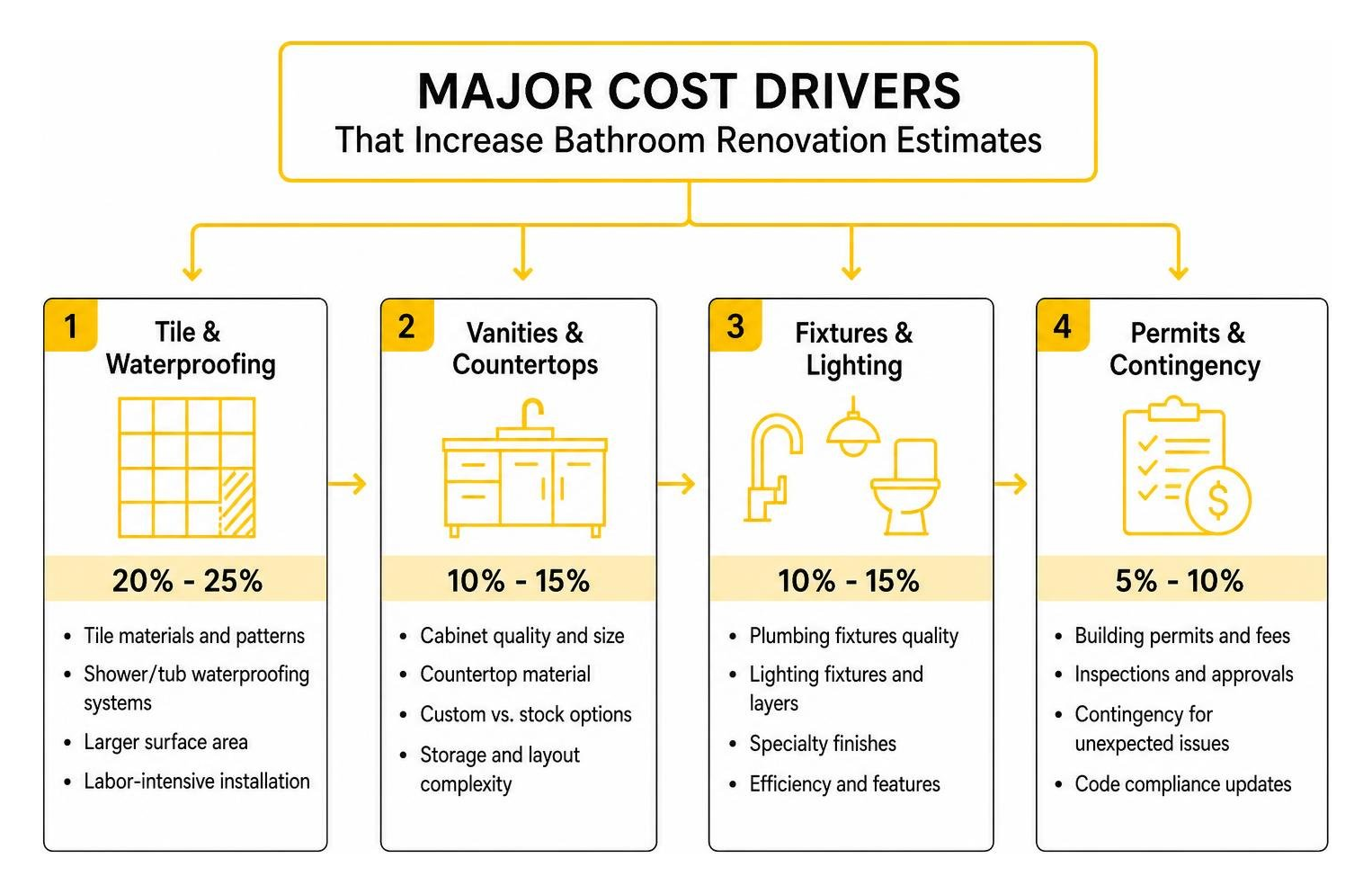
Other hidden expenses that often catch homeowners unprepared include:
- Subfloor Repair and Mold Remediation: Leaky toilet rings or failed shower pan liners frequently rot the underlying plywood subfloor. Fixing subfloor damage adds $400 to $1,800 to a project.
- Electrical Code Upgrades: Modern building codes require Dedicated 20-amp GFCI circuits for vanity outlets, updated exhaust fans, and dedicated wiring for radiant heated flooring, running $800 to $2,500.
- Tile Setting Labor: Tile labor varies dramatically by material. While standard porcelain ceramic tile costs $7 to $18 per square foot to install, natural marble or slate requires hand-buttering each tile, precise substrates, and double-sealing, pushing labor up by 30% to 50%.
- Exhaust Ventilation & Code Compliance: Older homes in Tustin or Brea often lack proper exterior ducting, requiring contract tilers and electricians to vent high-CFM fans through the roof or soffit.
For a deeper dive into regional price breakdowns, review The Kenna Real Estate Group’s guide on 2026 bathroom remodel costs.
Key Remodeling Tiers: Refresh, Standard, and Gut Renovations
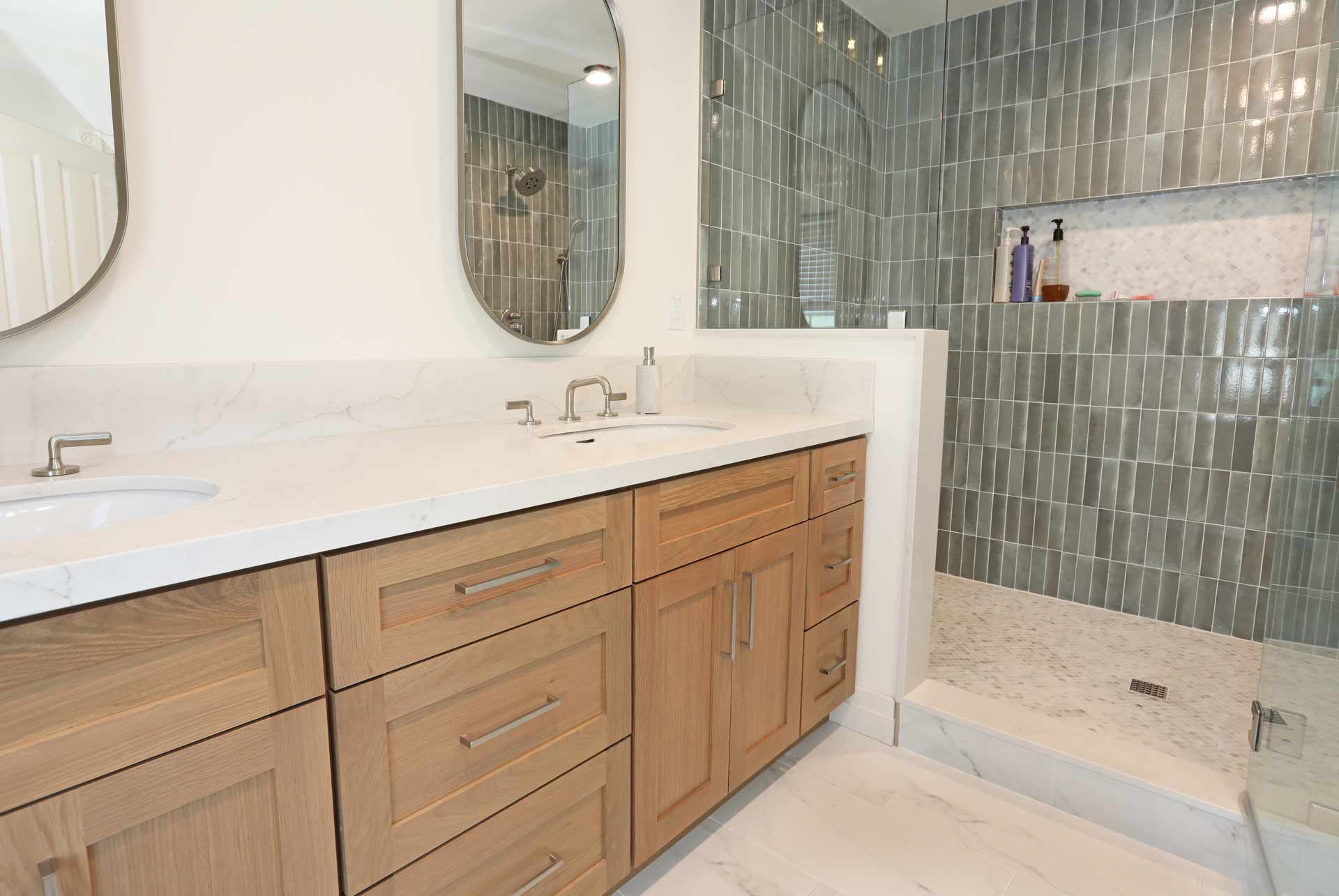
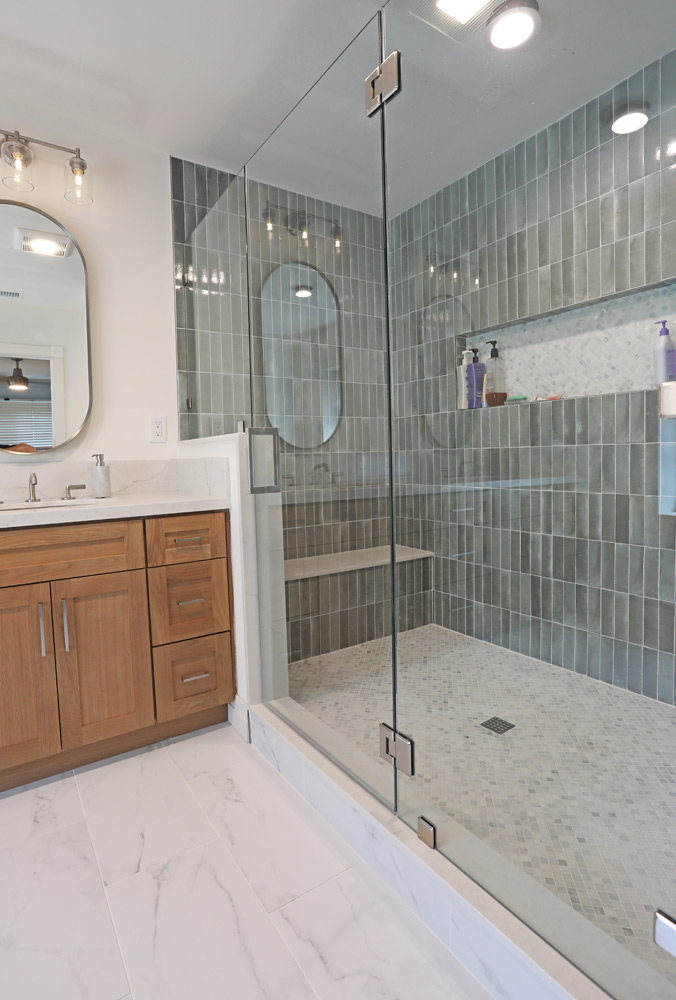
Choosing the correct remodeling scope ensures you achieve your aesthetic and functional goals without over-improving for your neighborhood’s home values.
Cosmetic Refresh vs. Full Bathroom Remodel
If your bathroom layout works well and your plumbing is in sound condition, a cosmetic refresh yields remarkable visual transformation at a fraction of full renovation costs. A cosmetic refresh ranges from $2,000 to $5,000 and can be finished in 2 to 4 days.
During a cosmetic refresh, we keep all existing fixture locations intact. Key updates include:
- Swapping out an old vanity for a pre-assembled, ready-made vanity with a quartz top.
- Replacing faucets, showerheads, and cabinet hardware with modern brushed brass or matte black finishes.
- Applying specialized moisture- and mold-resistant paint.
- Reglazing an existing cast-iron bathtub ($350–$600) rather than ripping it out.
A cosmetic refresh captures nearly 80% of the visual impact of a full remodel while saving thousands in demolition and plumbing labor!
Luxury Master Suite Overhauls
When you want to create a true spa-like sanctuary, a full gut renovation is the way to go. A full gut tear-down involves stripping the room down to structural wall studs and subflooring. This allows our design team to rebuild the space from scratch.
Modern luxury primary suites feature curbless zero-threshold entry showers, custom floating double vanities, linear floor drains, integrated LED mirror lighting, and freestanding acrylic or stone soaking tubs. If you are exploring high-end enhancements, explore our guide on the top 5 must-have features for a luxury bathroom remodel.
Comparing Scope, Duration, and Costs
To help you decide which scope fits your lifestyle, household needs, and budget, we have summarized the three primary remodeling tiers below:
| Remodeling Tier | Budget Range | Typical Duration | Major Scope Elements | Ideal For |
|---|---|---|---|---|
| Cosmetic Refresh | $2,000 – $5,000 | 2 – 4 Days | Paint, hardware, ready-made vanity, fixture swap, tub reglazing | Quick visual updates, rental units, tight budgets |
| Standard Remodel | $8,000 – $20,000 | 2 – 3 Weeks | New tile floor, custom shower pan, light plumbing, updated vanity & toilet | Outdated family bathrooms, structural reliability |
| Full Gut Renovation | $18,000 – $45,000+ | 3 – 6+ Weeks | Layout changes, wet wall moves, curbless shower, custom stone, heated floors | Primary suites, aging-in-place, long-term dream spaces |
Essential Steps for Planning a High-ROI Renovation
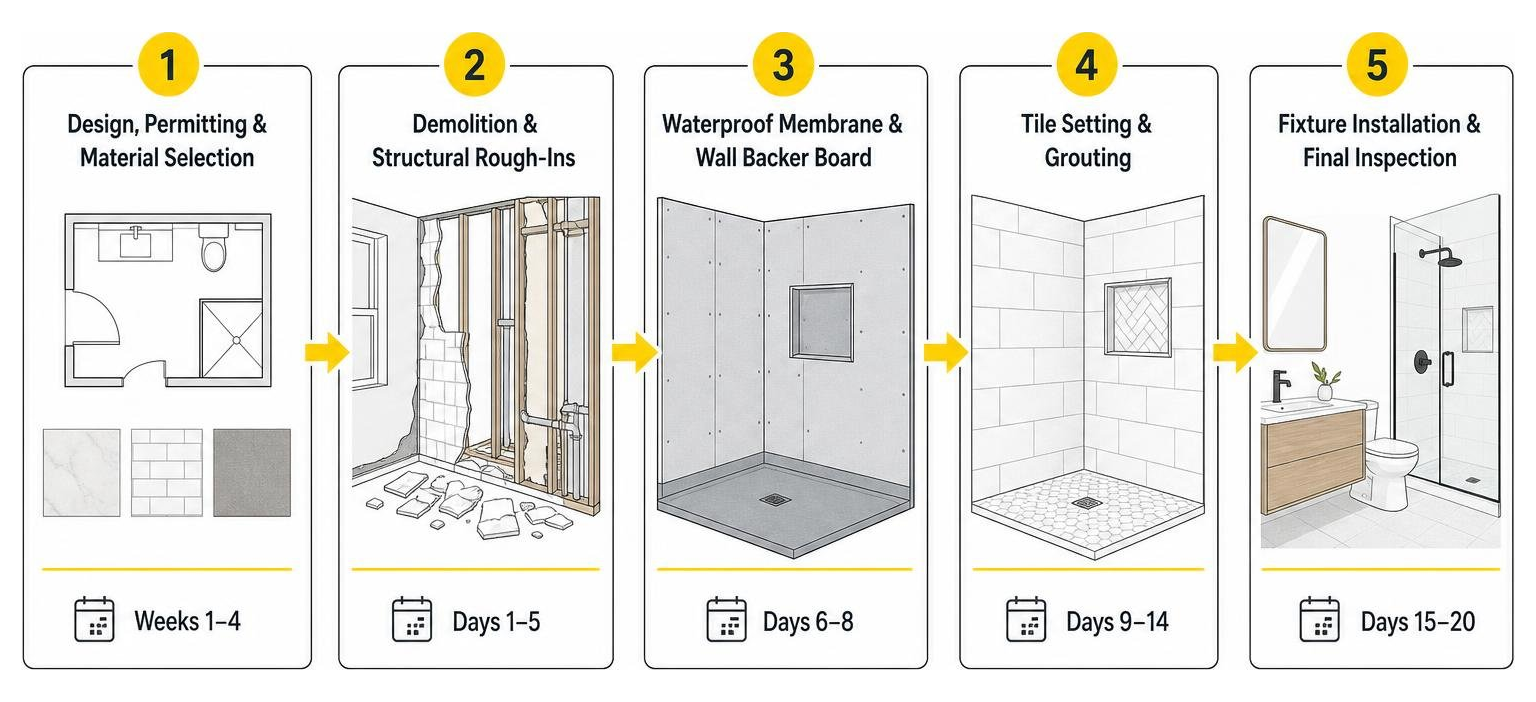
A successful renovation is driven by structured project management, professional trade management, and flawless waterproofing execution.
DIY vs. Professional Installation
It can be tempting to contemplate a DIY bathroom remodel to stretch your budget. However, bathrooms present unique structural hazards due to constant moisture exposure and complex code compliance.
While handy homeowners can safely handle cosmetic tasks like painting, replacing towel bars, or installing pre-hung medicine cabinets, structural trades carry substantial financial risk:
- Waterproofing Systems: A minor failure in a shower pan liner or liquid waterproofing membrane behind tile can rot subflooring and cause hidden mold, costing $5,000 to $15,000 in repair work down the road.
- Plumbing Connections: Incorrectly sloped drain lines or improperly fitted supply pipes lead to active leaks hidden behind drywall.
- Electrical Work: Moisture-dense environments demand precise GFCI circuit isolation and bonding to prevent fire or shock hazards.
Hiring an experienced contractor protects your investment and ensures trade warranties cover the craftsmanship.
Permits, Inspections, and Regional Labor Factors
Building regulations in Southern California municipalities—including Placentia, Yorba Linda, Anaheim Hills, Tustin, and Brea—mandate official permits for any work involving plumbing layout alterations, structural modifications, or electrical panel upgrades. Permits generally run between $100 and $1,000 depending on project scope.
Skipping required permits can jeopardize home insurance coverage and derail future home sales when inspectors flag unpermitted updates.
Furthermore, regional labor rates heavily influence overall project pricing. West Coast trade specialists charge 20% to 35% more per hour than national averages due to cost-of-living overhead and strict licensing guidelines. Skilled tile setters in Orange County, for example, command $75 to $120 per hour. When you partner with our team for comprehensive bathroom remodeling services, we manage all city permitting, rough-in inspections, and trade scheduling under a single, streamlined contract.
Design Trends, Materials, and Small Space Optimization
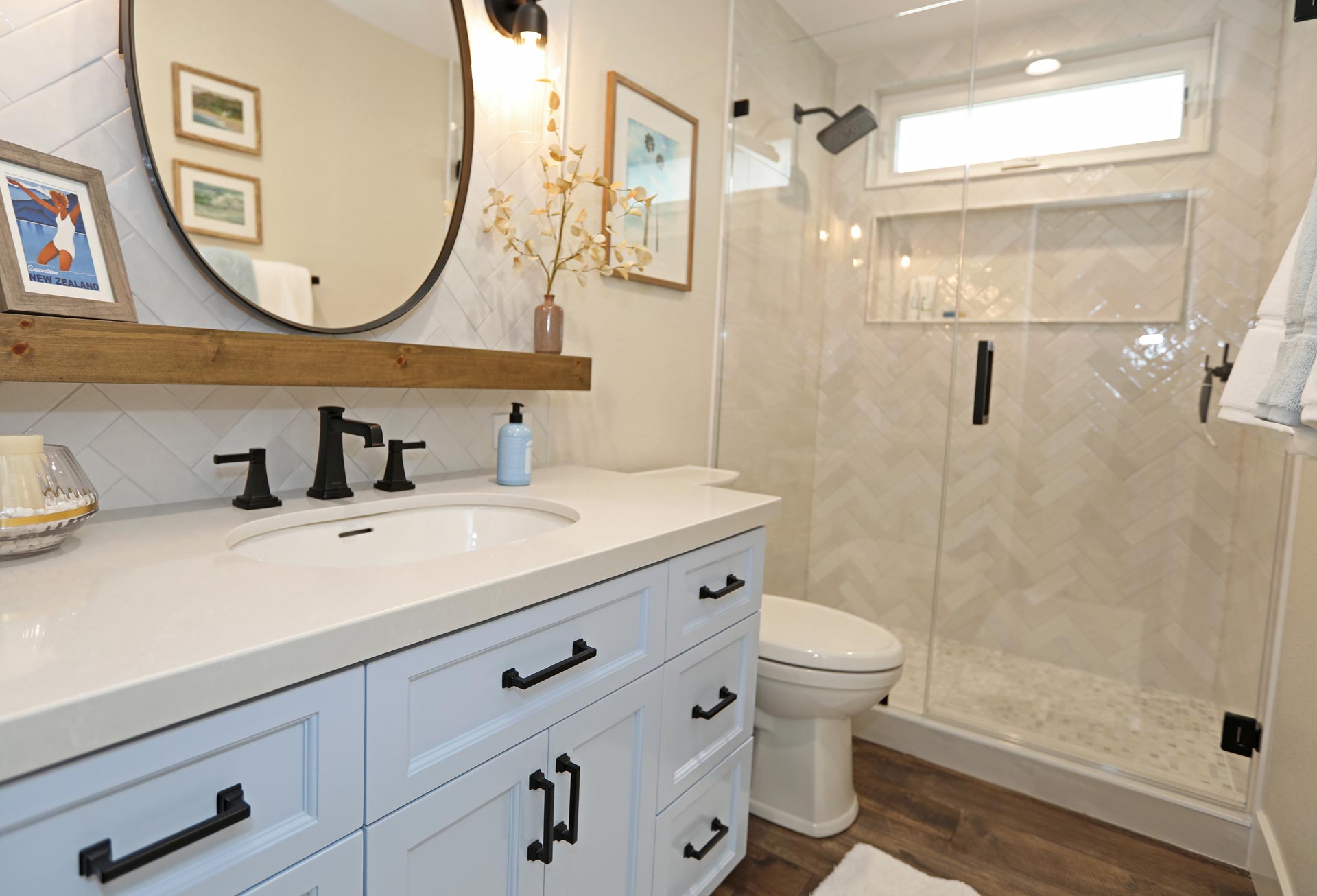
A functional bathroom seamlessly blends moisture-resistant materials with modern design trends. In 2026, trends focus on modern, transitional, and warm organic aesthetics that turn functional spaces into personal sanctuaries.
Material Selection for Flooring, Countertops, and Walls
Selecting the right materials balances long-term durability with daily maintenance:
- Flooring (Porcelain vs. Natural Stone): Porcelain tile is the undisputed king of bathroom flooring. It features an ultra-low water absorption rate (<0.5%), mimics marble or natural wood seamlessly, and costs just $4 to $8 per square foot for materials. Natural marble and slate deliver timeless beauty but require routine resealing and are prone to etching from cleaning chemicals. Always pick textured porcelain or mosaic tile for shower floors to maximize slip resistance.
- Countertops (Quartz vs. Granite): Engineered quartz continues to outpace natural granite for vanity tops. Quartz is non-porous, stain-resistant, and requires zero sealing—making it perfect for high-use family bathrooms.
- Shower Walls: Large-format porcelain tiles (such as 12×24 or 24×48 inches) reduce grout lines, creating a sleek appearance that is dramatically easier to keep clean.
Small Bathroom Layout Optimization
Optimizing a compact 5×8 bathroom or hall powder room requires clever space management. By incorporating principles established by the National Kitchen & Bath Association (NKBA), small spaces can feel surprisingly open:
- Trade the Bathtub for a Walk-In Shower: If you have another tub in the home, converting an underutilized tub/shower combination into a glass walk-in shower frees up visual space and physical floor area.
- Install a Floating Vanity: Wall-mounted floating vanities expose floor tile underneath, instantly tricking the eye into perceiving a larger room while providing modern appeal.
- Incorporate Recessed Storage: Utilize open wall cavities between 16-inch stud bays to create built-in shower niches and recessed medicine cabinets.
- Use Pocket Doors: Converting a standard swinging door to a sliding pocket door reclaims up to 9 square feet of floor swing clearance!
To see how custom layouts can optimize your space, explore our dedicated custom design services.
Budget Optimization and Common Mistakes to Avoid
Even well-planned remodeling projects can run off course without strict budget oversight. Protecting your wallet requires proactive decision-making before demolition begins.
How to Avoid Mistakes in Your Bathroom Remodel
Avoid these four common budget-busting pitfalls:
- Skipping the Waterproofing Inspection: Never let a installer lay tile directly over standard drywall or unsealed greenboard in wet areas. Demand a full waterproofing system—such as cementitious backer board combined with liquid waterproofing membranes or sheet membranes.
- Moving Fixtures Without Budget Allocation: Moving a toilet 6 inches to the left sounds simple, but it requires cutting floor joists, rerouting 3-inch drain pipes, and patching subfloors. Keep fixtures on existing wet walls whenever possible.
- Buying Tile Without Overage: Tile lots vary in color and shade between manufacturing batches. Always order a 10% to 15% overage to cover cut waste, tricky angles, and future repairs. Running out mid-project can leave you stuck with mismatched dye lots!
- Ignoring Ventilation CFM Requirements: Installing a cheap, underpowered exhaust fan leads to chronic humidity buildup, peeling paint, and mold growth. Choose a quiet, high-CFM exhaust fan vented directly outside.
Smart Strategies to Save Money Without Sacrificing Quality
You don’t need to cut corners on quality to keep your bathroom remodel within budget. Apply these practical cost-saving tactics:
- Keep the Wet Wall Layout: Save $3,000 to $8,000 by keeping plumbing stacks, sinks, and toilets in their original locations.
- Choose Stock Vanities with Stone Tops: Pre-fabricated vanity units ($400–$1,200) come complete with sinks and countertop surfaces at a fraction of custom millwork pricing ($2,500–$5,000).
- Use High-End Accent Tile Strategically: Love expensive marble tile? Use it in a featured shower niche or single accent wall while using affordable porcelain subway tile ($2–$4/sq. ft.) for the primary wall surfaces.
- Reglaze Existing Tubs: If your original cast-iron tub is structurally sound, professionally refinishing it for $350 to $600 yields a pristine finish while saving thousands in heavy demolition and plumbing reset costs.
- Maintain a 10% to 15% Contingency Fund: Set aside an emergency buffer for unexpected subfloor rot or electrical code fixes uncovered during teardown.
Frequently Asked Questions About Bathroom Remodeling
For answers to additional general renovation inquiries, visit our complete frequently asked questions hub.
What is the average return on investment (ROI) for a bathroom renovation?
According to national real estate market data, a mid-range bathroom renovation yields an average ROI of 60% to 70.1% at resale. Cosmetic refreshes often deliver higher percentage returns (up to 80–90%) because of low initial overhead. Updated bathrooms represent one of the top two features (alongside kitchens) that home buyers evaluate when making an offer.
How long does a typical renovation project take from start to finish?
The construction phase varies based on scope:
- Cosmetic Refresh: 2 to 4 days
- Standard Remodel: 2 to 3 weeks
- Full Gut / Primary Suite Renovation: 3 to 6+ weeks
Remember to account for pre-construction planning, architectural design, permitting, and fixture lead times, which typically take 4 to 8 weeks before work begins on-site.
Can I move my toilet or plumbing fixtures to a new wall?
Yes, you can move plumbing fixtures to new locations, provided your home’s structural framing and subfloor allow for proper drain slopes (a minimum of 1/4 inch drop per linear foot). However, rerouting water supply lines and main soil stacks requires opening up floors and walls, adding $2,500 to $5,000+ to your plumbing labor costs.
Conclusion
Planning a successful bathroom remodel comes down to balancing your aesthetic goals with a realistic understanding of construction scope, material durability, and trade labor. Whether you are executing a swift powder room update or embarking on a full master suite gut renovation, focusing on proper waterproofing, smart layout design, and quality fixture selection ensures your updated space delivers daily comfort and strong return on investment.
At Turn Key Remodel, we take the stress out of home renovations. Serving homeowners across Orange County, Yorba Linda, Placentia, Anaheim Hills, Tustin, and Brea, our experienced team provides true end-to-end project management—combining expert in-house interior design, transparent communication, and 20 years of craftsmanship delivered on time and on budget.
Ready to bring your dream bathroom to life? Contact Us today to schedule your personalized design consultation!